How Do Scientists Compare Humpback Whale Songs From Different Breeding Seasons?
Humpback whales are known for producing elaborate songs made up of repeated sounds, phrases, and sequences. These vocalizations provide researchers with an opportunity to investigate how animal communication develops over time.
One particularly interesting research question is whether humpback whale songs remain similar from one breeding season to the next. Scientists may record whale songs during one year and compare them with recordings collected during a later season to identify recurring patterns, differences in song structure, and possible long-term changes.
Unlike studies that examine changes within a few days or weeks, year-to-year comparisons require long-term data and careful research methods. Researchers must also consider whether the recordings represent comparable locations, environmental conditions, and groups of whales.
For a destination such as Samaná Bay in the Dominican Republic, this approach could help guide future research into seasonal whale vocalizations. However, specific conclusions about changes between Samaná breeding seasons require reliable local recordings collected across multiple years.
Why Compare Whale Songs Across Different Breeding Seasons?
Comparing recordings from separate breeding seasons helps scientists investigate whether acoustic patterns persist over longer periods.
A song pattern detected in one season might also appear in the next. Alternatively, researchers might observe differences in the arrangement of sounds, the occurrence of particular phrases, or the range of acoustic patterns represented in their recordings.
These comparisons can help answer several questions:
- Which song patterns remain recognizable across multiple breeding seasons?
- Do researchers detect new or less common patterns in later years?
- How much variation occurs between separate seasons?
- Are apparent differences associated with different whales being recorded?
- Can researchers distinguish long-term changes from differences in sampling methods?
The answers can improve understanding of whale vocal behavior and help scientists design better long-term monitoring programs.
However, a difference between two annual recordings does not automatically demonstrate that an entire whale population changed its song. Researchers need sufficient data to evaluate how representative each recording is.
1. Building a Long-Term Acoustic Record
The first requirement is a collection of underwater recordings spanning more than one breeding season.
Scientists may use stationary hydrophones, autonomous recording systems, or recordings collected during structured research surveys. Each approach must be documented so researchers can determine how comparable the recordings are.
A long-term dataset might contain recordings from the beginning, middle, and end of several breeding seasons. Researchers can then compare corresponding periods between years rather than relying on a single recording from each season.
For example, a hypothetical project could compare recordings collected during the middle of three consecutive breeding seasons. This approach may reduce the influence of differences in seasonal timing, although it cannot eliminate every source of variation.
Researchers should document:
- Recording dates and durations.
- Geographic locations and hydrophone depths.
- Equipment models and microphone sensitivity.
- Sampling schedules and interruptions.
- Background noise and recording quality.
- The methods used to identify whale songs.
Maintaining consistent procedures makes annual comparisons more reliable. If equipment or sampling methods change, researchers should record those changes and evaluate their possible effects.
2. Identifying Recurring Song Patterns
After collecting the recordings, scientists identify recognizable song patterns using audio playback, spectrograms, and acoustic analysis tools.
A spectrogram displays sound energy across time and frequency, allowing researchers to compare features such as frequency contours, sound duration, and the organization of acoustic elements.
Scientists may classify individual sound units and examine how these units are arranged into phrases or larger sequences. They can then compare the resulting descriptions across breeding seasons.
A recurring pattern in recordings from several years may suggest continuity in the recorded song structure. A pattern detected in one year but not another may indicate a possible difference, although researchers must consider whether the pattern was simply missed because of limited sampling.
Reliable comparisons require consistent definitions of the sound features being measured. If researchers use different classification rules in different years, the resulting differences may reflect the analysis rather than the whales.
Automated sound recognition can assist with large datasets, but detection systems should be validated against manually reviewed recordings, particularly when recording conditions vary between years.
3. Measuring Similarity Between Songs
Scientists need systematic ways to determine whether recordings from separate breeding seasons contain similar acoustic patterns.
Depending on the research question, they may compare:
Sound-unit sequences: Whether recognizable acoustic elements occur in similar orders.
Phrase structure: Whether groups of sound units retain comparable arrangements.
Acoustic features: Whether measured properties such as duration or frequency contours are similar.
Pattern occurrence: Whether particular song components are detected in both seasons.
Overall structure: Whether the broader organization of song sequences remains similar.
Researchers can represent songs as sequences of classified elements or use quantitative acoustic features to compare recordings. The appropriate method depends on the clarity of the audio and the type of variation being studied.
For example, two recordings may contain many of the same sound types but arrange them differently. Another pair may show similar phrase structures with some differences in individual sounds.
A single similarity score cannot necessarily describe every important feature. Scientists should explain which aspects of the songs were compared and what the measurements mean.
4. Distinguishing Real Changes From Differences in Sampling
One of the greatest challenges in year-to-year research is ensuring that recordings provide a fair comparison.
Suppose researchers collect hundreds of hours of audio during one breeding season but only a few hours during the next. They may detect more song patterns in the first dataset simply because it contains more recordings.
Differences in recording locations can create another problem. A hydrophone placed in one area may capture different singers from a hydrophone placed elsewhere, even during the same season.
Scientists can address these problems by selecting comparable recording periods, standardizing the amount of usable audio, and documenting changes in sampling coverage.
They should also distinguish between a pattern that was not detected and evidence that the pattern was absent. Limited recording time cannot establish that a particular song component disappeared from the entire population.
Careful sampling is essential before researchers conclude that whale songs changed between years.
5. Understanding the Role of Individual Whales
A comparison between breeding seasons may include recordings from different individual whales.
Humpback whales move between locations, and the singers within detection range may not be the same from one year to the next. Some individuals may return to an area, while others may be absent from the available recordings.
Consequently, differences between annual song samples could reflect changes in the individuals represented in the data.
Where suitable evidence is available, researchers may combine acoustic recordings with photo-identification, visual observations, or other methods of tracking individual whales.
These complementary methods can help establish whether a particular whale was observed in multiple seasons. Nevertheless, seeing the same whale in two years does not automatically prove that every song recorded during those periods came from that individual.
Researchers should make individual-level claims only when the evidence supports them. Otherwise, their conclusions should describe similarities and differences in the recorded songs without assigning them to specific whales.
6. Examining the Influence of Recording Conditions
Long-term acoustic monitoring is vulnerable to changes in the recording environment.
Background noise, weather, water conditions, equipment sensitivity, and hydrophone placement can all influence the sounds captured by a recording system.
For example, one year's recordings might contain substantial vessel noise while another year's recordings are relatively quiet. Some whale song components may be more difficult to identify in the noisier dataset.
Equipment upgrades can also affect the apparent frequency range or clarity of recorded sounds. Researchers must consider these differences before interpreting a change in the acoustic data as a biological change.
Possible safeguards include:
- Using comparable equipment and settings where practical.
- Recording equipment changes and deployment details.
- Applying consistent audio-processing methods.
- Measuring background noise when possible.
- Reviewing uncertain detections.
- Excluding unusable recordings according to predefined criteria.
These procedures reduce the likelihood that technical differences will be mistaken for changes in whale communication.
7. Investigating Possible Cultural Transmission
Humpback whale songs are of interest to scientists studying social learning and cultural transmission in animals.
Researchers can investigate whether song patterns appear in multiple recordings and whether similar patterns are present across different seasons or locations. Such observations may contribute to hypotheses about how songs spread and change.
However, finding similar songs in two breeding seasons does not establish exactly how the similarities arose. The pattern might have persisted among returning singers, been produced by different whales sharing similar songs, or reflected other processes.
Likewise, detecting a different song in a later year does not by itself prove that whales learned a new song from other individuals.
To study cultural transmission, scientists need evidence about the timing and distribution of patterns, and ideally information about the whales and populations involved.
Year-to-year comparisons can provide useful clues, but explaining the mechanisms of song change requires additional research.
8. Comparing Multiple Years Instead of Just Two
A comparison between two breeding seasons can reveal differences, but it provides limited information about the broader direction of change.
If researchers have recordings from several consecutive years, they can examine whether an observed difference persists, reverses, or appears to be a temporary fluctuation.
For example, a song pattern might be detected frequently in the first year, less frequently in the second, and more frequently again in the third. That result would require a different interpretation from a pattern that becomes progressively less common across several years.
Researchers can use statistical models to evaluate these trends while accounting for recording effort, background noise, and other relevant factors.
They should also consider the limitations of their data. A long time series is valuable only if the recordings are sufficiently comparable and the measurements are reliable.
Several years of consistent observations generally provide a stronger foundation for investigating long-term patterns than a small number of isolated recordings.
9. What Could This Research Mean for Samaná Bay?
Samaná Bay is associated with seasonal humpback whale activity, making it a relevant setting for questions about whale behavior and underwater acoustics.
A long-term local study could collect acoustic recordings during successive breeding seasons and compare song patterns using consistent methods.
Researchers might investigate whether particular acoustic features recur, whether the recorded patterns differ between years, and whether changes in the whales or recording conditions could explain those differences.
To reach reliable conclusions, such a project would need adequate sampling, documented equipment settings, validated sound classification, and a careful assessment of uncertainty.
Results from other breeding areas can help researchers design a study, but they cannot establish what has happened to whale songs in Samaná Bay without supporting local evidence.
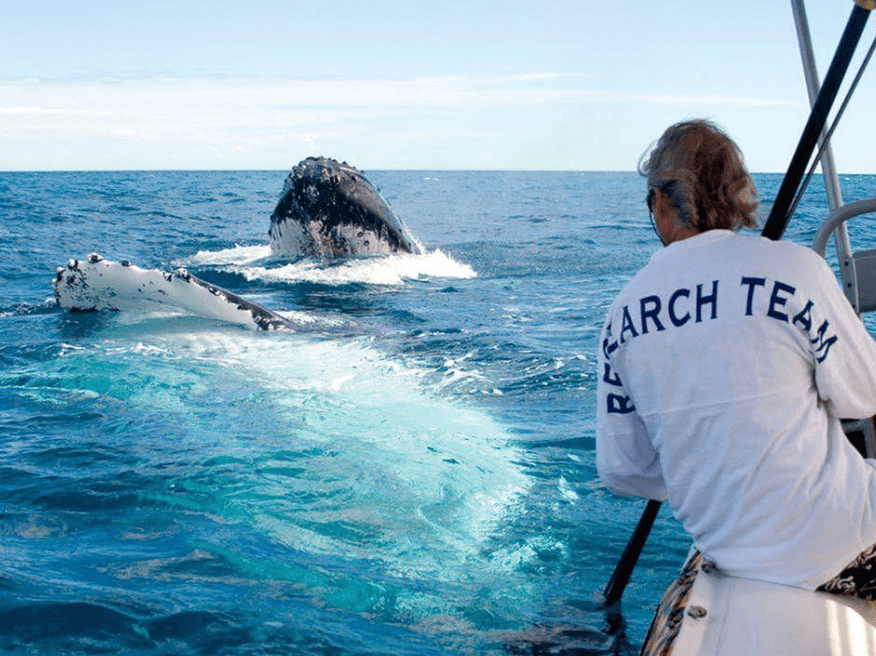
For visitors, this research provides an additional perspective on humpback whales. The animals' communication takes place underwater, where much of their activity cannot be observed directly from a whale-watching vessel.
Nevertheless, acoustic findings should not be used to promise particular surface sightings or to claim that a specific year has more singing activity without reliable data.
10. Common Mistakes in Comparing Breeding Seasons
Several mistakes can lead to misleading conclusions.
Comparing unequal recording effort: A larger dataset can reveal more song patterns simply because more audio was collected.
Assuming the same individuals were recorded: The identity of singers cannot be inferred from similar songs alone.
Ignoring equipment changes: Different recording systems can capture different levels of acoustic detail.
Treating non-detection as absence: A pattern missing from a sample may still occur outside the recorded periods.
Confusing song similarity with identical behavior: Similar acoustic patterns do not prove that whales behaved in the same way in both seasons.
Drawing conclusions from only two years: Two observations may reveal a difference but provide limited evidence about a persistent long-term trend.
Assuming a specific cause: A detected change does not automatically demonstrate learning, environmental influence, or a change in the whale population.
Recognizing these limitations helps researchers communicate findings accurately and avoid overstating the evidence.
11. The Value of Long-Term Whale Song Research
Long-term acoustic datasets allow scientists to examine whale communication at a scale that short studies cannot provide.
They can help researchers identify recurring patterns, assess the consistency of songs over time, and develop new questions about the processes influencing vocal behavior.
Combining acoustic data with visual observations, environmental measurements, and reliable information about individual whales can strengthen the interpretation of these patterns.
Technology continues to make long-term recording and sound analysis more practical. However, high-quality data collection, consistent methods, and transparent reporting remain essential.
The most useful research does not simply identify differences between years. It explains what was measured, how confident the researchers are in the comparison, and which alternative explanations remain possible.
Conclusion
Scientists compare humpback whale songs from different breeding seasons by collecting long-term underwater recordings, identifying recurring acoustic patterns, measuring song similarity, and evaluating differences across years.
Reliable comparisons require consistent sampling, careful sound classification, attention to equipment and environmental conditions, and caution when identifying individual singers. Recordings from several years can also help researchers distinguish temporary fluctuations from patterns that persist over time.
For Samaná Bay, this approach offers a framework for investigating long-term changes in whale communication, but specific local conclusions require suitable acoustic evidence.
By studying whale songs across successive breeding seasons, researchers can build a clearer picture of how recorded vocal patterns persist or change without assuming that every difference has the same explanation.
Frequently Asked Questions
Do humpback whale songs remain the same every year?
Not necessarily. Researchers can investigate similarities and differences across years, but the amount and type of variation must be established from suitable recordings. Patterns may differ between study areas and populations.
How do scientists compare whale songs recorded in different years?
They use underwater recordings, spectrograms, consistent sound classifications, and quantitative comparisons of acoustic patterns. They also account for differences in recording effort and equipment.
Can scientists prove that the same whale sang in two different breeding seasons?
Only when suitable evidence supports individual identification. Similar songs alone are not sufficient to establish that the same individual produced both recordings.
Why is long-term monitoring important?
Recordings collected across multiple years help researchers determine whether a pattern persists, fluctuates, or appears to change over time. They also provide more opportunities to assess uncertainty.
Has a specific year-to-year song change been established for Samaná Bay?
Such a conclusion requires appropriate local recordings and analysis. Findings from other locations should not be presented as proof of a particular change in Samaná Bay.
Can whale song research predict how many whales tourists will see?
Not reliably on its own. Underwater acoustic activity and visible surface sightings are different measures, so song recordings cannot guarantee the number of whales a visitor will observe.

Local explorer & expert guide in Samaná Whale Sanctuary.