How Do Scientists Measure Whether Humpback Whales Use Different Areas of Samaná Bay for Different Activities?
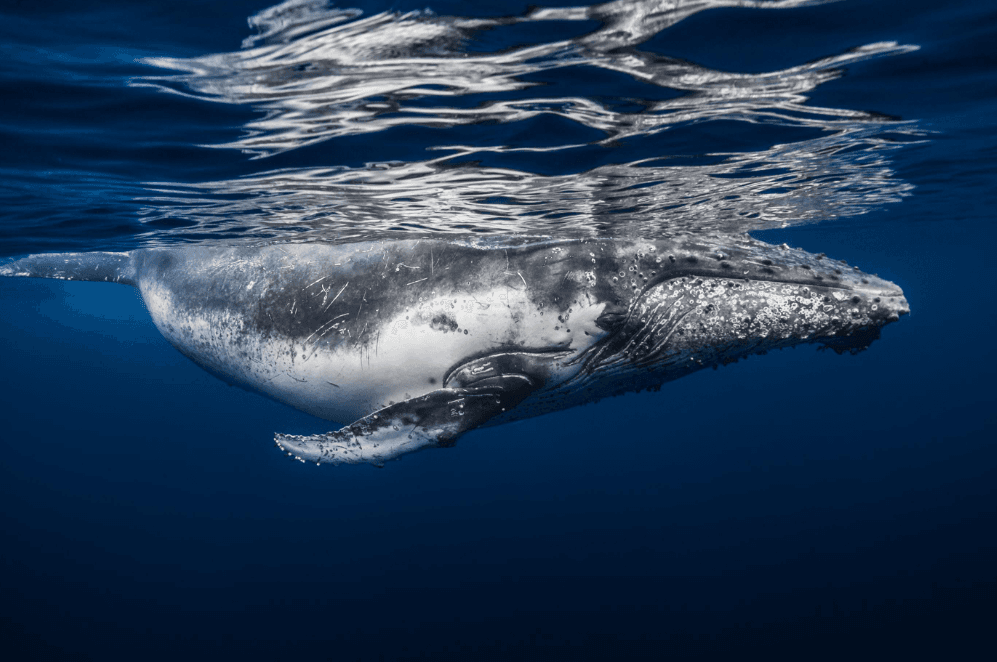
Samaná Bay in the Dominican Republic is known for seasonal visits by migrating humpback whales. During the breeding season, observers may encounter whales traveling through the water, resting near the surface, interacting with other whales, or swimming alongside their calves.
These behaviors raise an interesting scientific question: do humpback whales use different parts of Samaná Bay for different activities?
Answering this question requires more than recording where whales appear. Researchers need to document what the whales are doing, where the behavior occurs, and whether similar patterns appear across multiple observations.
By combining behavioral observations with location records and environmental information, scientists can investigate how whale activities vary across the bay. The methods described below are general approaches used in marine mammal research; they should not be interpreted as confirmed findings about specific locations in Samaná Bay without supporting local data.
Why Connect Whale Behavior With Location?
Knowing where whales are observed provides useful information, but understanding their behavior adds another layer of ecological context.
For example, an area where whales are frequently seen traveling may serve as a movement corridor. A location where mother-calf pairs are repeatedly observed could warrant further investigation into how those whales use the habitat.
However, researchers must avoid assuming that one activity always occurs in one particular area. A whale can travel, rest, and interact with other whales in the same location, depending on the circumstances.
The objective is to identify recurring relationships between behavior and location rather than assign a fixed purpose to every part of the bay.
1. Recording Whale Activities During Observations
Researchers begin by documenting visible behavior during a whale encounter.
Depending on the research protocol, observers may classify activities into categories such as:
- Traveling: Sustained directional movement through the water.
- Resting: Reduced activity or slow movement consistent with a resting state.
- Socializing: Observable interactions between two or more whales.
- Mother-calf behavior: Swimming together, maintaining proximity, or other observable interactions.
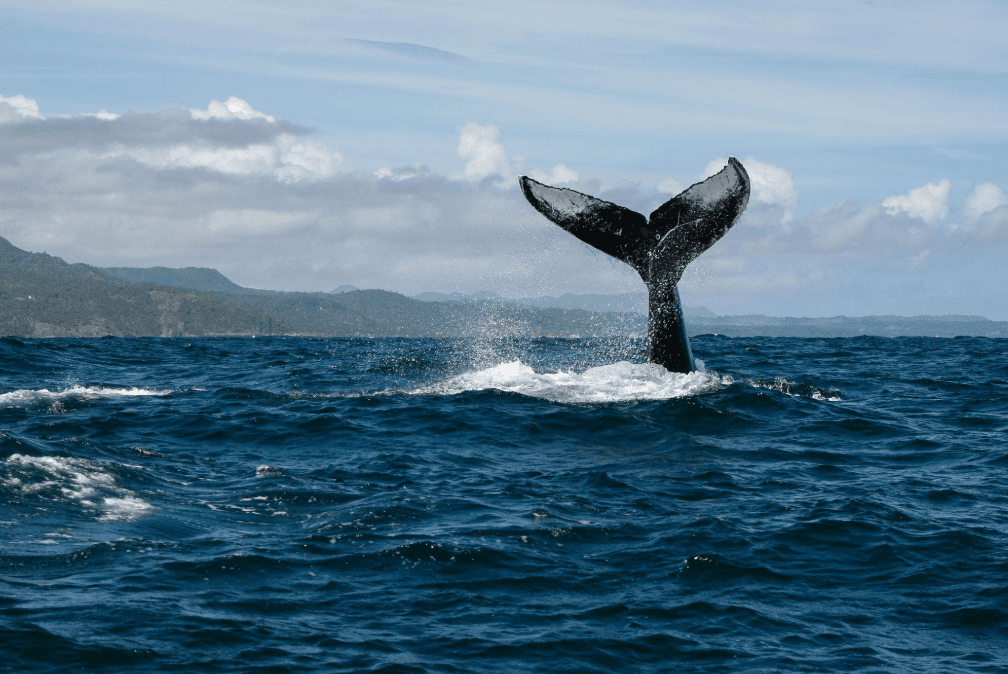
- Surface activity: Behaviors such as breaching, tail slapping, or repeated surface movements.
Researchers need clear definitions for each category so different observers can record behavior consistently.
Not every behavior can be identified confidently from a boat. For example, a whale moving slowly at the surface is not necessarily resting. Scientists should record uncertainty when the available evidence does not support a reliable classification.
2. Linking Each Behavior to a Geographic Location
Once an activity is recorded, researchers associate it with the observation's location.
GPS coordinates can help establish where a whale was seen, while date and time records provide context for comparing observations.
If researchers document traveling whales in one area and social interactions in another, they can begin investigating whether the difference is meaningful.
A single observation cannot establish a general pattern. Repeated records are needed to determine whether particular activities occur disproportionately in certain areas.
Researchers must also consider the precision of the location data. A whale's position may change during an observation, so a single coordinate may not represent the entire period of activity.
3. Creating Separate Maps for Different Behaviors
Geographic information systems can help scientists visualize the distribution of whale activities.
Rather than creating one map containing every sighting, researchers may prepare separate maps for different behavioral categories.
For example, one map might display observations classified as traveling, while another shows social interactions. A third could display recorded mother-calf encounters.
Comparing these maps may reveal patterns worth investigating, such as repeated observations of a particular activity in a limited portion of the study area.
However, a visually concentrated cluster does not automatically indicate that whales prefer that location. Researchers must account for differences in survey effort, visibility, and the number of observations available for each behavior.
4. Measuring How Frequently Each Activity Occurs
Scientists can summarize the number of observations associated with each behavior and location.
Suppose a study records traveling, resting, and socializing in several sections of a bay. Researchers can calculate the proportion of classified observations associated with each activity in each section.
This allows comparisons that are more informative than raw sighting counts alone.
For instance, an area with more traveling observations might simply receive more boat traffic from researchers. Comparing proportions and accounting for observation effort can help determine whether the apparent difference persists.
These calculations describe the collected observations. They do not necessarily represent the exact amount of time whales spend performing each activity unless the sampling method was designed to estimate time budgets.
5. Examining Water Depth and Other Environmental Conditions
Behavioral patterns may be associated with environmental differences across the bay.
Researchers can compare activity records with available information about:
- Water depth and underwater topography.
- Distance from shore and coastal geography.
- Weather, wind, waves, and visibility.
- Time of day and date within the breeding season.
- The presence of other whales and the type of observed interaction.
These comparisons help scientists explore possible explanations for spatial patterns.
For example, if a certain behavior is recorded more frequently in one depth range, researchers can investigate whether that relationship remains after considering other relevant factors.
A relationship does not establish causation. Additional evidence may be needed to determine whether the environmental feature influences whale behavior or merely occurs alongside it.
6. Comparing Activities Between Different Whale Groups
Not every whale encounter involves the same social context.
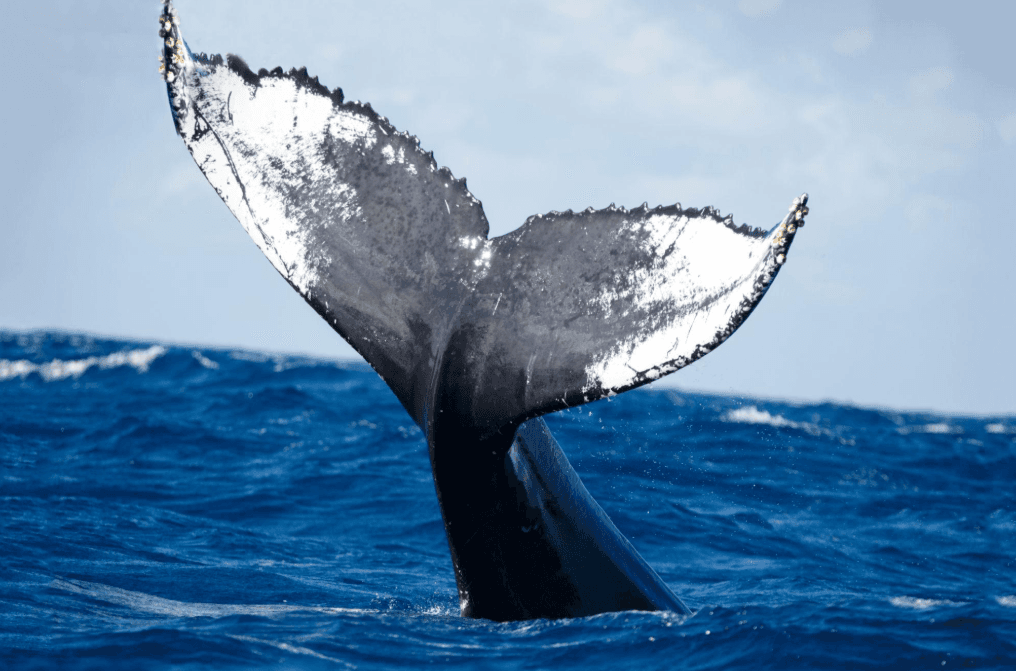
Researchers may distinguish individual whales, mother-calf pairs, and groups engaged in social interactions when reliable observations allow them to do so.
They can then examine whether different groups show different distributions of recorded activities.
For example, a study might compare the locations where mother-calf pairs are observed with the locations of groups engaged in social interactions.
Such comparisons may help researchers generate hypotheses about habitat use, but the conclusions depend on the available sample sizes and observation methods.
Scientists should not assume that all mothers and calves behave alike or that a particular group always uses the same part of the bay.
7. Tracking Changes Throughout the Breeding Season
Whale behavior and distribution can vary over time, so researchers need to consider when observations occur.
An activity recorded frequently early in the season might be less common in later weeks. Alternatively, apparent changes might result from shifts in survey routes or sea conditions.
To investigate seasonal differences, scientists can compare behavior-location records from different periods while accounting for observation effort.
Repeated sampling helps distinguish a potential seasonal pattern from a temporary event or an unevenly collected dataset.
When records are available across multiple years, researchers can also investigate whether similar patterns recur under different conditions.
8. Accounting for Missed Whales and Uneven Survey Effort
Researchers cannot observe every whale in the bay at every moment.
Some areas may be surveyed more often than others, and rough seas or poor visibility can make it harder to detect animals. Whales may also change their behavior before observers can classify it confidently.
These limitations can affect the apparent relationship between location and activity.
To reduce bias, scientists may document survey routes, observation duration, sea conditions, and periods without detections. Depending on the research design, statistical methods can help account for imperfect detection and repeated observations of the same animals.
Without these safeguards, a heavily surveyed location could appear especially important simply because researchers spend more time there.
9. Using Statistical Analysis to Test Behavioral Patterns
Once enough reliable observations have been collected, researchers can test whether activity distributions differ among locations.
The appropriate analysis depends on the study design. Scientists may compare activity proportions, model the probability of observing a behavior, or account for repeated observations of the same whale.
They should also consider uncertainty, sample size, and possible confounding factors.
If a study finds an association between location and behavior, the conclusion should reflect what the data support. Researchers may be able to identify a pattern without knowing exactly why it occurs.
This careful distinction makes the findings more useful for future studies and conservation decisions.
10. How Behavioral Research Can Support Conservation
Understanding where whale activities are observed can help scientists identify questions that deserve further investigation.
If reliable evidence indicates that a location is repeatedly used for an important activity, conservation planners may consider that information alongside vessel traffic, noise exposure, habitat characteristics, and other ecological evidence.
The findings could inform decisions about monitoring priorities and responsible whale-watching practices.
Nevertheless, behavioral maps should not be used alone to declare an area essential habitat or to establish a conservation boundary. Such decisions require an appropriate body of evidence and consideration of uncertainty.
Frequently Asked Questions
Do humpback whales perform different activities in different parts of Samaná Bay?
They may show spatial differences in observed behavior, but confirming a consistent pattern requires systematic data. Specific claims about local activity hotspots should be supported by documented research.
How do scientists know whether a whale is resting or traveling?
Researchers use defined behavioral criteria and record visible movement and activity. When an observation is ambiguous, the behavior should be classified cautiously rather than assigned a definite label.
Why do researchers use separate maps for different behaviors?
Separate maps make it easier to compare the geographic distribution of activities. Scientists can investigate whether certain behaviors are concentrated in particular areas while accounting for survey effort and detection limitations.
Can water depth influence whale behavior?
Water depth is one environmental variable researchers can investigate. Its relationship with behavior must be assessed using suitable data rather than assumed from the location alone.
How does this research help protect humpback whales?
Reliable information about behavior and habitat use can contribute to conservation planning, monitoring, and the evaluation of human activities. It works best when combined with other evidence about whale ecology and environmental pressures.
Conclusion
Scientists investigate whether humpback whales use different parts of Samaná Bay for different activities by combining behavioral classification, geographic records, repeated observations, environmental data, and statistical analysis.
These methods help researchers move beyond simple sighting counts to examine how whale behavior varies across space and time.
The most reliable conclusions come from systematic observations that account for imperfect detection and uneven survey effort. With appropriately collected data, behavioral research can improve understanding of humpback whales and contribute to informed conservation efforts in Samaná Bay.

Local explorer & expert guide in Samaná Whale Sanctuary.