Why Do Humpback Whales Swim With Their Mouths Partly Open?
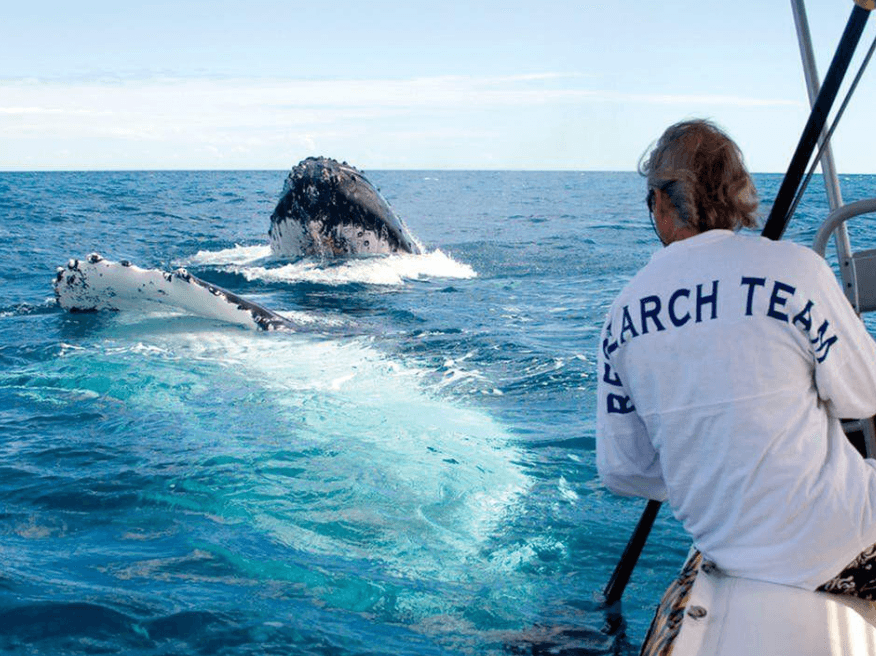
A humpback whale swimming near the surface can reveal surprising details about its body and movements. Sometimes, an observer may notice that the whale's mouth appears slightly open as it moves through the water. The sight can be intriguing, especially when the animal continues swimming rather than immediately disappearing beneath the surface.
Why does this happen Is the whale feeding, adjusting its jaw, or simply appearing that way because of the viewing angle?
The answer is not always obvious. Humpback whales have specialized mouths adapted for filter feeding, but a partly open mouth observed from a boat does not automatically establish what the whale is doing.
For visitors exploring Samaná Bay in the Dominican Republic, understanding how to interpret this visual detail can make whale watching more educational and help avoid common misconceptions.
What Does a Partly Open Mouth Look Like?
A humpback whale has a large lower jaw and a mouth designed to take in water and prey during feeding. When part of the jaw becomes visible above or just below the surface, the mouth may appear slightly open.
However, appearances can be misleading. Waves can hide the lower jaw, reflections can obscure the mouth, and the angle between the whale and the observer can make the gap between the jaws difficult to judge.
A photograph captures only one instant. It may show the mouth partly open without revealing what happened immediately before or afterward.
Before deciding what the whale is doing, consider the entire movement sequence. Is the animal swimming steadily Is there evidence of a feeding action Does the apparent opening persist, or does it disappear as the whale changes position?
These details matter more than the mouth's appearance in a single frame.
1. The Whale May Be Approaching or Engaging in Feeding Activity
Humpback whales feed by filtering prey from water using baleen plates suspended from their upper jaws. Depending on the feeding technique, a whale may open its mouth as part of a coordinated movement toward prey.
During a feeding lunge, the whale accelerates toward a prey concentration and takes in water and food. Its expandable throat grooves allow the front of its body to accommodate a large volume before water is expelled through the baleen.
A whale that appears to have its mouth partly open while swimming could be associated with feeding activity, but that visual detail alone is insufficient to confirm it.
Reliable interpretation requires additional context, such as the whale's movement, the surrounding conditions, and whether other recognizable parts of a feeding sequence are visible.
If you observe a whale moving with its mouth apparently open, describe what you see rather than automatically labeling it a feeding event.
2. The Viewing Angle May Create the Impression of an Open Mouth
The ocean's surface makes it difficult to observe a whale's body clearly. A humpback whale may be partly submerged, and the visible outline of its jaw can change as the animal turns or rises and falls with the water.
From one angle, the mouth may appear closed. From another, the same general body position may look as though there is a gap between the jaws.
Sunlight, reflections, and waves can make the distinction even harder to judge.
This is particularly important when reviewing wildlife photographs. An image may suggest that a whale was swimming with its mouth open when the apparent opening is partly caused by the angle or the water obscuring the jaw.
A clear series of images or a longer observation may provide more context than a single photograph, although neither guarantees that the animal's behavior can be identified with certainty.
3. Why Is a Humpback Whale's Jaw Adapted for Such Large Movements?
Humpback whales have anatomy suited to filter feeding. Their lower jaws are large, and the tissues beneath the mouth can expand during feeding.
Longitudinal throat grooves, often called ventral pleats, allow the throat region to stretch when the whale engulfs water and prey. Once the mouthful has been taken in, the whale expels water through its baleen, retaining suitable prey to swallow.
This feeding system differs substantially from the chewing mechanisms of animals with teeth.
The jaw's size and flexibility help explain why mouth position attracts attention during a sighting. Nevertheless, the whale's specialized anatomy does not mean that a partly open mouth during ordinary swimming has one established explanation.
To understand the behavior, anatomy must be considered alongside the animal's movement and environment.
4. Could the Whale Be Moving Its Head While Swimming?
Humpback whales change their body orientation as they move through the water. They can turn, rise, descend, and adjust their direction.
When the head changes angle relative to the water, the visible outline of the jaw can also change. The mouth may appear more open from one perspective even if the observer cannot determine whether the jaw has actually moved.
This is a reminder that whale watching is an exercise in observation, not simply identification.
If you notice a partly open mouth, look at the whale's overall posture. Is its head angled upward Is the animal turning Is the body moving smoothly along a path or changing orientation?
These clues can help describe the scene without assigning a specific motive.
5. Does a Partly Open Mouth Mean the Whale Is in Distress?
No conclusion about a whale's health should be drawn from this visual feature alone.
A partly open mouth in a photograph may reflect the animal's position, an observed movement, or limitations in visibility. It does not independently establish injury, illness, distress, or difficulty swimming.
Assessing a wild whale's condition requires appropriate expertise and more information than a brief sighting usually provides.
Visitors should avoid diagnosing animals from photographs or social media clips. If a situation appears genuinely concerning, the appropriate response is to inform the responsible guide or relevant wildlife authorities rather than approach the animal for a closer look.
Accurate wildlife reporting begins with describing what is visible and distinguishing that observation from speculation.
6. How Can You Tell Whether the Whale Is Actually Feeding?
There is no single visual clue that guarantees a feeding interpretation in every situation. Researchers consider combinations of behavior and environmental context.
For example, a feeding lunge is a recognizable movement pattern involving acceleration toward prey and a substantial mouth opening. Other feeding techniques may involve different movements and may be more difficult to identify from the surface.
A partly open mouth without these supporting details is not enough to confirm feeding.
During a whale-watching excursion, you can look for the sequence of events, note whether the whale repeats a particular movement, and listen to your guide's explanation. Even then, the most accurate conclusion may be that the behavior could not be identified confidently.
Recognizing uncertainty is an important part of responsible wildlife observation.
7. What Should Whale Watchers Record During the Sighting?
If you want to understand a humpback whale's behavior, pay attention to more than its mouth.
Useful details include:
- Swimming direction: Was the whale moving steadily or changing course?
- Body posture: Was the head angled upward, downward, or approximately level?
- Duration: Did the mouth appear partly open for an instant or across several observations?
- Surface conditions: Were waves or reflections obscuring the jaw?
- Other movements: Did the whale change speed, turn, or perform a recognizable feeding action?
- Nearby whales: Were other animals present, and could their movements provide additional context?
You do not need to make a scientific diagnosis. A simple, accurate description of what happened is enough to make your observation useful.
For photographers, recording the surrounding context can also make a wildlife image more informative than a tightly cropped picture of the mouth alone.
8. Why Is It Important Not to Confuse This With Surface Feeding?
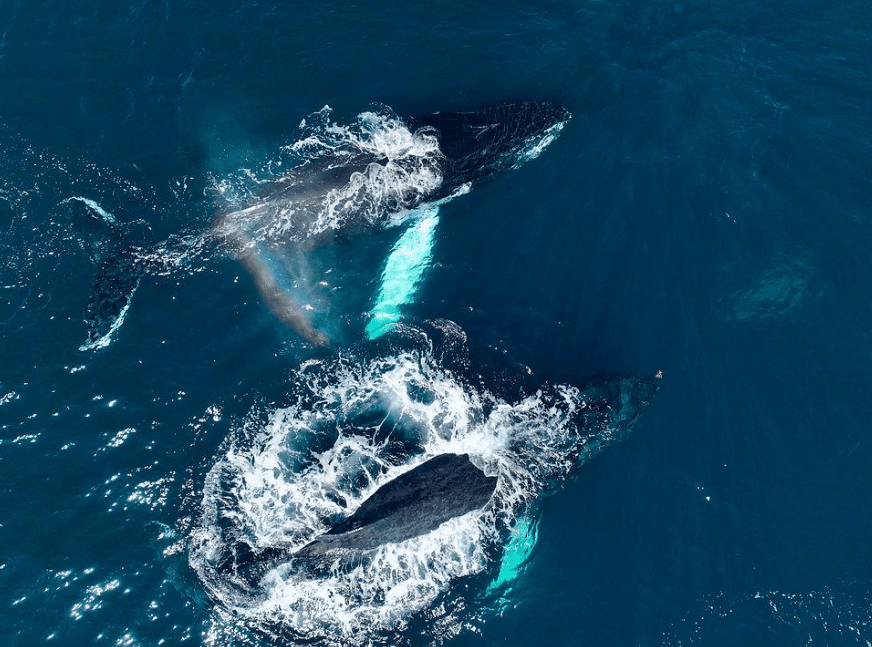
Surface feeding is a broad description of feeding activity that takes place near the water's surface. A whale feeding near the surface may display recognizable movements associated with taking in prey.
However, a whale swimming near the surface with its mouth apparently partly open is not automatically surface feeding.
The distinction matters because wildlife content can easily turn an uncertain observation into a misleading claim. A photograph with a visible jaw may be striking, but it cannot always establish whether prey was present or whether the whale was engaged in feeding.
If you share your experience online, use captions that match the available evidence. For example, “A humpback whale swimming near the surface with its mouth partly visible” is more cautious than declaring that the whale was feeding.
This approach helps readers understand what was actually observed.
9. Can You Photograph This Behavior During Whale Watching in Samaná?
You may have an opportunity to photograph a humpback whale's head or jaw during a surface encounter, but no particular mouth position is guaranteed.
To improve your chances of documenting what you see:
Watch the whole animal. The whale's body movement may help explain why the jaw looks different.
Leave room in the frame. A wider image can include the whale's head, body, and surrounding water.
Use a short sequence when practical. Multiple frames may show whether the apparent opening changes as the whale moves.
Consider the light. Glare and reflections can obscure the jaw, particularly when the whale is partly submerged.
Follow the crew's guidance. Remain in a safe position and do not encourage a boat to approach more closely than permitted.
A photograph is most useful when its caption describes the visible event accurately. You do not need to assign a definite purpose to every movement to make the image interesting.
10. What Can Visitors Expect From Whale Watching in Samaná Bay?
Samaná Bay is a well-known seasonal destination for observing humpback whales in the Dominican Republic. During the broader winter and early-spring whale-watching period, visitors may see whales surfacing, breathing, swimming, or engaging in a variety of natural behaviors.
The behavior of each whale is unpredictable. One encounter may offer a clear view of the animal's head, while another may provide only a glimpse of its back or tail.
A partly open mouth is not a standard feature of every sighting and should not be promised as part of a tour.
Before booking, review current seasonal information and check the actual details of the excursion. Choose a responsible operator that follows applicable wildlife-viewing rules and allows visitors to observe without interfering with the whales.
Responsible Whale Watching
If you observe a humpback whale swimming with its mouth apparently partly open, let the animal continue naturally. Do not ask the captain to pursue it or move closer to obtain a better view.
Responsible whale watching means respecting wildlife regulations, following the crew's instructions, and avoiding actions intended to provoke a reaction.
Keep these principles in mind:
- Observe from a safe and permitted distance.
- Never attempt to touch, feed, or attract a whale.
- Avoid interpreting a single body position as proof of feeding or distress.
- Photograph from a safe position on the boat.
- Allow the whale to change direction or leave the area without pursuit.
Respectful observation gives visitors the opportunity to learn while helping protect the animals and their habitat.
Frequently Asked Questions
Why might a humpback whale swim with its mouth partly open?
The appearance may be associated with feeding-related activity, a change in body position, or the viewing angle. A partly open mouth alone does not establish the cause.
Does a partly open mouth mean a humpback whale is feeding?
Not necessarily. Feeding must be interpreted from the broader movement pattern and available evidence rather than the mouth position alone.
Can waves make a whale's mouth look open?
Yes. Reflections, waves, partial submersion, and viewing angles can change the visible outline of the jaw.
Does an open mouth indicate that a whale is sick?
No. The mouth's appearance alone is insufficient to assess a whale's health. Avoid diagnosing wildlife from a brief sighting.
What is the difference between an open-mouth sighting and a feeding lunge?
An open-mouth sighting describes a visible position. A feeding lunge is a broader action involving acceleration toward prey and engulfment of water and food.
Can I see this behavior on a Samaná whale-watching tour?
It is possible to observe a whale's mouth or jaw during a surface encounter, but the behavior is unpredictable and is not guaranteed on any excursion.
Plan Your Samaná Whale-Watching Experience
A humpback whale swimming with its mouth partly open can raise interesting questions about anatomy, movement, and feeding. The key is to recognize that the visible position is only one part of the encounter.
If you are planning a trip to the Dominican Republic, explore available Samaná whale-watching excursions and verify current tour details before booking. Choose an operator that prioritizes responsible wildlife observation and provides clear information about the experience.
Suggested call to action: Explore Samaná whale-watching tours and discover the seasonal presence of humpback whales in the Dominican Republic.
Final Takeaway
A humpback whale that appears to swim with its mouth partly open is displaying a visual feature that needs context before it can be interpreted. Feeding is one possible explanation in some circumstances, but the mouth position alone does not prove it. Observe the complete sequence, describe what you see accurately, and give the whale space to move naturally.

Local explorer & expert guide in Samaná Whale Sanctuary.