Why Do Humpback Whales Sometimes Pause Briefly at the Surface Before Swimming Again?
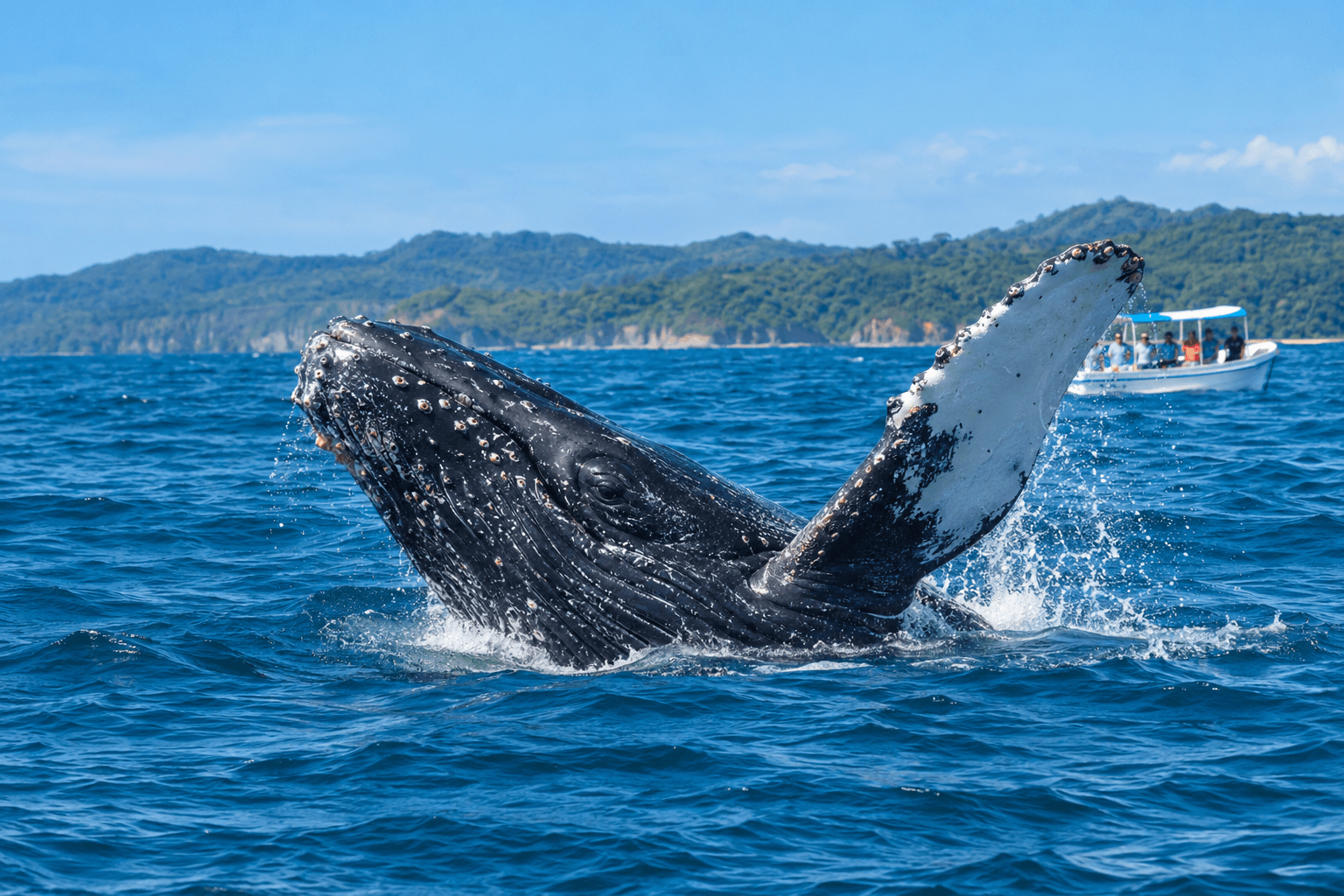
During a whale-watching trip in Samaná Bay, Dominican Republic, visitors may see a humpback whale rise to the surface, remain visible for a short time, and then continue moving. The whale might appear almost still, with only its back or a small part of its body showing above the water.
This can make observers wonder whether the whale is resting, breathing, watching its surroundings, or preparing to dive.
The important detail is that a whale appearing motionless from a boat does not necessarily mean it has stopped moving underwater. Its body may be drifting, adjusting position, or moving in ways that are difficult to see from the surface. A brief pause is an observation, not a complete explanation of what the animal is doing.
Understanding this difference helps whale watchers appreciate small details that might otherwise be overlooked. It also encourages visitors to observe the whale without assigning an unsupported meaning to every movement.
What Does a Pause at the Surface Look Like?
A surface pause is a period when a whale appears to maintain a relatively stable position or shows little obvious forward movement while visible above the water.
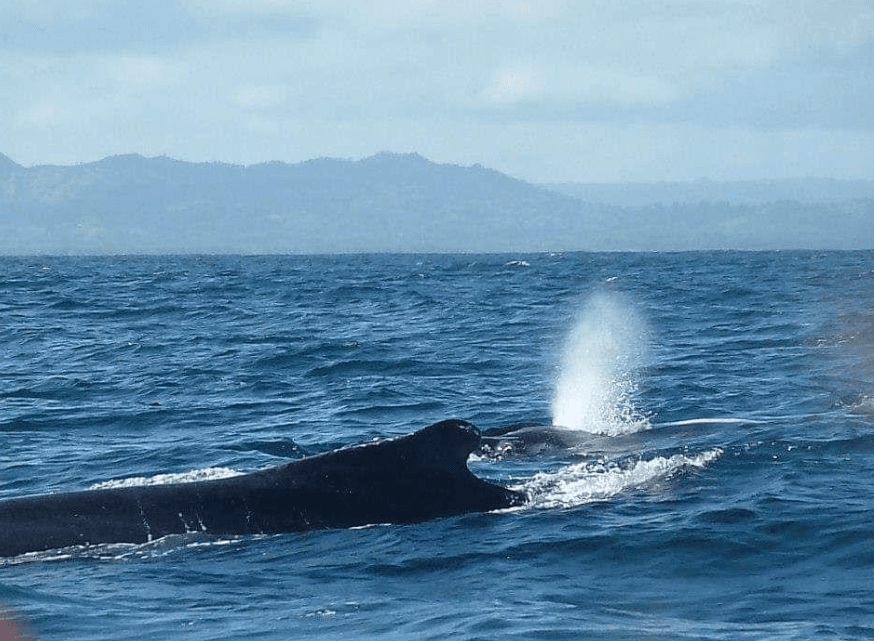
The whale’s back may remain near the surface, its body may rise and fall gently with the water, or it may stay in roughly the same visible area before moving again. Sometimes, only a small portion of the animal can be seen, making the pause difficult to distinguish from a moment when the whale is simply hidden by waves.
This is a useful descriptive term rather than a precise scientific diagnosis. Unless the animal’s movement is measured carefully, an observer cannot know whether it has completely stopped, slowed down, or continued moving beneath the surface.
The difference matters because a whale’s visible position provides only a partial picture of its underwater behavior.
Why Might a Humpback Whale Appear to Pause?
Several explanations may be possible, depending on the circumstances. A brief pause alone does not identify which explanation applies.
1. Remaining at the Surface to Breathe
Humpback whales are air-breathing mammals. They must surface periodically to breathe, and their visible behavior may include a short period near the waterline.
During this time, the whale may appear to move very little before continuing along its route or submerging again. The length and appearance of a surface visit can vary between observations.
However, not every apparent pause should be described as a breathing break unless the behavior supports that description. The whale may be partly hidden, and its position can change subtly while its back remains visible.
A surface observation also cannot establish whether the whale has completed a particular breathing sequence or how long it will remain visible.
2. Moving Slowly While Remaining Near the Same Area
A whale may travel slowly enough that its position appears almost unchanged to people on a boat. Gentle movement can be difficult to detect when the animal is large and only a small part of its body is visible.
The whale might also be moving in a direction that creates little obvious change from the observer’s viewpoint.
For example, movement toward or away from the boat can look different from movement across the field of view. Without knowing the whale’s distance and direction, observers should avoid concluding that it has stopped completely.
3. Adjusting Its Position Before Moving Again
A whale’s body does not have to follow a perfectly straight route. It may adjust its orientation or position while moving through the water.
From above, a small change in posture can be hard to notice. The whale may appear stationary until its back shifts, its body angle changes, or it begins traveling in a more visible direction.
These adjustments are one possible explanation for an apparent pause, but they should not be assumed in every encounter. A careful description records the visible change without claiming to know the reason for it.
4. Remaining Near Another Whale
If more than one humpback whale is present, an apparent pause may occur while the animals remain in the same general area.
One whale may be visible while another is submerged. Their relative positions can change even when the surface view looks quiet.
The presence of a nearby whale does not automatically mean the animals are resting together, communicating, courting, or engaging in another specific interaction. Those interpretations require additional behavioral evidence.
For visitors, the most useful approach is to note whether another whale is visible and describe what each animal does next.
5. Appearing Still Because of Waves or Viewing Conditions
Sometimes, the apparent pause is partly a result of what the observer can see.
Waves may obscure the whale’s back, while changing light can make subtle movements harder to distinguish. If the boat is also drifting, the whale’s position relative to the observer may appear more stable than it really is.
A whale can therefore seem stationary even when it is moving gradually beneath or along the surface.
This is a reminder that whale watching involves interpretation as well as observation. The view from a boat is valuable, but it does not reveal every movement occurring underwater.
Does a Surface Pause Mean a Whale Is Resting?
Not necessarily.
Rest is a specific interpretation of an animal’s state, and a short period of limited visible movement does not establish that a whale is resting. The animal may be breathing, moving slowly, adjusting its position, or simply appearing still because of the viewing angle.
A whale’s actual activity cannot reliably be identified from a single brief pause without additional evidence.
For that reason, it is better to say that a whale “appeared nearly motionless at the surface” than to state that it was definitely resting. This careful wording communicates the observation while leaving room for uncertainty.
It also avoids confusing a quiet-looking moment with a confirmed behavioral state.
How Is a Surface Pause Different From a Dive?
A surface pause describes an apparent period of limited movement while the whale remains visible near the waterline. A dive involves the whale submerging beneath the surface.
The two events may occur in sequence. A whale may appear nearly still before disappearing underwater, or it may continue moving without an obvious pause before submerging.
However, observers should not assume that every pause is preparation for a dive. The whale might remain visible or resume swimming along the surface instead.
The most reliable way to describe an encounter is to record the sequence: what was visible, how long the apparent pause lasted, and whether the whale subsequently moved away, submerged, or remained in view.
Can You Tell What a Whale Will Do After Pausing?
A brief pause does not reliably predict the whale’s next movement.
The animal might continue swimming, change direction, submerge, or remain near the surface. A particular sequence may look familiar to an experienced guide, but individual observations do not guarantee what will happen next.
Visitors should avoid treating a pause as a signal that a dive or another dramatic behavior is certain to occur.
Instead, remain attentive and watch for observable changes in body position, direction, and visibility. This approach makes the encounter more informative without turning uncertain predictions into facts.
How to Observe a Surface Pause During Whale Watching in Samaná Bay
If a humpback whale appears to pause during your excursion, a few simple habits can help you understand what you are seeing.
Watch the whole visible sequence
Notice what the whale was doing before the apparent pause and what happens afterward. A short sequence gives more context than a single photograph.
Look for subtle changes in position
Pay attention to the visible back, the direction the body faces, and any gradual change in the distance between the whale and the boat. Avoid assuming that a lack of obvious movement means the whale is completely still.
Consider the sea conditions
Waves, glare, and changing visibility can make small movements difficult to identify. What looks like a pause may partly reflect a temporary loss of visual detail.
Avoid guessing the whale’s intention
A quiet surface appearance does not prove that the whale is resting, waiting, or responding to people. Describe the action first and leave its cause uncertain when the evidence is limited.
Follow responsible viewing practices
Listen to the guide and follow the operator’s instructions. Do not encourage the boat to crowd or chase the animal just because it appears to be staying in one place.
Responsible whale watching allows visitors to observe natural behavior without pressuring whales to remain near a vessel.
What Can Photographs Reveal About a Surface Pause?
Photographs can help document what was visible during an encounter. A sequence of images may show whether the whale’s position changed, whether more of its body appeared above the surface, or whether it eventually submerged.
However, a single still photograph cannot establish how long a pause lasted or whether the whale was moving slowly underwater. A photograph also cannot reveal the animal’s intention.
For more useful documentation, photographers can keep a brief written note about the sequence and the viewing conditions. Captions should describe visible actions rather than claim a definite explanation.
For example, “A humpback whale remained nearly stationary at the surface before submerging” is a more defensible caption than “A resting whale prepared to dive,” unless the latter interpretation is supported by appropriate evidence.
What Researchers Can Learn From Surface Pauses
Researchers can study whale behavior by recording observable events and comparing them across encounters. Depending on the research question, observations may include the duration of visible surface activity, changes in position, surfacing sequences, the presence of other whales, and environmental conditions.
Video recordings can help reviewers examine small movements that may be difficult to see in real time. Other research methods may be needed to determine what the whale is doing underwater.
A key distinction is that documenting an apparent pause does not automatically explain its function. Repeated observations and suitable evidence are needed before researchers can confidently distinguish between possible explanations.
Casual whale watchers can apply the same principle: accurate observations are valuable even when the reason for a behavior remains unknown.
Is a Brief Pause a Reason to Worry About a Whale?
A short period of limited visible movement is not, by itself, evidence of distress or illness.
Wildlife assessment requires more than one surface observation. The animal may simply be moving slowly, remaining near the surface, or appearing still because of the viewing conditions.
Visitors should not attempt to diagnose the whale based on a brief pause. If a guide or qualified wildlife professional identifies a concern, follow their instructions and the applicable reporting procedures rather than approaching the animal to investigate.
The safest approach is to observe respectfully and allow trained professionals to evaluate situations that warrant further attention.
Frequently Asked Questions
Why do humpback whales sometimes appear motionless at the surface?
They may be moving slowly, remaining near the surface to breathe, adjusting their position, or appearing still because of waves and viewing angles. A brief observation does not establish one definite cause.
Are humpback whales sleeping when they pause at the surface?
A surface pause alone cannot establish that a whale is sleeping. Determining the animal’s state requires evidence beyond a short period of limited visible movement.
Does a surface pause mean a whale is about to dive?
Not always. A whale may submerge after a pause, but it may also resume swimming or remain near the surface. The next movement cannot be guaranteed.
How long do humpback whales pause at the surface?
There is no single duration that applies to every visible pause. What observers perceive depends on the whale’s behavior, visibility, distance, and the definition of a pause being used.
Can I see this behavior during whale watching in Samaná Bay?
It is possible to encounter whales that appear to pause near the surface, but no particular behavior is guaranteed on a whale-watching trip. Sightings and viewing conditions vary.
Is it useful to photograph a whale during a pause?
Yes. Photographs can document the whale’s visible position, especially when several images capture a sequence. They should not be treated as proof of the whale’s intention or exact underwater activity.
What should I do when a whale pauses near the boat?
Remain attentive, follow the guide’s instructions, and give the whale space. Avoid assuming that the animal is inviting a closer approach or that a particular behavior will happen next.
Conclusion: A Quiet Moment Can Still Be Worth Observing
When a humpback whale appears to pause briefly at the surface, the moment can offer visitor

Local explorer & expert guide in Samaná Whale Sanctuary.