How to Identify a Humpback Whale by Its Dorsal Fin
When a whale surfaces in Samaná Bay, the first thing you notice may be a dark shape moving through the water. A moment later, part of its back appears, followed by a small fin before the animal dives again.
That fin, located on the whale's back, is called the dorsal fin. Although it is much smaller than the humpback whale's enormous pectoral fins, it can provide useful clues for identifying the species.
Learning to recognize a humpback whale's dorsal fin can make a whale-watching excursion in the Dominican Republic more engaging. It encourages visitors to look carefully at the animal's overall shape rather than relying on a single dramatic movement.
However, the dorsal fin alone is not always enough to identify a whale confidently. The most reliable observations combine several visible features, including the shape of the back, the head, the pectoral fins, and, when visible, the tail flukes.
What Is a Humpback Whale's Dorsal Fin?
The dorsal fin is the fin-like structure located along the upper surface of a whale's body, toward the rear portion of its back.
Unlike the horizontal tail flukes, which provide much of the power for swimming, the dorsal fin does not function as the whale's main source of propulsion. Its role is associated with stability and hydrodynamics as the animal moves through the water.
Humpback whales have relatively small dorsal fins compared with their large bodies. The fin sits on a raised area of the back, which may be especially noticeable when the whale arches before diving.
Because humpback whales often surface briefly, the dorsal fin may be one of the few features visible during a short encounter.
What Does a Humpback Whale's Dorsal Fin Look Like?
A humpback whale's dorsal fin is generally small and can have a low, rounded, triangular, or somewhat irregular appearance. Its exact outline varies among individuals.
Some fins appear more prominent than others. In certain whales, the fin may look like a small bump on the back, while in others its shape is easier to distinguish against the water.
The surrounding body contour is also important. Humpback whales often show a noticeable raised region near the dorsal fin, especially as they change body position at the surface.
Water conditions, viewing distance, lighting, and the angle of observation can all affect what you see. A fin that looks sharply pointed in one photograph may appear rounded from another angle.
For this reason, it is better to describe the fin's visible shape than to assume that a particular outline proves the whale's identity.
Why Does the Dorsal Fin Matter for Whale Identification?
The dorsal fin is one of several features that help observers recognize different whale species.
A humpback whale's small dorsal fin, combined with its broad body, distinctive head features, and very long pectoral fins, creates a recognizable overall profile.
Other whale species have different combinations of body shape and fin proportions. Some have more prominent dorsal fins, while others have very small fins or no obvious dorsal fin at all.
Nevertheless, dorsal-fin shape can overlap among species, and some individuals have damaged or unusual fins. A confident identification should take the entire animal into account.
For a casual whale watcher, the goal is not necessarily to identify every whale from a single glance. Instead, learning several features helps make observations more accurate and rewarding.
How Can You Recognize a Humpback Whale When It Surfaces?
A whale's dorsal fin is useful, but other features can provide additional clues.
1. Look at the overall body shape
Humpback whales have large, robust bodies. When a substantial section of the back appears at the surface, consider its shape alongside the dorsal fin.
Avoid making an identification from size alone, because distance and perspective can make an animal appear larger or smaller than it really is.
2. Notice the long pectoral fins
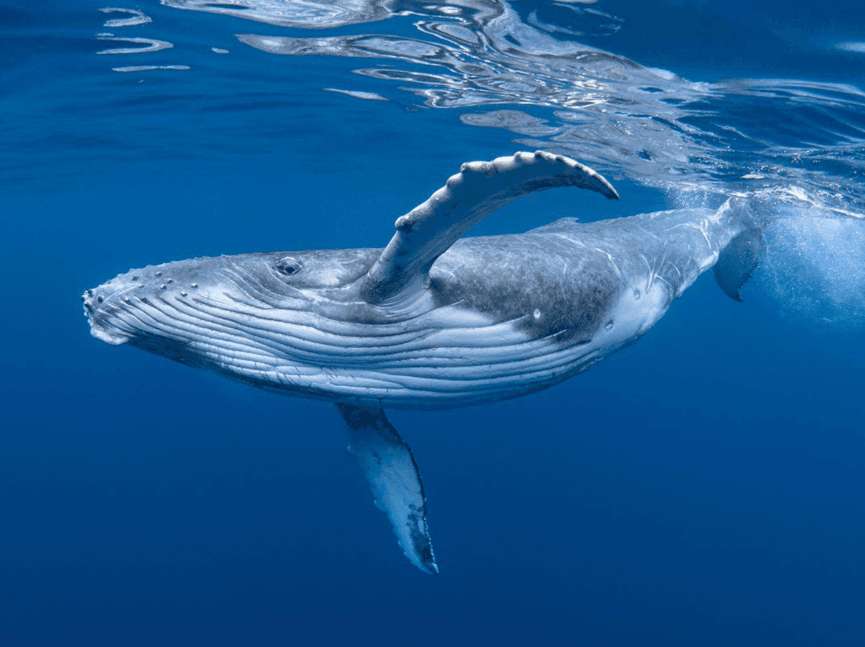
Humpback whales are particularly well known for their exceptionally long pectoral fins. If one becomes visible, it can be a helpful identification clue.
The fins are located on the sides of the body, not on the back, so they should not be confused with the dorsal fin.
3. Observe the head if it becomes visible
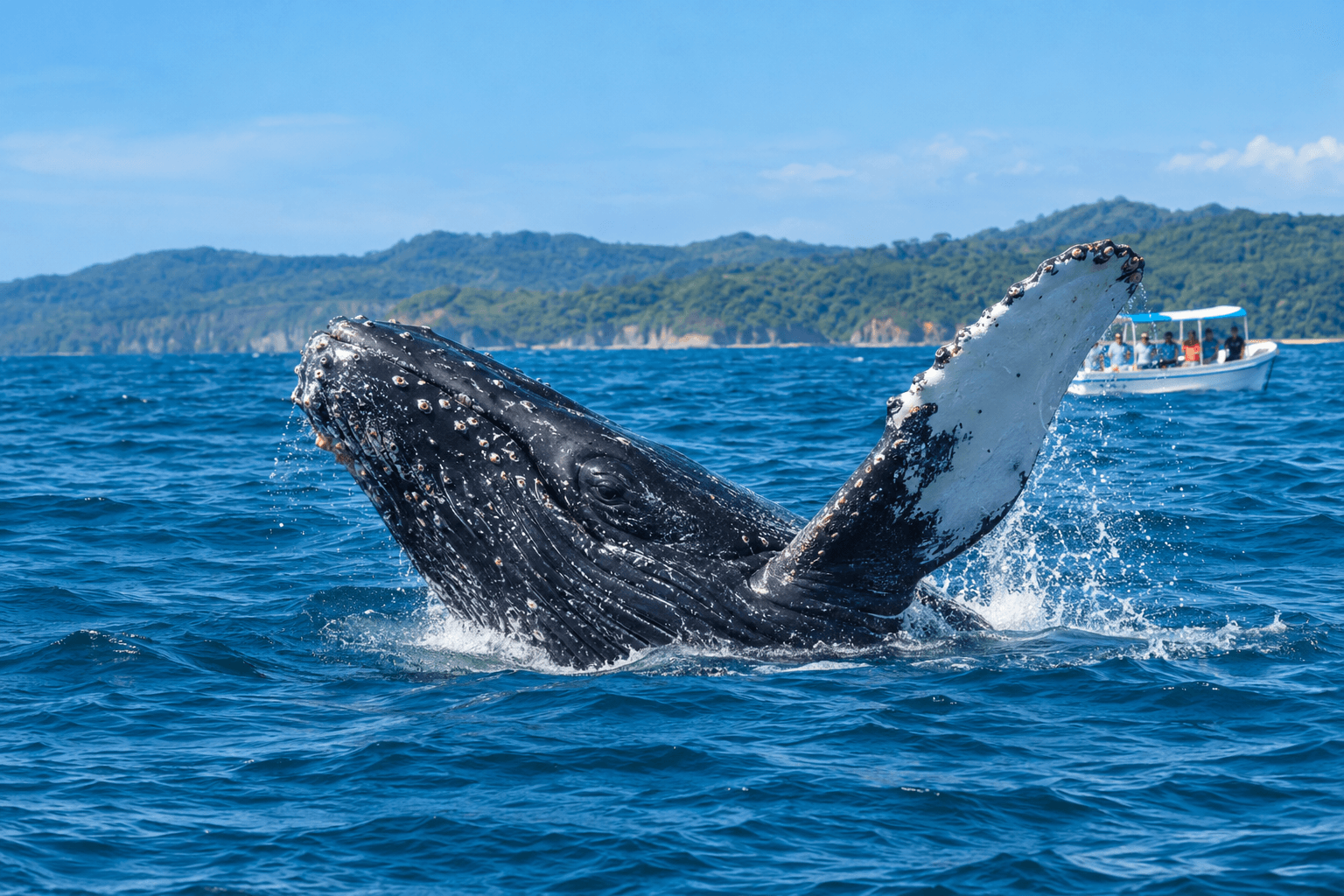
Humpback whales have distinctive bumps called tubercles along the head and lower jaw. These features can be useful when a clear view is available.
The head may not be visible during a brief surface encounter, so this clue is not always available to observers.
4. Watch the whale's overall surface profile
A whale may expose different parts of its body as it surfaces, swims, or prepares to dive. The shape of the back and the position of the dorsal fin can contribute to identification.
No single movement is a guarantee of species identity. Combine the available clues and follow the guide's explanation where possible.
Can the Dorsal Fin Identify an Individual Humpback Whale?
A dorsal fin can sometimes help distinguish individual whales, particularly when it has a distinctive shape, scar, or other visible marking. However, it is not the main feature generally used in established humpback whale photo-identification programs.
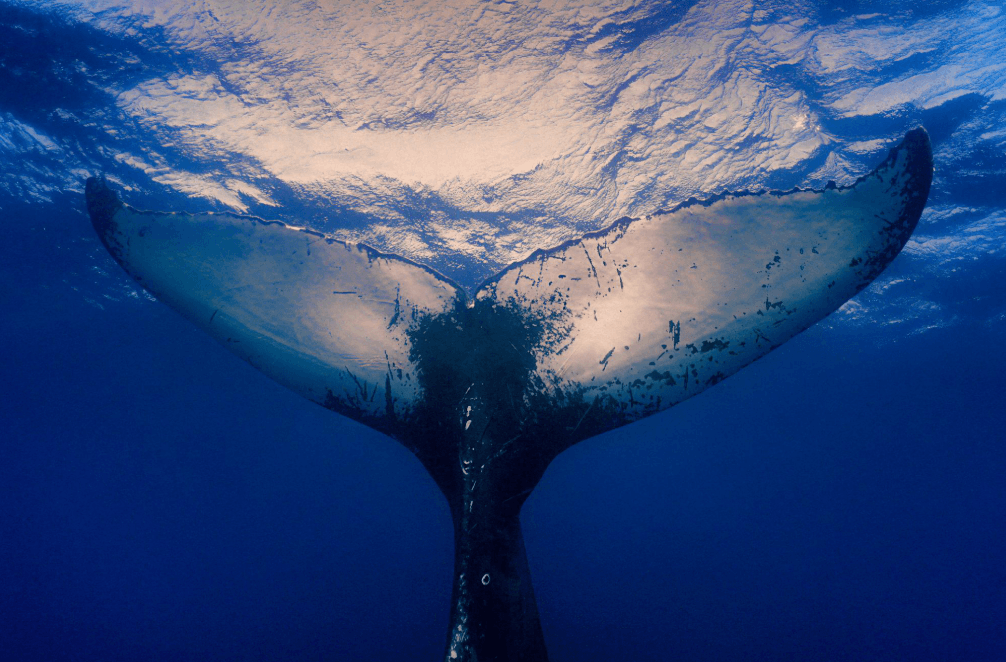
Researchers commonly use photographs of the underside of the tail flukes to identify individual humpback whales. The patterns of pigmentation, scars, and markings on the flukes can provide a recognizable individual signature.
Dorsal-fin photographs may still provide supplementary information, especially when other features are not visible.
It is important to distinguish between identifying a species and identifying an individual. Recognizing that a whale is a humpback does not mean you know which specific whale it is.
Individual identification generally requires suitable photographs, careful comparison, and access to reliable reference records.
Does a Humpback Whale's Dorsal Fin Change as It Grows?
A whale's body changes as it develops, so its proportions and appearance may differ between early life and adulthood.
In addition, the appearance of a dorsal fin can be affected by scars, injuries, or other changes to the surrounding tissue. These differences may make a fin look unusual, but an irregular shape alone does not establish the whale's age, health, or history.
It is also difficult to estimate a whale's age accurately from a brief observation of its dorsal fin. Size estimates from a boat are uncertain, and body proportions are not a substitute for scientific age data.
If you photograph a whale in Samaná, describe what you can see rather than assigning an exact age or medical explanation based on its fin.
Why Can the Dorsal Fin Be Difficult to See?
A humpback whale may expose only a small portion of its back when it surfaces. The dorsal fin can appear for just a moment before the animal moves beneath the water again.
Several factors can make identification difficult:
- Distance: A small fin may be hard to distinguish from the surrounding water.
- Waves: Moving water can obscure the outline of the fin.
- Lighting: Glare and shadows can change how the fin appears.
- Viewing angle: A fin viewed from the side may look different from one seen at an angle.
- Brief sightings: The whale may submerge before you can observe its other features.
These conditions are normal parts of wildlife observation. They do not mean that you have failed to see the whale properly.
Patience is more useful than asking a boat to chase the animal for a better view.
Can You Use Photographs to Study Humpback Whale Dorsal Fins?
Yes. Photographs can help you review visible features after an excursion and compare different views of a whale.
For the clearest results, try to capture the whale's back and dorsal fin without sacrificing awareness of the crew's instructions or the surrounding activity.
When reviewing photographs, consider:
- The fin's approximate outline.
- Its position relative to the back.
- Any visible scars or unusual markings.
- The overall shape of the animal.
- Whether the image is clear enough to support an identification.
A single blurry image may not provide enough information. Avoid treating minor differences caused by water, shadows, or camera angles as permanent anatomical differences.
If you intend to contribute photographs to a research project or whale-identification database, follow that project's instructions and provide accurate information about the sighting.
What Is the Difference Between a Dorsal Fin and a Tail Fluke?
These structures are easy to distinguish once you know where to look.
The dorsal fin is located on the upper surface of the whale's back. It is relatively small on a humpback whale and may be visible when the animal surfaces.
The tail flukes are at the end of the tail. They are broad, horizontal lobes that move up and down to help propel the whale.
When a humpback whale raises its tail high above the water before a deep dive, the underside of the flukes may become visible. That view can reveal individual pigmentation patterns used in photo-identification research.
The dorsal fin and tail flukes therefore offer different types of information. The dorsal fin can contribute to a general species identification, while the underside of the tail flukes is especially useful for recognizing individual humpback whales.
Can You See Humpback Whale Dorsal Fins in Samaná Bay?
Samaná Bay is a well-known seasonal destination for humpback whale watching in the Dominican Republic. During the winter breeding season, visitors may see whales surfacing, moving through the water, and occasionally exposing different parts of their bodies.
A dorsal fin may be visible when a whale surfaces, but the quality and duration of each sighting vary. Some encounters offer a clear view of the whale's back, while others provide only a brief glimpse.
The presence of whales and the behavior observed during a trip cannot be guaranteed. Weather, sea conditions, whale movements, and other natural factors influence the experience.
Even a short sighting can be valuable. Looking carefully at the dorsal fin, body profile, and other visible features helps visitors appreciate the differences among marine mammals.
How to Observe Whales Responsibly During Your Trip
The best way to learn about whale identification is to observe the animals without disturbing them.
Choose a tour operator that follows applicable local rules and established wildlife-viewing guidance. Follow the crew's instructions, keep the required distance, and never encourage the boat to pursue a whale that is moving away.
Binoculars or a camera with a suitable zoom may help you see details without requiring a closer approach. Remember that a whale can change direction or submerge at any time.
Responsible whale watching also means accepting uncertainty. It is better to leave an identification unresolved than to make an unsupported claim about a whale's species, age, or identity.
Plan Your Samaná Whale-Watching Experience
If you are planning to see humpback whales in Samaná Bay, check the excursion's departure location, duration, inclusions, safety arrangements, and wildlife-viewing policies before booking.
Ask the operator what educational information the guide provides and how the tour respects whale behavior. Choose a provider that sets realistic expectations rather than promising a particular sighting.
Whether you see a dorsal fin briefly or observe a whale for longer, learning to recognize the animal's features can make the experience more memorable.
Final Thoughts
A humpback whale's dorsal fin may be small compared with its enormous body, but it can still offer useful clues about the animal's identity and anatomy.
The most accurate identification combines the dorsal fin with other features, such as the whale's overall body shape, head, and exceptionally long pectoral fins. When researchers need to identify individual humpback whales, photographs of the underside of the tail flukes are generally more useful than dorsal-fin shape alone.
During your next whale-watching trip in Samaná Bay, take time to observe these details without expecting every feature to be visible.
Planning a whale-watching trip in Samaná? Explore available excursions, confirm current details directly with the operator, and choose a responsible experience that respects the whales and their natural environment.
Editorial note: Verify scientific claims and current tour details before publication. Do not promise sightings of specific whales or individual-identification results.

Local explorer & expert guide in Samaná Whale Sanctuary.