Why Do Humpback Whales Sometimes Dive Without Showing Their Tail Flukes?
During a humpback whale-watching trip in Samaná Bay, Dominican Republic, passengers often hope to see a whale lift its enormous tail above the ocean before disappearing underwater. This dramatic movement, known as a fluke-up dive, can be one of the most recognizable sights of a whale-watching excursion.
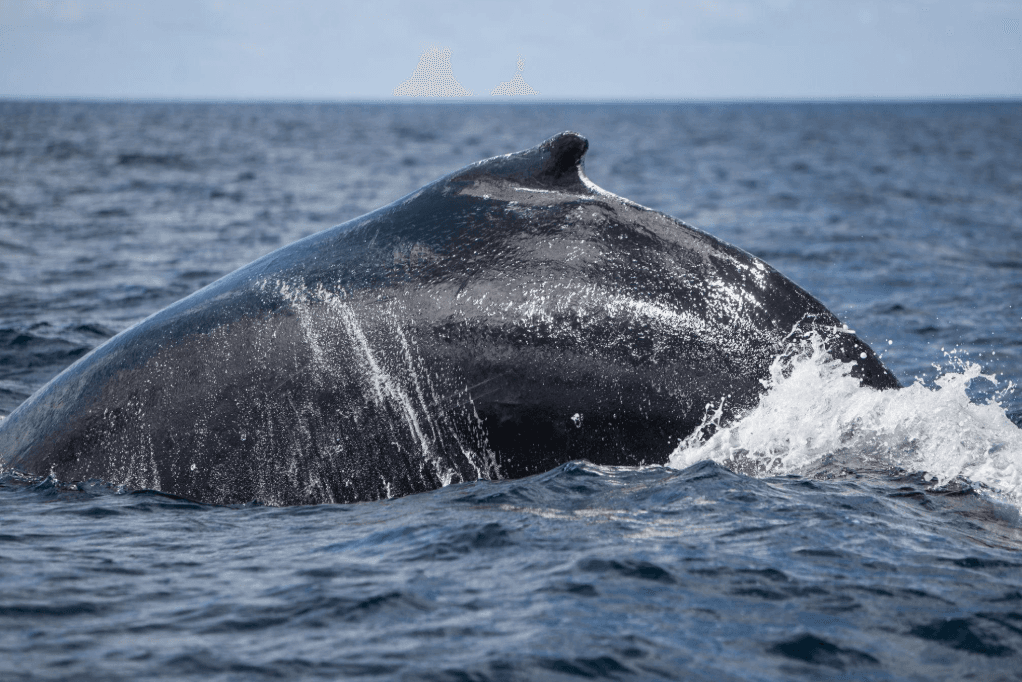
However, humpback whales do not always show their tails when they submerge. Sometimes, a whale's back gradually disappears beneath the surface, leaving no clear view of its flukes.
Why does this happen Is the whale diving differently, or does the absence of a visible tail indicate something unusual?
In many cases, it is simply a difference in how the whale moves into the water. The angle of its body, the depth and shape of its dive, and the observer's viewing position can all influence whether the tail becomes visible.
Understanding these differences helps visitors interpret whale behavior more accurately and appreciate the variety of movements they may witness during whale-watching season.
What Is a Fluke-Up Dive?
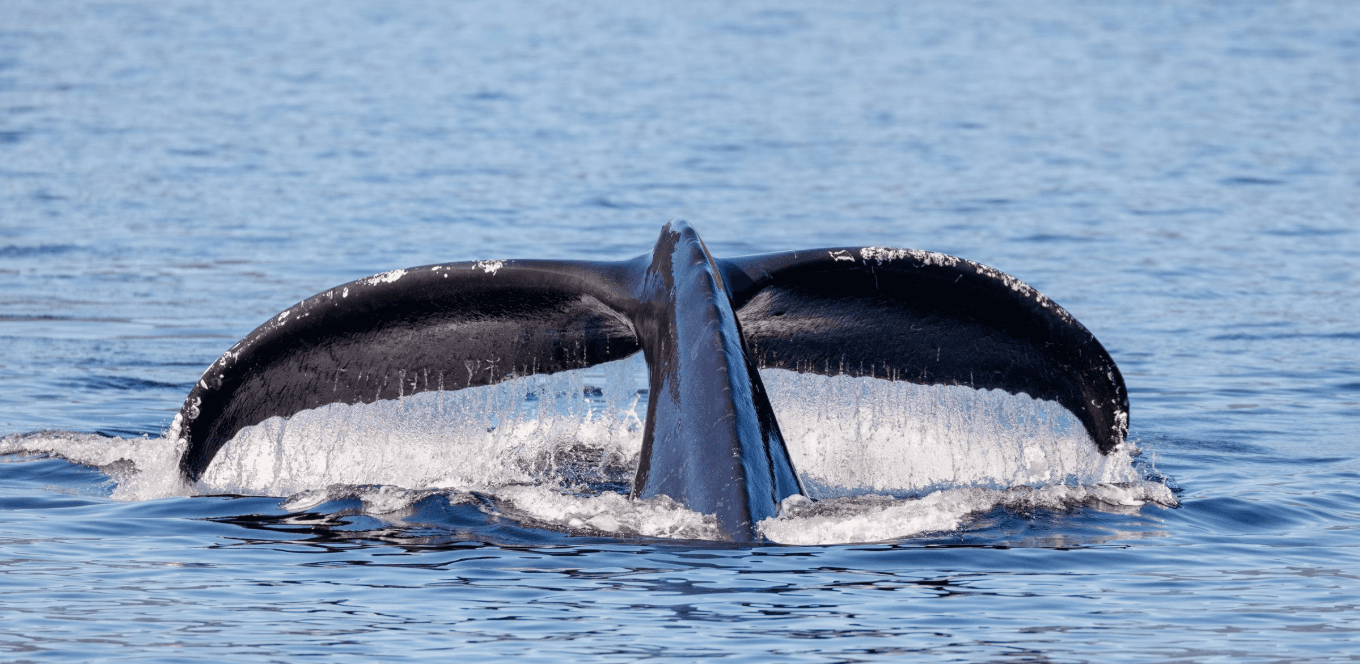
A fluke-up dive occurs when a whale raises its tail flukes above the water before submerging. The flukes are the broad, horizontal lobes at the end of a whale's tail, which help propel it through the water.
During some humpback whale dives, the animal arches its back and angles its body downward. Its tail then rises above the surface, sometimes exposing the underside of the flukes.
This movement can give observers a clear view of the tail's shape and markings. Researchers may also photograph these markings when conditions allow, because distinctive patterns can help identify individual whales.
However, a fluke-up dive is only one possible way a humpback whale enters a deeper dive. It is not a movement that must occur every time the whale submerges.
Why Do Humpback Whales Sometimes Submerge Without Raising Their Tails?
A whale can move below the surface without lifting its tail completely out of the water. The visibility of the flukes depends on the animal's body position and the movement it makes as it descends.
The whale may follow a different body angle
When a humpback whale changes depth, its body angle can vary. If it moves downward without arching in a way that raises the tail above the surface, observers may see only its back before it disappears.
The whale can still be making an ordinary dive even though the tail remains underwater.
The dive may be relatively shallow
Not every submergence involves a deep dive. A whale may descend only far enough to continue swimming underwater before surfacing again.
In such cases, its tail may never rise above the water. The animal can simply move forward and disappear beneath the surface.
The observer may have an incomplete view
A whale's body does not always move in a way that is fully visible from a boat. The viewing angle, distance, surface movement, and timing of the observation can hide the tail.
For example, a whale may begin submerging behind a wave or at an angle that makes the flukes difficult to see. Even if the tail moves upward slightly, the observer might miss the movement.
These explanations demonstrate why the absence of a visible tail should not automatically be interpreted as unusual behavior.
Does a Missing Tail Display Mean the Whale Is Not Diving Deeply?
No. A whale can make a deeper dive without clearly exposing its tail flukes to observers.
The depth reached underwater and the appearance of the tail at the surface are different aspects of a dive. The tail's visibility alone does not establish how deep the whale travels.
When a humpback whale performs a recognizable fluke-up dive, it provides a useful visual clue that the animal is beginning a dive. However, the same conclusion about dive depth cannot be drawn from the absence or presence of a tail display alone.
Determining the actual depth of a whale's dive requires additional information, such as suitable tracking or depth-recording data. Surface observations alone provide only a partial view of what happens underwater.
For whale watchers in Samaná Bay, this means that a whale disappearing without raising its tail is not necessarily making a shorter or less important dive.
How Does a Whale's Swimming Movement Influence Its Dive?
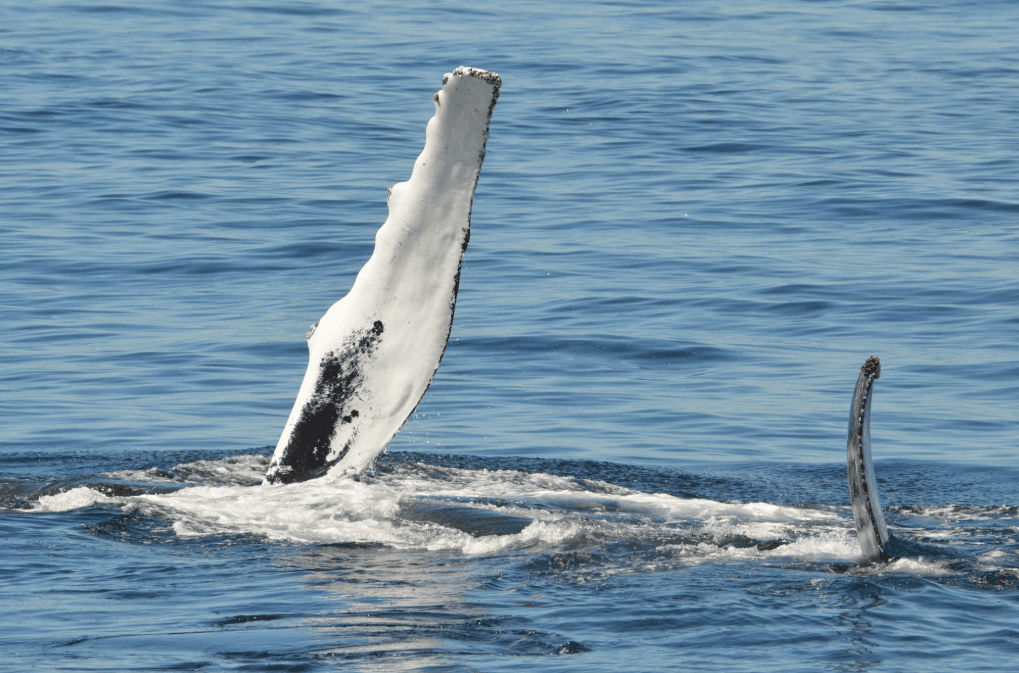
Humpback whales use their powerful tails to propel themselves through the water. Their large pectoral fins also contribute to maneuvering and controlling movement.
As a whale transitions from swimming near the surface to moving underwater, its body position and direction can change. The movement may involve a noticeable arch, a gradual descent, or a turn that alters the angle visible to observers.
The resulting appearance depends on how the whale moves at that moment.
It is important not to assume that every difference in diving movement reflects a specific purpose. A whale that submerges smoothly may be traveling, while another that arches noticeably may also be traveling. The visible movement alone may not reveal the animal's exact intention.
Scientists interpret diving behavior by considering the full sequence of observations and, when available, other evidence rather than assigning a definite explanation to a single movement.
Can the Whale's Activity Affect Whether Its Tail Appears?
The context of a whale's activity can influence the movements observers see, although the relationship is not always straightforward.
A humpback whale may travel, interact with another whale, or change its direction while moving through the water. Different activities can involve different body movements and dive patterns.
For example, a whale engaged in surface activity may remain visible for a period before submerging. A whale that is moving steadily through an area may disappear without producing a dramatic tail display.
However, observers should not use the tail display alone to determine what the whale is doing. A fluke-up dive does not automatically prove that the animal is feeding, avoiding a boat, or preparing to travel a particular distance.
The behavior must be considered alongside other observations, and some encounters will remain uncertain.
Why Is a Fluke-Up Dive Important for Whale Identification?
The underside of a humpback whale's tail can contain distinctive pigmentation patterns, scars, and markings. Researchers may use photographs of these features to identify individual whales.
When a whale raises its flukes fully and the underside is clearly visible, it may provide a useful photographic opportunity.
A dive without a visible tail offers fewer opportunities to capture these particular markings. Researchers may still be able to photograph other features, depending on the angle and image quality, but the available evidence can be more limited.
This does not mean that a whale cannot be identified without a tail photograph. Individual identification may sometimes be supported by other distinctive characteristics or existing records. The reliability of any identification depends on the evidence available.
It is also important to distinguish between recognizing a dive and identifying the animal. Observing a whale submerge without showing its tail is a behavioral observation, not proof of which individual whale was seen.
What Can Whale-Watching Guides Learn From a Dive?
A guide may use the whale's visible movements to decide where to continue watching. If a whale begins to submerge, its body angle and direction may provide clues about the general area in which it was last moving.
However, the next surfacing location cannot be predicted with certainty from the dive alone.
A whale may change direction underwater, and the vessel may also move while passengers wait. Guides must therefore remain attentive and flexible rather than assuming the animal will return to the surface at a particular point.
For visitors, watching the entire sequence can be more informative than waiting only for the tail to appear. The curve of the back, the movement of the dorsal fin, and the gradual disappearance of the body can all reveal different aspects of the dive.
The best observations come from patience and careful attention rather than expecting every whale to perform the same movement.
How Can Visitors Tell the Difference Between a Fluke-Up Dive and a Regular Submergence?
The most obvious difference is whether the tail flukes rise clearly above the water.
During a recognizable fluke-up dive, the whale often arches its back and raises its tail, exposing the flukes before disappearing. The exact appearance can vary between observations.
During a regular submergence without a visible fluke display, the whale's back may gradually sink below the surface while its tail remains underwater or out of view.
Visitors should remember that the distinction is based on what they can observe. A tail may be hidden by waves, distance, or the angle of the boat, so not every apparent non-fluke dive can be classified with complete certainty.
A guide can help explain what was visible, but there is no need to assign a special meaning to every dive.
Does the Absence of a Tail Display Indicate Stress?
Not by itself.
A humpback whale submerging without showing its tail is not sufficient evidence that it is stressed, frightened, or responding to a boat. The movement may simply reflect the way the animal is descending or the observer's limited view.
Assessing a possible response to disturbance requires broader evidence, including the whale's behavior over time and the circumstances of the encounter.
Responsible whale watching should not depend on proving whether an animal is disturbed. Operators should follow applicable rules and maintain appropriate viewing practices regardless of whether a whale displays an obvious reaction.
Visitors should avoid pressuring a boat crew to pursue an animal simply to obtain a tail photograph.
What Should Photographers Do When a Whale Dives Without Showing Its Tail?
Wildlife photographers cannot control how a whale surfaces or submerges. A good approach is to prepare for different types of movement rather than concentrating exclusively on tail photographs.
Photographers can observe the whale's overall body position, follow the guide's directions, and be ready for a possible reappearance. A photograph of the animal's back or a natural surface movement may still be a valuable record of the encounter.
It is also important to respect the animal's space and the crew's instructions. Getting a closer photograph is never a justification for unsafe behavior or inappropriate vessel approaches.
Photographers should avoid assuming that the whale will raise its tail on its next dive. Even when the animal has performed a fluke-up dive previously, the next submergence may look different.
Frequently Asked Questions
Do humpback whales always raise their tails before diving?
No. Humpback whales can submerge without visibly raising their tail flukes. A tail display is one possible diving movement, not a requirement for every dive.
Why do some whales show their tails while others do not?
Differences in body position, swimming movement, dive angle, and viewing conditions can influence whether the tail becomes visible. A single observation may not reveal the exact reason.
Can a humpback whale dive deeply without showing its tail?
Yes. The visible tail display does not reliably establish how deep a whale travels. Additional tracking or depth data are needed to measure the dive directly.
Is a fluke-up dive a sign that a whale is preparing to leave Samaná Bay?
Not necessarily. A tail display can indicate that a whale is submerging, but it does not prove that the animal is leaving the bay or traveling a particular distance.
Can researchers identify a whale from its tail?
Photographs of distinctive tail-fluke markings can help researchers identify individual humpback whales. The reliability of the identification depends on the clarity of the image and the available comparison records.
Should visitors wait for a tail display to consider a whale sighting successful?
No. Humpback whales display a variety of natural movements, and a tail lift is only one possible sight. Observing the animal's back, breathing, or other surface behavior can also be a meaningful experience.
Conclusion
Humpback whales sometimes dive without showing their tail flukes because their bodies can descend at different angles and not every submergence produces a visible tail lift. Viewing conditions can also prevent observers from seeing the complete movement.
A fluke-up dive is a useful visual sign, but its absence does not prove that a whale is diving shallowly, behaving unusually, or reacting to a boat.
During whale-watching trips in Samaná Bay, paying attention to the entire movement sequence helps visitors understand what they see. Every dive may look a little different, and that variety is part of observing wild humpback whales in their natural environment.

Local explorer & expert guide in Samaná Whale Sanctuary.