What Happens When Humpback Whales Dive Deep A Samaná Guide
A humpback whale appears at the surface of Samaná Bay, takes a few breaths, and then slowly disappears beneath the water. Within moments, its enormous body is hidden from view. The ocean looks empty again, leaving visitors wondering where the whale has gone and how long it will stay underwater.
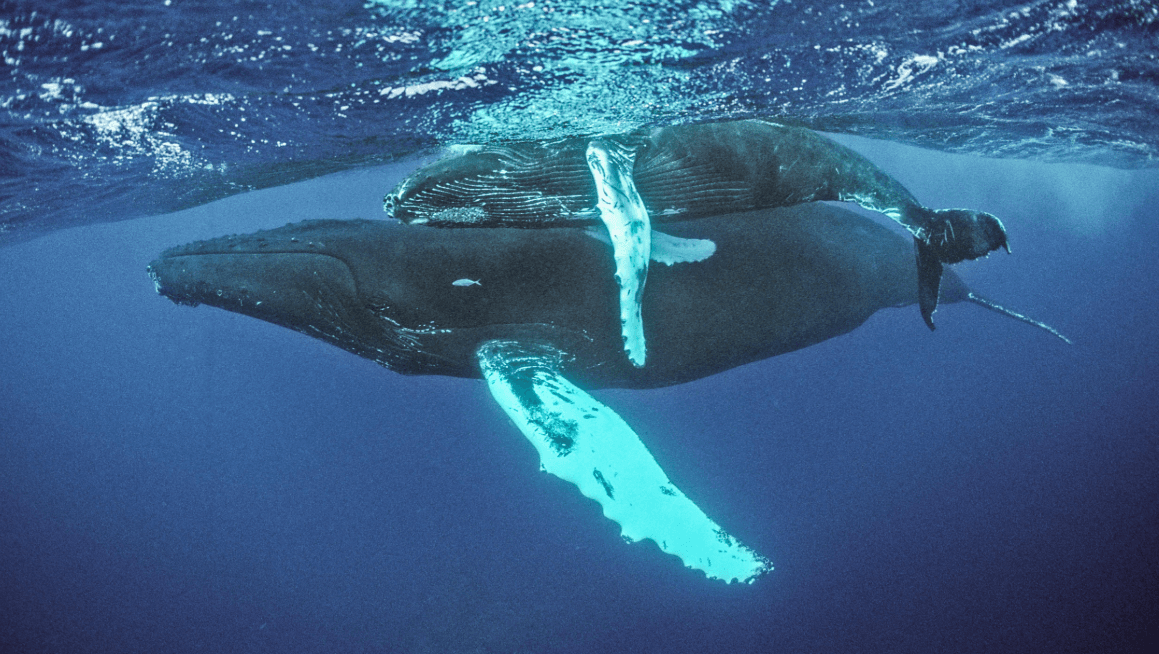
Diving is an essential part of humpback whale life. These marine mammals move between the surface and the underwater world to travel, explore their surroundings, interact with other whales, and search for food in appropriate feeding habitats.
For visitors enjoying whale watching in Samaná, understanding whale dives helps explain why sightings can be brief and why patience is such an important part of a responsible wildlife excursion.
How Deep Can Humpback Whales Dive?
Humpback whales can dive hundreds of metres underwater under suitable conditions. Their actual dive depth depends on their activity, location, and individual circumstances.
A whale travelling through a breeding area may behave differently from one feeding in colder northern waters. Humpbacks are known for feeding on prey such as krill and small fish in their feeding grounds, where underwater dives can be part of their search for food.
There is no single depth that describes every humpback whale dive. Some dives are relatively shallow, while others take the animal considerably deeper.
It is also important to distinguish between a species' diving capability and what a whale is likely to do during a particular whale-watching trip. A visitor watching whales in Samaná Bay cannot determine the depth of a hidden whale simply by observing the surface.
Why Do Humpback Whales Disappear Underwater?
When a humpback whale dives, it may be doing several different things. The reason for a particular dive is not always obvious to people watching from a boat.
1. Travelling Through the Water
Whales can move underwater instead of remaining at the surface. Diving may allow a humpback to continue travelling while remaining out of sight.
The animal's direction and destination may not be clear to surface observers. A whale that disappears in one location might resurface farther away, and its exact route cannot reliably be predicted from one sighting.
2. Exploring Its Environment
The underwater environment contains changing light, sounds, water movement, and other animals. Humpback whales use their senses to navigate and respond to their surroundings.
A dive allows the whale to move through this environment, although observers cannot assume that exploration is the reason behind every descent.
3. Searching for Food
Humpback whales feed mainly in productive feeding areas where prey is available. They may dive to reach schools of small fish or concentrations of krill.
Samaná Bay is widely known as a seasonal breeding and calving area for North Atlantic humpback whales, rather than the main northern feeding habitat used during summer. Therefore, a dive observed in Samaná should not automatically be interpreted as a feeding dive.
4. Interacting With Other Whales
Humpback whales may dive as part of their movements around other individuals. They can disappear from view and later surface in another position.
However, the purpose of a dive cannot always be identified from the whale's proximity to another animal. More detailed observations are often needed to understand the context of an interaction.
How Long Can a Humpback Whale Stay Underwater?
Humpback whales can remain underwater for several minutes and, depending on their activity, considerably longer. Dive duration varies, so there is no fixed interval at which every whale must return to the surface.
A whale moving calmly may have a different dive pattern from one that is actively feeding or travelling. Individual animals also vary in their behavior.
During a whale-watching excursion, you might see a whale surface several times in succession before making a longer dive. Alternatively, the whale might disappear and remain out of sight while your guide scans the surrounding water.
The time between sightings is not necessarily a sign of distress. It can be part of the animal's normal underwater activity.
How Do Humpback Whales Manage Long Dives?
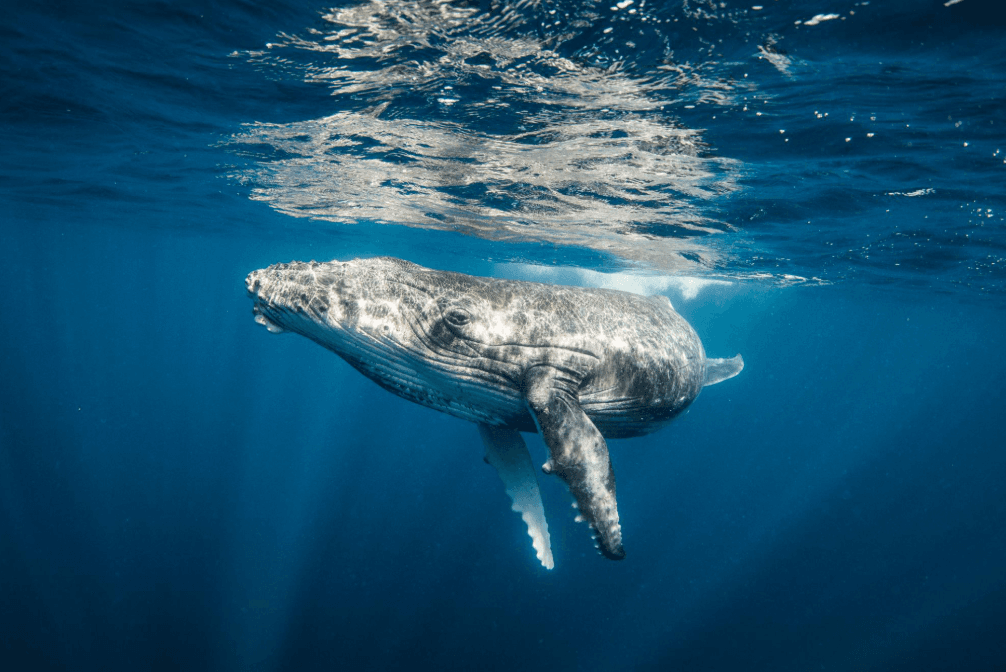
Humpback whales are mammals, but their bodies are adapted for underwater activity. Several physiological features help them manage the demands of diving.
Oxygen stored in the body: Whales carry oxygen in their blood and muscles, allowing them to remain underwater without breathing continuously.
Changes in circulation: Diving mammals can regulate blood flow in ways that help prioritize oxygen delivery to important organs during a dive.
Energy management: The energy required for a dive depends on the whale's activity, movement, and the conditions it encounters.
These adaptations help humpback whales spend time underwater before returning to the surface for air. They do not make whales fish or allow them to breathe underwater.
Why Do Humpback Whales Sometimes Raise Their Tails Before Diving?
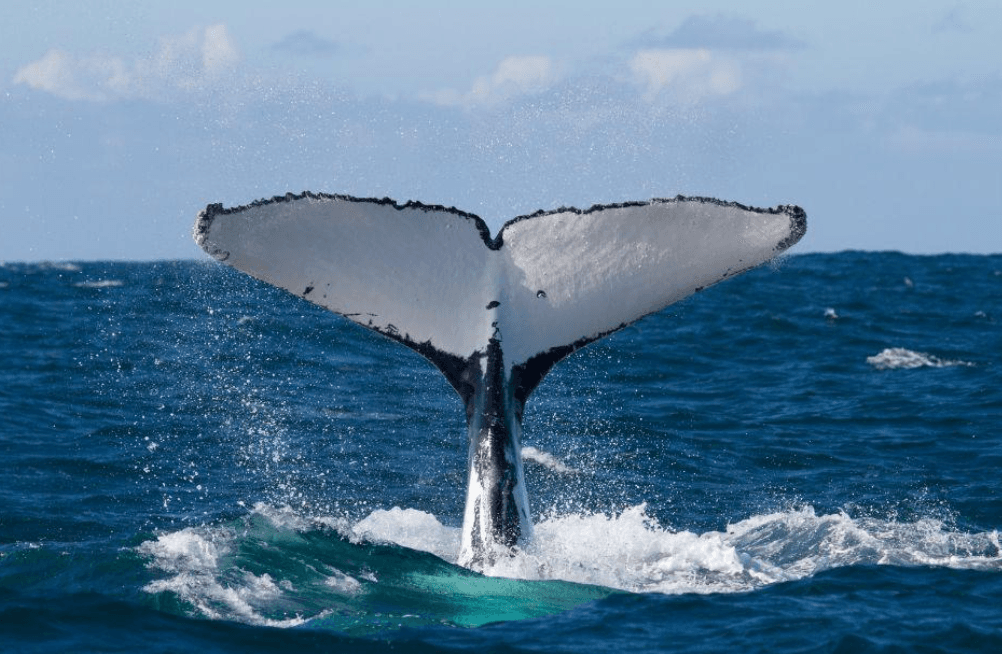
One recognizable sight during whale watching is a humpback whale lifting its broad tail flukes above the water before disappearing.
This movement can occur when a whale arches its body and begins a deeper descent. Raising the tail may be associated with the whale's body position during that dive.
However, humpbacks do not raise their tails before every dive. Some descend without displaying their flukes clearly, while others provide a striking view of the tail.
The appearance of the tail can help guides describe what is happening at the surface, but it does not reveal the whale's exact depth or how long it will remain underwater.
What Happens to a Whale's Body Pressure During a Dive?
Water pressure increases with depth. A humpback whale diving below the surface experiences greater pressure than it does at the surface.
Marine mammals have physiological adaptations that help them cope with changes in pressure while diving. The flexible structure of their respiratory system is one part of how they manage underwater conditions.
However, the details of pressure management are complex, and the effects of a dive depend on factors including depth, duration, and activity.
For visitors, the main point is that humpback whales are adapted to diving in ways that differ from humans. People should never attempt to imitate a whale's dive or enter the water near wild whales.
Can You Predict Where a Humpback Whale Will Resurface?
Not with certainty. A whale may travel underwater before returning to the surface, and its direction can be difficult to judge from a boat.
A guide may observe the whale's previous movements and scan the surrounding water for another surfacing event. Even with experience, however, there is no guarantee of knowing exactly where the whale will appear next.
When the whale disappears:
- Continue watching the water rather than assuming the sighting has ended.
- Listen to your guide's observations.
- Avoid asking the boat to chase the animal.
- Give the whale space to move naturally.
- Be prepared for the possibility that the whale may not resurface within your immediate field of view.
Patient observation is more respectful and often more rewarding than trying to follow every movement.
What Does a Deep Dive Mean During Whale Watching in Samaná?
A deep or extended dive may simply mean that a whale is continuing its natural activity underwater. It does not automatically mean the whale is leaving the area, feeding, or avoiding the boat.
Samaná Bay provides seasonal habitat for North Atlantic humpback whales during the breeding season. Whales may surface, dive, travel, and interact with other individuals while they are in the region.
Visitors may see a whale for a few moments and then wait before it appears again. That uncertainty is part of observing wild animals in their natural environment.
Responsible whale watching does not depend on forcing a whale to remain visible. The goal is to appreciate the encounter while allowing the animal to choose its own movements.
How to Observe Diving Whales Responsibly
Watching a whale disappear underwater can be exciting, especially when you are wondering where it will surface next. But the whale's welfare should always come first.
Follow these simple practices during your Samaná excursion:
- Follow your captain's and guide's instructions.
- Respect the applicable wildlife-viewing distances and regulations.
- Never encourage a boat to pursue a whale that has dived.
- Do not attempt to enter the water to follow the animal.
- Use binoculars or a camera zoom rather than seeking a closer approach.
- Accept that some dives will last longer than others.
A responsible operator understands that whales are wild animals, not performers, and that sightings cannot be guaranteed.
Frequently Asked Questions
How deep do humpback whales dive?
Humpback whales can dive hundreds of metres, but the depth varies with their activity and circumstances. Not every dive reaches the same depth.
How long can a humpback whale stay underwater?
Humpbacks can remain underwater for several minutes and sometimes considerably longer. Dive duration depends on factors such as activity and individual behavior.
Do humpback whales sleep underwater?
Humpback whales need to rest, but their resting behavior differs from human sleep. They must continue managing their breathing and surfacing needs. A whale disappearing underwater does not necessarily mean it is sleeping.
Why does a humpback whale raise its tail before diving?
Raising the tail can accompany a deeper descent as the whale arches its body. However, humpbacks do not show their tail flukes before every dive.
Do humpback whales dive deep in Samaná Bay?
Humpbacks can dive while in Samaná Bay, but the depth and duration of individual dives vary. A surface observer generally cannot determine the depth of a whale that has disappeared underwater.
Should I worry if a whale stays underwater for a long time?
An extended period out of sight does not, by itself, indicate a problem. Whales naturally spend time underwater, and their surfacing patterns vary. Visitors should follow the guide's instructions and avoid trying to pursue the animal.
Discover More About Humpback Whales in Samaná
A humpback whale's dive reveals how much of its life takes place beyond human view. From moving through the water to reaching feeding areas, diving allows these marine mammals to use an environment that visitors can only partially observe from the surface.
During your Samaná whale-watching trip, remember that a whale disappearing underwater is not necessarily the end of the encounter. Stay patient, listen to your guide, and appreciate each sighting without expecting to control what happens next.
Sometimes, the most fascinating part of whale watching is knowing that an extraordinary world continues beneath the waves, even when the ocean looks empty.

Local explorer & expert guide in Samaná Whale Sanctuary.