Why Does a Humpback Whale’s Blow Look Different in Windy Weather?
During a whale-watching trip in Samaná Bay, Dominican Republic, one of the most exciting sights is the moment a humpback whale surfaces and releases a powerful breath through its blowholes. The resulting cloud of spray and condensed moisture can appear tall, short, thick, faint, or tilted to one side.
But why does a whale’s blow sometimes look different when the wind picks up?
The answer lies in the interaction between the whale’s exhalation and the surrounding air. Wind can move the visible mist, change how long it remains recognizable, and make the blow appear different from one observation to the next. Understanding these effects helps visitors enjoy Samaná whale watching while learning to distinguish what they see from what is actually happening beneath the ocean surface.
What Is a Humpback Whale’s Blow?
A humpback whale’s blow is the visible cloud produced when it exhales at the ocean surface. Humpbacks breathe air through two blowholes located on top of their heads.
When a whale surfaces to breathe, it forcefully releases air from its respiratory system. Warm, moist air and droplets can form a visible plume as the exhalation meets the surrounding atmosphere. The appearance of this plume depends on several factors, including atmospheric conditions, lighting, distance, and the angle from which it is observed.
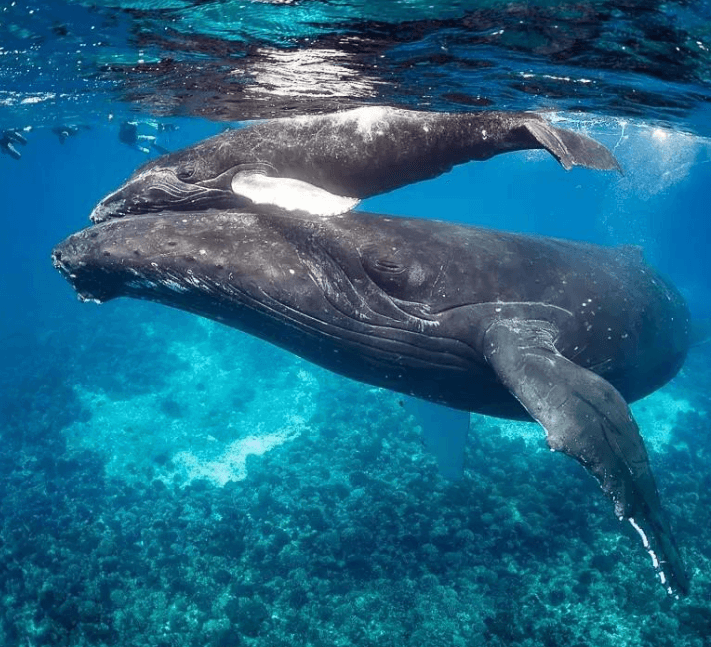
The blow is often one of the first clues that a whale is nearby. In Samaná Bay, where humpback whales gather seasonally to breed and give birth, recognizing a distant plume can help whale watchers notice an animal before seeing its back, dorsal fin, or tail.
However, not every blow looks the same. Wind is one reason for this variation.
How Wind Changes the Appearance of a Whale’s Blow
Wind affects the visible plume mainly by moving and dispersing the moisture in the air. It does not necessarily mean that the whale is breathing differently.
1. Wind Can Push the Blow Sideways
On a relatively calm day, a whale’s blow may appear to rise almost vertically before gradually dispersing. When a breeze is present, the plume can lean or drift in the direction the air is moving.
This sideways movement can make the blow look longer or more spread out than it would in still air. From a boat, visitors may notice a narrow plume extending across the surface rather than rising in a compact column.
The direction of the visible mist is not a reliable indication of the whale’s swimming direction. The whale may be traveling in a completely different direction from the one in which the wind carries its blow.
2. Wind Can Make the Plume Disperse More Quickly
A whale’s exhalation is brief, but the visible moisture may remain recognizable for a short time afterward. Moving air can carry droplets away and mix the moist plume with the surrounding atmosphere.
As this happens, the blow may become wider, less concentrated, or harder to see. On a breezy day, visitors might notice a brief flash of white mist that disappears quickly.
This does not necessarily mean the whale has produced a weaker exhalation. The wind may simply have changed how the plume spreads through the air.
3. The Blow May Appear Less Distinct at a Distance
Wind can make it more difficult to observe a plume clearly, particularly when the whale is far from the boat. As the mist spreads, its edges may become less defined against the sky or the ocean.
The effect also depends on lighting. A pale plume can be easier to notice against a darker background, while bright sunlight, glare, or a light-colored sky may make it less visible.
For whale watchers in Samaná Bay, this is a useful reminder: a faint blow does not automatically indicate a small whale or an unusual breathing pattern.
4. Wind Can Make Different Blows Look Unequal
A whale may surface and exhale several times during a period at the surface. One blow may appear tall and sharply defined, while the next looks flatter or more diffuse.
If the wind changes slightly, or if the boat moves to a different viewing angle, the plumes may appear different even when the whale’s behavior has not changed significantly.
Natural variation in the exhalation, the surrounding air, and the observer’s viewpoint can all contribute to these differences. It is better to observe the entire surfacing sequence than to draw conclusions from one plume alone.
Does a Different-Looking Blow Mean the Whale Is Unwell?
Not necessarily. A whale’s blow can vary naturally, and wind or lighting can change its appearance dramatically.
A single short, faint, or sideways plume is not enough to determine a humpback whale’s health. Visitors should avoid interpreting the appearance of one blow as evidence of illness, injury, or breathing difficulty.
Marine researchers assess animals using a broader range of observations, which may include repeated behavior, movement, physical appearance, and other relevant evidence.
If a whale appears to be in distress, the appropriate response is to inform the tour guide or qualified crew rather than attempt to approach the animal.
Why Wind Matters During Samaná Whale Watching
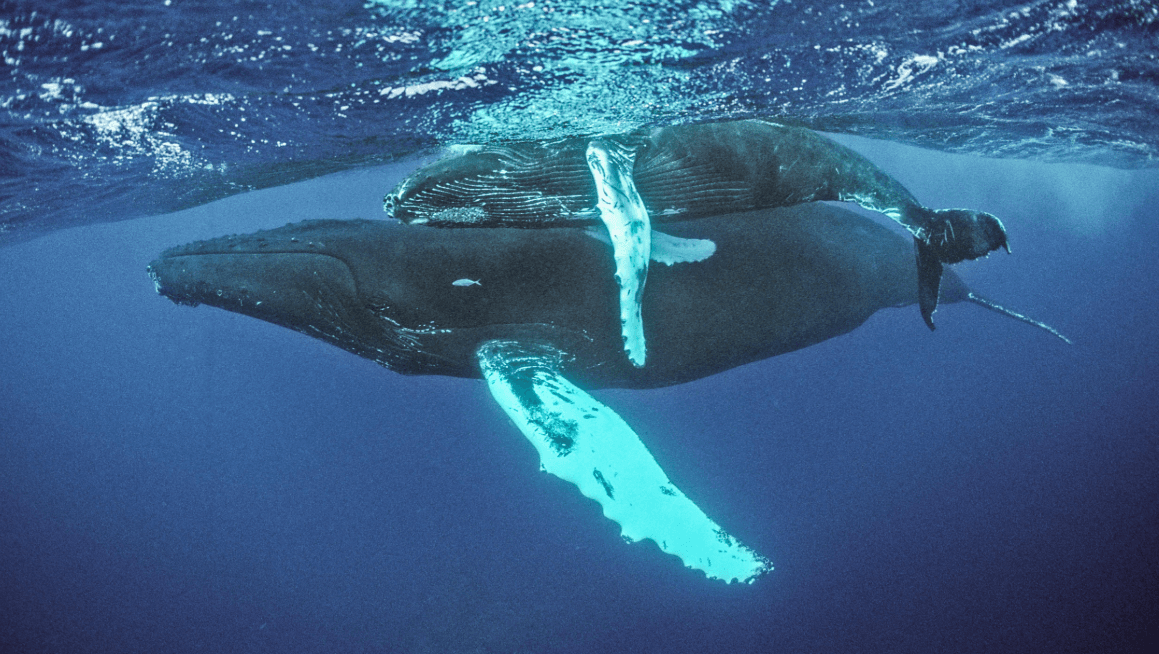
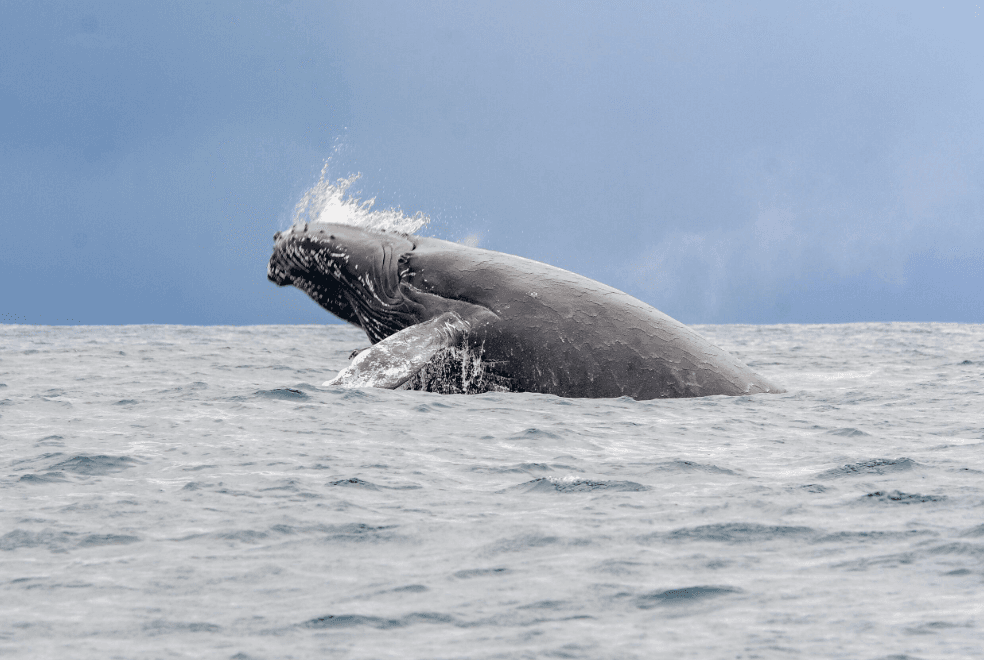
Samaná Bay is an important seasonal destination for observing North Atlantic humpback whales. During the winter breeding season, visitors may see whales surfacing, traveling, breaching, resting, and interacting with other whales.
Because the blow is often visible before the animal’s body, understanding how wind affects the plume can make the experience more rewarding.
For example, a guide may spot a distant blow and direct passengers’ attention toward it. By watching the plume’s location and then looking carefully for the whale’s back or dorsal fin, visitors can follow the sighting more effectively.
Windy conditions may also affect the boat’s motion and the ease of observing distant animals. Follow the crew’s instructions, remain seated or hold the available handrails when appropriate, and keep your camera or binoculars secure.
Wind does not automatically make a whale-watching trip unsuccessful. The visibility of individual blows is only one part of the experience.
How to Observe a Whale’s Blow More Effectively
You do not need specialist equipment to notice differences in a humpback whale’s exhalation. A little patience and careful observation can help.
Look beyond the mist. After noticing a blow, watch for the whale’s back, dorsal fin, or the next surfacing event. The plume may disappear before the animal becomes clearly visible.
Pay attention to the wind. Notice whether the mist drifts sideways or spreads quickly. This can help explain why one blow appears different from another.
Consider the background. A plume may stand out against a darker horizon but become difficult to distinguish against bright sky or sunlit water.
Observe repeated surfacing events. Compare several blows from the same whale when possible. Repeated observations provide more context than a single glimpse.
Listen to your guide. Local guides can help passengers identify whale sightings and understand the behavior they are observing without disturbing the animals.
Keep a simple whale-watching journal. Record the time, approximate viewing distance, wind conditions, and what you observed. Avoid making assumptions about a whale’s health based only on the plume’s appearance.
Can You Predict the Weather by Looking at a Whale’s Blow?
A whale’s blow can show how moving air affects a visible plume, but it is not a reliable weather forecast.
A plume drifting sideways tells you that air is moving around it. It does not, by itself, reveal whether the wind will strengthen, whether rain is approaching, or whether sea conditions will change.
For planning a whale-watching trip, rely on the tour operator’s updates and appropriate marine weather forecasts. Conditions on the water can differ from those experienced on land.
Frequently Asked Questions
Why does a humpback whale’s blow lean to one side?
Wind can carry the visible mist away from the point where the whale exhales. The direction of the plume therefore does not necessarily match the whale’s direction of travel.
Does wind make a whale’s blow smaller?
Wind can spread the moisture over a wider area, making the plume appear less concentrated. This does not prove that the whale released less air.
Why is a whale’s blow sometimes difficult to see?
The plume may disperse quickly, blend into the background, or become difficult to distinguish because of sunlight, distance, and viewing angle.
Can you identify a humpback whale by its blow alone?
The blow can help you notice a whale, but it is not a dependable way to identify an individual. Guides and researchers use additional features and observations to identify whales.
Is whale watching possible when it is windy in Samaná Bay?
It depends on the actual marine conditions and the tour operator’s safety assessment. Wind can affect visibility and boat comfort, but the decision to operate should be based on current conditions rather than the appearance of whale blows alone.
Final Thoughts
A humpback whale’s blow is more than a quick puff of mist above the ocean. It is an opportunity to observe how an animal’s natural behavior interacts with the surrounding environment.
During Samaná whale watching, wind may push the plume sideways, disperse it quickly, or make it harder to distinguish against the sky. These changes are often related to viewing conditions rather than a meaningful change in the whale’s breathing.
The next time you see a humpback whale surface in Samaná Bay, look carefully at the blow, the direction of the breeze, and what the whale does afterward. By observing the whole sequence, you can better appreciate the experience without jumping to conclusions from a single sighting.
Planning a Samaná whale-watching trip? Choose a responsible tour operator, follow the crew’s guidance, and give these remarkable animals plenty of space.

Local explorer & expert guide in Samaná Whale Sanctuary.