Ocean Temperature and Humpback Whales: What Changes?
Humpback whales travel between different ocean regions throughout the year, following a seasonal cycle that connects feeding grounds with breeding and calving areas. These journeys expose them to substantial differences in water temperature, food availability, and environmental conditions.
Ocean temperature plays an important role in marine ecosystems, influencing where prey species thrive and how ocean habitats change over time. For humpback whales, these changes can affect feeding opportunities and may influence where and when individuals are observed.
In Samaná Bay, Dominican Republic, North Atlantic humpback whales gather seasonally in relatively warm waters. Understanding the relationship between ocean temperature and whale behavior helps explain why these animals move between distant regions and why changing ocean conditions matter for their future.
Why Does Ocean Temperature Matter to Humpback Whales?
Humpback whales are warm-blooded mammals. They maintain a relatively stable internal body temperature despite changes in the surrounding water.
Their bodies have adaptations, including a thick layer of blubber, that help conserve heat. However, maintaining body temperature is only one part of the relationship between whales and ocean conditions.
Temperature also influences the marine environment in which humpback whales live.
It can affect the distribution and seasonal timing of prey species, the structure of ocean habitats, and the timing of biological events. These factors may influence whale movements and feeding success.
Importantly, humpback whales do not simply move toward the warmest water available. Their distribution reflects several interacting factors, including breeding behavior, prey availability, migration routes, and environmental conditions.
Why Do Humpback Whales Visit Warm Waters?
North Atlantic humpback whales undertake seasonal migrations between higher-latitude feeding grounds and lower-latitude breeding regions.
During the warmer months, many whales feed in productive northern waters where prey such as krill and small schooling fish can be abundant. During the winter breeding season, many migrate toward warmer tropical or subtropical waters.
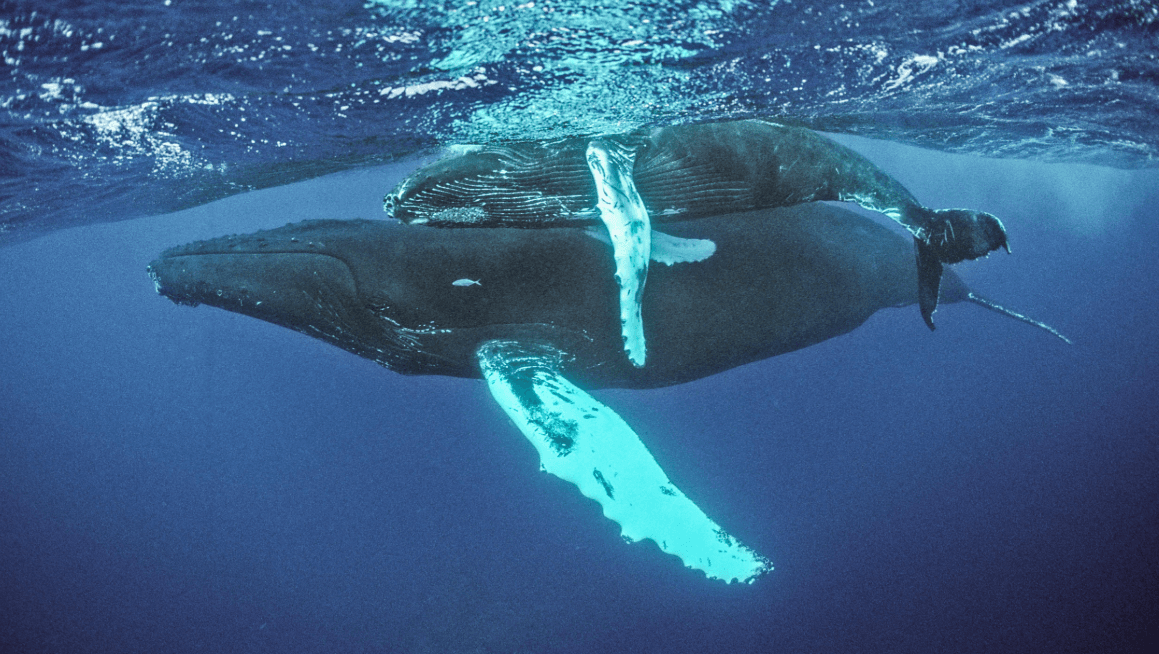
Samaná Bay is one of the well-known destinations for humpback whale watching during this breeding period.
Warm breeding areas provide suitable environments for reproductive activities and the early development of calves. However, scientists continue to investigate the full range of factors influencing the selection of particular breeding locations.
The migration is not simply a response to cold water. Seasonal changes in food availability, reproductive behavior, and the evolutionary history of whale populations all contribute to this pattern.
How Does Water Temperature Affect Humpback Whale Feeding?
Food availability is one of the most important links between ocean temperature and humpback whale ecology.
Humpback whales feed on prey such as krill and small fish. The abundance and distribution of these animals depend on environmental conditions, including ocean circulation, nutrient availability, and seasonal changes.
Temperature can influence these systems, but its effects are often indirect.
For example, changes in ocean temperature can alter water-column structure and influence how nutrients move through marine ecosystems. These changes may affect plankton production and, in turn, the prey available to larger animals.
If prey becomes less abundant or shifts into a different area, whales may need to adjust their feeding locations or behavior.
However, warmer water does not always mean less food. The outcome depends on the region, the species involved, and the wider ocean conditions.
Can Changing Ocean Temperatures Affect Whale Migration?
Yes, changing ocean conditions may influence whale migration, but temperature is only one factor involved.
Humpback whales follow established seasonal migration patterns. Their movements are associated with breeding cycles, feeding opportunities, and environmental conditions across large geographic areas.
If ocean warming changes the timing or location of prey availability, some whales may adjust their movements or feeding strategies. Changes in breeding habitat conditions may also affect where whales gather.
Researchers have observed changes in the distribution and timing of various marine species as ocean conditions change. However, it is important not to assume that every shift in whale sightings is caused by temperature alone.
Population trends, prey movements, weather, survey effort, and other environmental factors must also be considered.
What Happens When Ocean Temperatures Rise?
Long-term ocean warming can influence marine ecosystems in several ways.
1. Changes in prey distribution
Some prey species may shift their geographic ranges or seasonal patterns as their preferred environmental conditions change. Humpback whales may respond to these changes when searching for food.
2. Changes in feeding-ground productivity
Warming can affect ocean mixing, nutrient availability, and plankton communities. In some regions, these changes may reduce the availability of particular prey, while other areas may experience different outcomes.
3. Changes in seasonal timing
Environmental conditions can influence when prey becomes available and when certain marine species appear in particular regions. These shifts may affect the timing of ecological interactions.
4. Greater uncertainty for whale populations
If conditions change rapidly, whales may face difficulty adapting their established feeding and migration patterns. The effects will depend on the population's flexibility and the conditions in its feeding and breeding habitats.
These processes are complex. Ocean warming does not produce the same outcome everywhere, and researchers need long-term observations to understand the effects on individual humpback whale populations.
Could Ocean Warming Affect Humpback Whales in Samaná Bay?
Samaná Bay is an important seasonal breeding and calving area for North Atlantic humpback whales. Changes in ocean conditions could influence the wider ecological system that supports these whales.
For example, warming may affect feeding grounds at higher latitudes, potentially changing prey availability before whales migrate south. Changes in sea conditions may also influence the environment experienced by whales in breeding regions.
However, it would be inaccurate to claim that a specific change in Samaná Bay's water temperature will automatically cause whales to arrive earlier, stay longer, or disappear.
Whale movements reflect several interacting biological and environmental factors. Establishing a temperature-related trend requires consistent observations over multiple seasons and comparisons with other relevant data.
For travelers, the most practical point is that whale-watching dates should be based on established seasonal patterns and current local information rather than assumptions about a particular year's temperature.
How Do Scientists Study Ocean Temperature and Whales?
Researchers combine environmental measurements with observations of whale behavior and distribution to investigate the relationship between ocean conditions and whale populations.
Ocean monitoring
Buoys, research instruments, satellites, and other systems help scientists measure sea-surface temperatures and, where available, temperatures at greater depths.
Whale surveys
Researchers record whale sightings, locations, and sometimes behavioral information. Repeated surveys help reveal seasonal patterns and long-term changes in distribution.
Prey research
Studying krill, small fish, and other prey species helps scientists investigate whether changes in food availability are associated with whale movements.
Long-term data analysis
Comparing whale observations with ocean temperature, prey abundance, and other environmental records can help researchers identify possible relationships.
No single measurement explains every whale movement. Scientists gain a more reliable understanding by combining multiple sources of evidence over time.
Is Warmer Water Always Better for Humpback Whales?
No. Humpback whales use different ocean regions for different purposes, and the conditions that suit one stage of their annual cycle may not suit another.
Warm breeding waters can provide suitable conditions for mating and calving. Productive feeding grounds, however, are often found in cooler, higher-latitude regions where prey can be abundant during the feeding season.
A whale needs access to sufficient food to maintain its energy reserves, support migration, and meet the demands of reproduction.
Consequently, a warmer ocean does not automatically improve conditions for humpback whales. The effects depend on how warming changes prey, habitat, and other environmental factors across the whale's range.
What Can Whale Watchers Learn From This Relationship?
Visitors to Samaná Bay can use the migration season as an opportunity to learn how marine animals respond to their environment.
During whale-watching trips, guides may explain seasonal whale movements, breeding behavior, and the importance of the bay as a habitat for North Atlantic humpbacks.
Although visitors cannot determine ocean-temperature trends from a single trip, they can learn why scientists monitor environmental conditions alongside whale sightings.
Responsible whale watching also helps keep attention on the importance of protecting marine habitats. Choosing operators that follow local rules, maintain appropriate distances, and avoid disturbing the whales supports a more responsible wildlife experience.
How Can Ocean Warming Be Addressed?
Ocean warming is closely connected to global climate change. Reducing greenhouse gas emissions is essential to limiting further long-term warming.
Marine conservation also helps protect the habitats and ecological relationships on which whales depend. Important actions include:
- Supporting the protection of important marine habitats.
- Reducing plastic pollution and abandoned fishing gear.
- Following responsible vessel-operation practices.
- Supporting credible marine research and conservation programs.
- Learning about climate change and its effects on ocean ecosystems.
These actions address different pressures and should not be confused with direct solutions to every effect of warming. Together, however, they contribute to protecting marine ecosystems and reducing avoidable risks to whales.
Frequently Asked Questions
Do humpback whales prefer warm or cold water?
Their habitat preferences depend on the season and activity. Many North Atlantic humpback whales feed in higher-latitude waters and migrate to warmer regions such as Samaná Bay for breeding and calving.
Does ocean warming change humpback whale migration?
It may influence migration indirectly by changing prey availability and habitat conditions. The effects vary by region and population, and temperature alone does not explain every change in whale movements.
Why do humpback whales migrate to Samaná Bay?
Samaná Bay is a seasonal breeding and calving area for North Atlantic humpback whales. Their migration is linked to reproductive behavior, seasonal ecology, and the whales' annual life cycle.
Can humpback whales survive in cold water?
Yes. Humpback whales are adapted to a wide range of ocean temperatures. Their blubber helps conserve body heat, allowing many populations to feed in cold waters.
Does warmer ocean water mean fewer whales in Samaná?
Not necessarily. Whale numbers observed in a particular season depend on several factors. A long-term decline or change cannot be established from water temperature or a single season of sightings alone.
When is the best time to see humpback whales in Samaná?
The main whale-watching season is generally during winter and early spring, when North Atlantic humpback whales visit the region. Confirm current local dates and tour availability before planning your trip.
Final Thoughts
Ocean temperature affects marine ecosystems in ways that can influence humpback whale feeding opportunities, habitat conditions, and seasonal distribution. Yet these relationships are complex, and temperature is only one part of the picture.
For humpback whales visiting Samaná Bay, the annual journey between feeding and breeding areas demonstrates how closely their lives are connected to different ocean environments.
By understanding these connections, visitors can appreciate whale watching as more than a wildlife excursion. It is also an opportunity to learn about changing oceans, scientific research, and the importance of protecting marine ecosystems for the future.

Local explorer & expert guide in Samaná Whale Sanctuary.