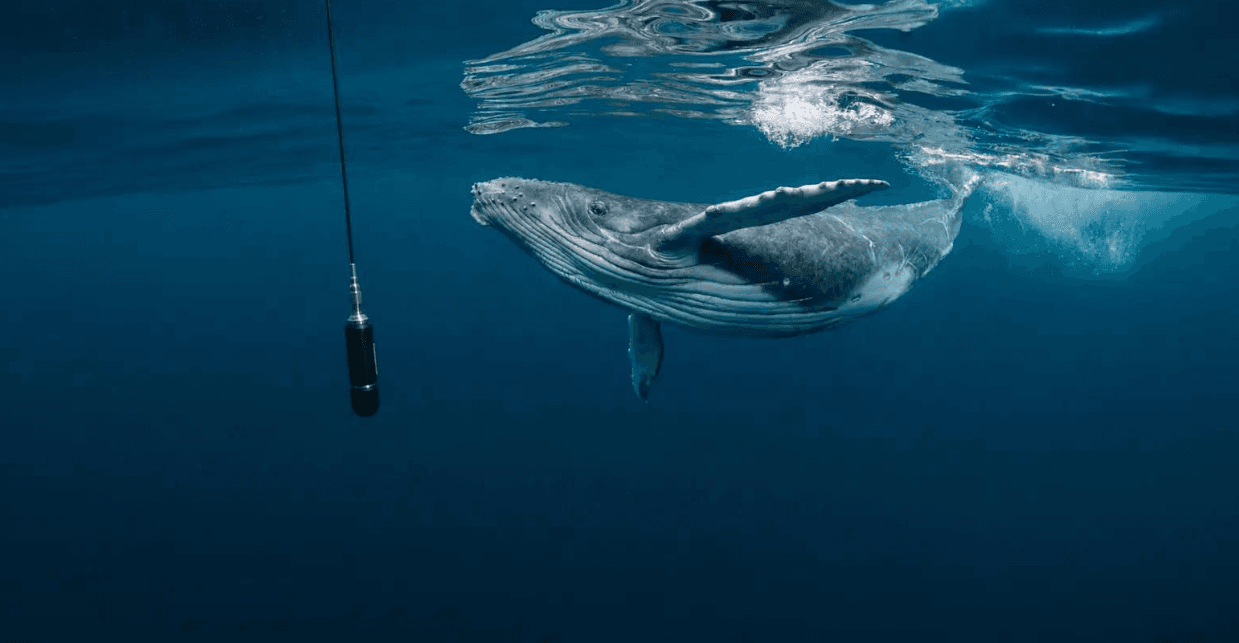
How Do Scientists Determine When Humpback Whales Arrive and Leave Samaná Bay?
Every year, humpback whales travel from feeding grounds in colder waters to warmer breeding regions. Samaná Bay in the Dominican Republic is an important destination for seasonal whale watching, attracting visitors who hope to see these remarkable marine mammals.
But how do scientists determine when humpback whales arrive in the bay and when they leave?
The answer is more complicated than recording the first and last whale sightings. A whale may enter an area before researchers observe it, and another may leave without being seen again. Scientists therefore use repeated surveys, individual identification, observation records, and statistical methods to estimate seasonal presence.
Understanding these methods helps researchers study migration timing, compare different years, and explain what whale sightings can—and cannot—tell us about the animals using Samaná Bay.
Why Is Arrival and Departure Timing Important?
The timing of seasonal whale presence provides information about how animals use a breeding region throughout the year.
Researchers may investigate several questions:
- When are humpback whales first detected during a seasonal survey?
- When do sightings become more frequent?
- When does the number of recorded encounters begin to decline?
- Do individual whales arrive and depart at different times?
- Are arrival and departure patterns similar across multiple years?
- Could environmental conditions be associated with changes in seasonal timing?
These questions have different answers. The first sighting is a directly recorded event, while the actual arrival of the first whale may have occurred earlier. Similarly, the last recorded sighting does not necessarily mark the departure of the final whale.
Scientists must distinguish observed dates from estimated biological events.
1. Recording the First Sightings of the Season
One of the simplest ways to monitor seasonal whale presence is to conduct repeated surveys and record the date of each sighting.
Observers can document the location, time, number of whales, sea conditions, and survey effort. These records help researchers identify the earliest confirmed observation within a particular monitoring period.
However, the first recorded sighting depends on several factors.
For example, a whale might already be present when researchers begin their surveys. Alternatively, the animal could be nearby but remain underwater, travel outside the surveyed area, or be difficult to detect because of poor visibility.
The first sighting should therefore be described as the first detection within the available records, not necessarily the exact date when the first whale arrived.
Long-term monitoring can reduce this uncertainty by providing observations across more of the season.
2. Determining When Sightings Become More Frequent
The first observation tells researchers when a whale was detected, but it does not reveal how the number of whales using the area changes throughout the season.
To investigate seasonal patterns, scientists can organize observations by day, week, or month, depending on the survey schedule.
They may examine:
- The number of sightings during each period.
- The number of individual whales identified.
- The frequency of mother-and-calf observations.
- The proportion of surveys in which whales were detected.
- The amount of time spent searching for whales.
These measurements help distinguish a genuine change in recorded whale activity from a change in survey effort.
For instance, more sightings during one week might reflect an increase in whale presence, more intensive observation, improved visibility, or some combination of these factors.
A reliable seasonal analysis considers these possibilities instead of interpreting raw sighting totals in isolation.
3. Identifying Individual Whales to Estimate Their Arrival Dates
Researchers can use photo-identification to investigate when particular whales are first recorded during a season.
Humpback whales have distinctive tail-fluke patterns, including variations in pigmentation and markings. Scientists compare photographs from different encounters to determine whether the same individual has been observed more than once.
When a whale is identified across several observations, researchers can construct a record of its known presence in the study area.
For example, a whale might be photographed during an early-season survey and identified again several weeks later. This establishes that the same individual was recorded on both occasions.
However, the first photograph does not necessarily reveal the whale's actual arrival date. The animal may have entered the area before the first successful encounter.
Individual identification is particularly valuable for comparing the timing of different whales without counting repeated sightings of the same animal as separate individuals.
4. Estimating Departure Dates
Departure timing can be more difficult to determine than it first appears.
A whale's final recorded sighting may be followed by several days without another observation. During that period, the animal might have left the bay, moved to another part of the region, or remained nearby without being detected.
Researchers therefore distinguish between the last observed date and the estimated departure date.
To investigate departures, scientists can combine repeated surveys, individual identification, the timing of subsequent sightings, and information about survey coverage.
If an identified whale is later documented in another region, that observation may provide additional evidence about its movement. Even then, the exact time it left Samaná Bay may remain unknown.
Scientists should avoid assigning a precise departure date when the records support only a broader interval.
5. Using First and Last Sightings to Estimate Seasonal Presence
First and last sightings provide useful boundaries for describing when a whale was documented in an area.
Suppose a hypothetical individual is first photographed on February 3 and last photographed on March 12. These dates establish the period during which the whale was recorded at least once.
They do not prove that the whale remained continuously inside the bay throughout that interval.
The animal may have left and returned, moved beyond the survey area, or gone undetected between encounters.
Researchers can improve their estimates by examining the frequency of observations, the locations surveyed, and any reliable records from other areas.
When data are limited, it is more accurate to report the first and last confirmed sightings than to claim a continuous residence period.
6. Comparing Arrival and Departure Timing Across Years
Long-term research can reveal whether seasonal timing varies between years.
Scientists can compare the earliest confirmed sighting, the distribution of sightings throughout the season, the final confirmed sighting, and the number of survey days with successful detections.
For meaningful comparisons, the surveys should be sufficiently consistent. If one year has frequent observations beginning early in the season and another has only occasional surveys, the apparent difference in arrival timing may reflect monitoring effort rather than whale behavior.
Researchers should also account for uncertainty in individual identification and differences in the areas covered.
With suitable data, scientists may investigate whether seasonal timing changes consistently across years. However, they should not assume that every whale arrives or departs on the same schedule.
7. How Statistical Models Help Estimate Arrival and Departure
Statistical methods can help researchers account for the fact that whales are not detected every time they are present.
Depending on the data, scientists may use detection models, occupancy approaches, mark-recapture methods, or models of seasonal sighting patterns.
Each method addresses different questions.
Detection models can help account for the probability that an animal present in an area will be observed.
Photo-identification and mark-recapture approaches can help investigate the occurrence and return of identifiable individuals when the study design supports those analyses.
Seasonal trend models can describe how sighting rates or estimated whale presence change through time.
Uncertainty intervals can communicate the range of dates or estimates supported by the data.
No statistical method automatically solves every problem. Researchers must choose an approach that matches their sampling design, the quality of the records, and the question they want to answer.
8. Investigating Environmental Factors That May Influence Timing
Researchers may also investigate whether seasonal whale presence is associated with environmental conditions.
Potential factors include water temperature, currents, weather patterns, prey availability, and conditions in other parts of the migration route.
These variables may be relevant to whale movements, but their influence on arrival or departure timing in Samaná Bay must be established with suitable evidence.
For example, if whales are detected earlier in a particular year, scientists would need to consider other explanations before attributing the difference to a change in water temperature.
A useful investigation combines repeated seasonal records with environmental measurements and considers alternative explanations.
It should also recognize that different individuals may respond differently to changing conditions.
9. Why Some Whales May Seem to Disappear Before the Season Ends
A decline in sightings does not necessarily mean that all whales have left the region.
Several explanations are possible:
- Whales may have moved outside the areas covered by the surveys.
- Animals may be less visible under particular sea conditions.
- Survey effort may have decreased.
- Some individuals may have departed while others remained.
- Whales may be present but not detected during a particular observation period.
This is why researchers use consistent monitoring schedules where possible and record unsuccessful survey days.
A day without a sighting is useful information, but its meaning depends on where observers searched, how long they searched, and how likely whales were to be detected.
10. What Seasonal Timing Means for Whale Watchers
Seasonal research can help travelers understand when whale watching is generally possible in Samaná Bay.
However, a broad seasonal pattern cannot guarantee that whales will be seen on a specific day. Marine wildlife moves naturally, and individual encounters depend on conditions that can vary from one trip to another.
Travelers should check current local guidance, tour schedules, and responsible whale-watching practices when planning a visit.
Operators should follow applicable regulations and maintain appropriate distances from whales. The priority should be responsible observation rather than pursuing animals to guarantee a close encounter.
Seasonal arrival and departure records are useful for understanding broad patterns, but they should not be treated as a precise daily forecast.
Frequently Asked Questions
When do humpback whales arrive in Samaná Bay?
Humpback whales visit Samaná Bay during the North Atlantic breeding season, generally associated with the winter months. The exact timing of individual arrivals varies, and the first recorded sighting does not necessarily mark the first whale's actual arrival.
How do scientists know when the last whale leaves?
They generally cannot determine the exact departure of the last whale from sightings alone. Researchers use repeated surveys, individual identification, and statistical methods to estimate seasonal departure patterns while accounting for missed detections.
Does the last sighting mean a whale has left the bay?
No. A final recorded sighting means the whale was observed on that date. It may subsequently have left, moved outside the survey area, or remained undetected.
Why might arrival dates differ between years?
Differences in whale movements may contribute, but changes in survey timing, observation effort, sea conditions, and detection probability can also affect recorded arrival dates.
Can scientists determine how long an individual whale stays?
Sometimes they can estimate the period between an individual's first and last sightings. The estimate may be incomplete if the whale was present before the first sighting, remained after the last sighting, or moved outside the surveyed area.
Are whale arrival dates predictable for visitors?
Seasonal patterns provide useful planning guidance, but they cannot guarantee sightings on a particular date. Whale encounters depend on natural movement, local conditions, and the availability of animals during a trip.
Conclusion
Scientists determine when humpback whales arrive and leave Samaná Bay by combining repeated observations, individual identification, seasonal sighting records, and methods that account for imperfect detection.
The earliest and latest sightings provide important information, but they should not automatically be treated as exact arrival and departure dates. Reliable estimates require consistent monitoring, careful interpretation, and clear communication of uncertainty.
By improving knowledge of seasonal whale presence, researchers can better understand how humpback whales use Samaná Bay and help inform responsible whale watching and marine conservation.

Local explorer & expert guide in Samaná Whale Sanctuary.