How Do Humpback Whales Keep Warm in the Ocean?
Humpback whales travel through a remarkable range of marine environments during their annual migrations. Some parts of their life cycle take place in cold, productive waters, while their seasonal breeding activities occur in warmer regions, including the waters around Samaná in the Dominican Republic.
This raises an interesting question: how does a whale maintain a suitable body temperature when the surrounding water can be much colder than its body?
The answer lies in several adaptations that work together. Humpback whales have a thick layer of insulating blubber beneath their skin, a large body that loses heat relatively slowly, and physiological mechanisms that help regulate heat exchange.
Blubber is one of the most important adaptations that helps humpback whales retain body heat in cold water. Their bodies also produce heat through normal metabolism, while the circulation of blood helps manage heat transfer between the body and its surroundings.
Understanding these adaptations helps explain how humpback whales survive across different ocean temperatures and why their seasonal migrations connect distinct marine habitats.
What Is Blubber, and Why Is It Important?
Blubber is a thick layer of fat and connective tissue beneath a whale's skin. It is different from the ordinary skin surface and plays several important roles in the animal's survival.
For humpback whales, blubber helps conserve heat, stores energy, and contributes to the body's overall structure.
Blubber acts as insulation
Water can carry heat away from a body much more efficiently than air under many comparable conditions. This creates a challenge for warm-blooded marine mammals living in cold seas.
Blubber helps slow the transfer of heat from a whale's warmer internal tissues to the surrounding water. By providing insulation beneath the skin, it helps the whale maintain a relatively stable internal temperature.
Without effective insulation, a large whale would lose heat more rapidly when swimming in cold water.
Blubber stores energy
Blubber also serves as an energy reserve. Humpback whales often feed heavily in productive feeding areas before migrating to tropical breeding grounds.
During migration and the breeding season, feeding may be limited compared with feeding-ground periods. Stored energy helps support the whale's normal body functions and other energetic demands.
The same tissue therefore contributes to both temperature regulation and energy management.
Blubber thickness can vary
Blubber is not a perfectly uniform layer. Its thickness and condition can vary across the body and between individuals.
Factors such as age, nutritional condition, reproductive status, and recent feeding history can influence body reserves. A whale's insulation and energy stores are therefore connected to its broader biological condition.
It would be misleading to assume that all humpback whales have identical blubber thickness or the same energy reserves.
How Does a Whale's Large Body Help It Stay Warm?
Humpback whales are enormous animals. Their large size affects how quickly they exchange heat with their surroundings.
A smaller animal generally has more surface area relative to its body volume than a much larger animal of similar shape. Because heat exchange occurs across the body's surface, a large animal can lose heat more slowly relative to the amount of tissue it needs to keep warm.
This general biological principle is sometimes described through the relationship between surface area and volume.
A lower surface-area-to-volume ratio
As an animal becomes larger, its volume tends to increase faster than its surface area, assuming broadly similar proportions.
This means that a large whale has a relatively smaller external surface area compared with its body volume than a much smaller animal would.
The effect does not eliminate heat loss, but it can help make temperature regulation more manageable.
Size works together with blubber
Body size alone is not enough to explain how a humpback whale maintains its temperature. Insulation, circulation, metabolism, and the conditions of the surrounding water all contribute.
A whale's thermal performance depends on these factors working together rather than on a single adaptation.
Are Humpback Whales Warm-Blooded?
Yes. Humpback whales are mammals, and they maintain an internal body temperature within a regulated range rather than allowing their bodies to match the surrounding water temperature.
Their internal organs must function under suitable thermal conditions, even when the whale swims through colder water.
Maintaining that internal environment requires energy and physiological regulation.
Metabolism produces heat
Like other mammals, humpback whales produce heat through metabolic processes. The body uses energy to support activities such as movement, circulation, cellular functions, and other essential processes.
Some of this energy is released as heat.
Blubber then helps reduce the rate at which heat escapes to the surrounding water.
Body temperature is regulated, not perfectly constant everywhere
An animal's body does not necessarily have exactly the same temperature in every tissue at every moment. Heat production, circulation, activity, and the surrounding environment can influence local temperatures.
Physiological regulation helps maintain conditions suitable for normal body function, while different parts of the body may exchange heat with the environment at different rates.
The important point is that humpback whales have adaptations for maintaining internal temperature despite changes in water temperature.
How Does Blood Circulation Help Manage Heat?
Blood circulation distributes oxygen and nutrients throughout a whale's body and also plays a role in transferring heat.
Blood carries heat produced by metabolism from one part of the body to another. Changes in blood flow can influence how much heat reaches the body's surface and how much is retained internally.
Marine mammals use physiological mechanisms to help manage these exchanges.
Controlling heat transfer
The body can adjust blood flow to different tissues. Under suitable conditions, changes in circulation can help reduce heat loss from parts of the body exposed to the surrounding water.
These responses work alongside blubber insulation rather than replacing it.
What about the fins and flukes?
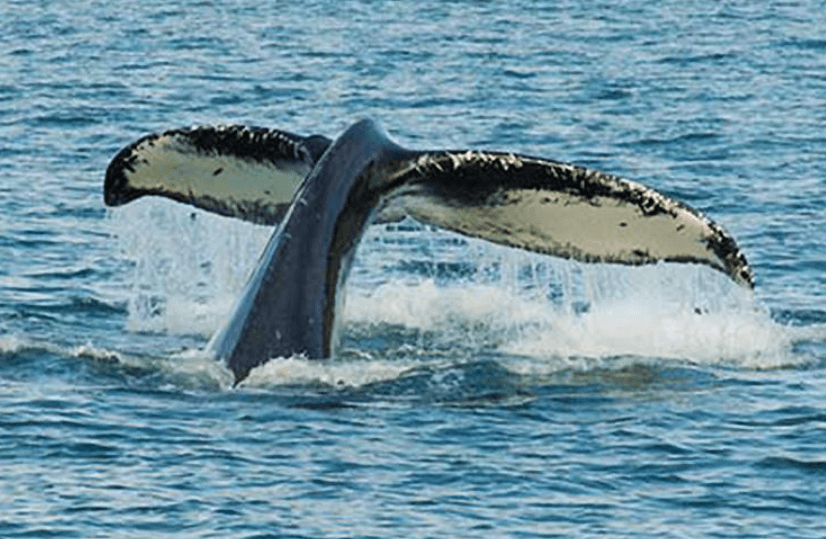
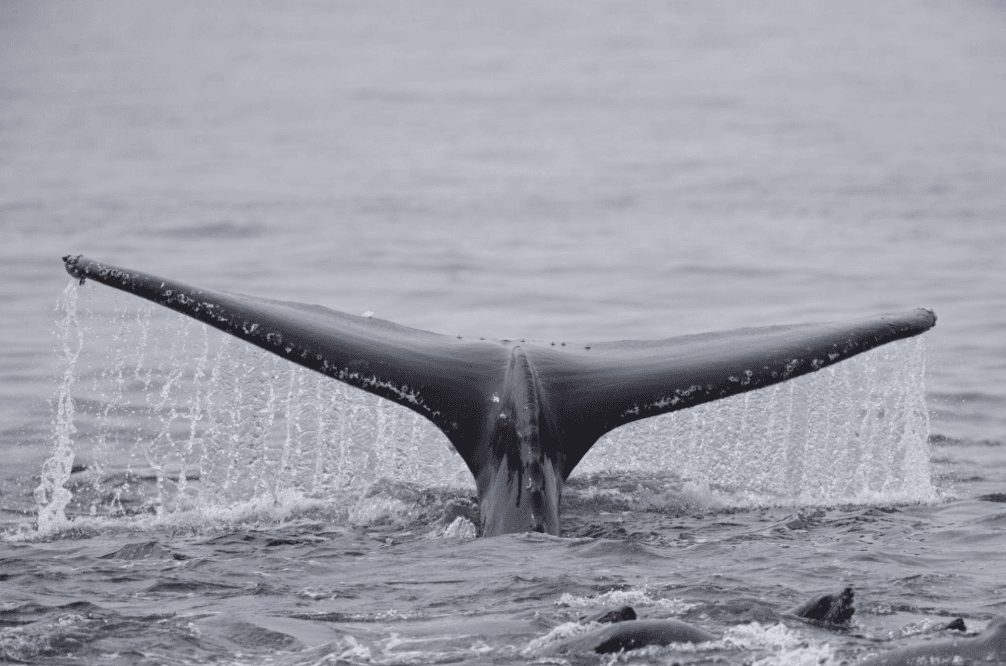
Humpback whales have large pectoral fins and broad tail flukes. These structures are important for movement, but they also have a different relationship with the surrounding water from the thick central body.
Heat exchange in extremities can be more complex because they have a relatively large exposed surface area compared with their volume.
Marine mammals can regulate circulation in ways that influence heat transfer through exposed body regions. However, the exact pattern of heat exchange varies by anatomy and physiological conditions, so it is best not to assume that every whale uses an identical mechanism in every situation.
Why Can Humpback Whales Live in Cold and Warm Waters?
Humpback whales are migratory animals adapted to use different marine environments during different parts of their life cycle.
Cold and temperate feeding areas can provide abundant prey during productive seasons. Warmer breeding areas, including the Caribbean, provide important habitat for courtship, mating, and calf development.
Their insulation and body-temperature regulation allow them to function in these contrasting environments.
Cold-water feeding grounds
In colder waters, blubber helps reduce heat loss while whales swim and feed. Their large bodies also help limit heat loss relative to their volume.
These feeding areas can provide the energy resources that whales need before making long migrations.
Warm-water breeding grounds
During the breeding season, North Atlantic humpback whales travel to warmer regions, including the waters around Samaná.
Because the water is warmer, the challenge of losing heat can be reduced compared with colder environments. However, whales still need to regulate their internal temperature.
Warm water does not mean that body-temperature regulation becomes unnecessary. The animal's metabolism continues to produce heat, and the body must manage that heat appropriately.
Migration connects both environments
The annual migration allows humpback whales to use different habitats for feeding and reproduction.
Their insulation, stored energy, and physiological adaptations support this lifestyle, while their behavior and movements are influenced by the broader demands of migration.
Can Humpback Whales Become Too Warm?
Yes. Heat management is not only about retaining warmth in cold water. A large mammal must also avoid accumulating excessive heat, particularly during vigorous activity or in warmer conditions.
A whale produces heat through metabolism and muscular activity. It must balance heat production with the ability to transfer heat to the surrounding environment.
Heat production during activity
Swimming requires muscular work, and more intense activity can increase heat production.
A whale's body must accommodate changes in heat production as it moves, feeds, or engages in other behaviors.
The amount of heat produced depends on the activity and the animal's physiological condition.
Heat exchange in warm water
Warmer surrounding water reduces the temperature difference between the whale's body and its environment, which can influence the rate at which heat moves out of the body.
Whales still have physiological mechanisms for managing internal temperature, but heat transfer depends on the conditions at the time.
Blubber is therefore not simply a thick layer that keeps a whale warm under all circumstances. Its role is part of a broader system that balances insulation, energy storage, heat production, and heat exchange.
Does Blubber Change During a Whale's Annual Cycle?
A humpback whale's body condition can change throughout the year as it feeds, migrates, and reproduces.
In productive feeding areas, whales can accumulate energy reserves. During periods when food intake is reduced, stored energy helps sustain their bodies.
This means blubber has a dynamic role rather than remaining identical throughout the year.
Before migration
Feeding can help whales build the energy reserves required for long journeys and the breeding period.
The amount of energy stored depends on food availability, feeding success, and individual condition.
During migration and breeding
Whales draw on their reserves to support movement and normal biological functions. Reproductive activities can place additional demands on some individuals, especially mothers nursing calves.
Changes in body condition reflect the combined effects of energy intake and energy use.
It is important not to claim that a whale's blubber thickness can be accurately judged from an ordinary whale-watching photograph. Reliable assessment requires appropriate scientific observations and methods.
What Does This Mean for Humpback Whales in Samaná?
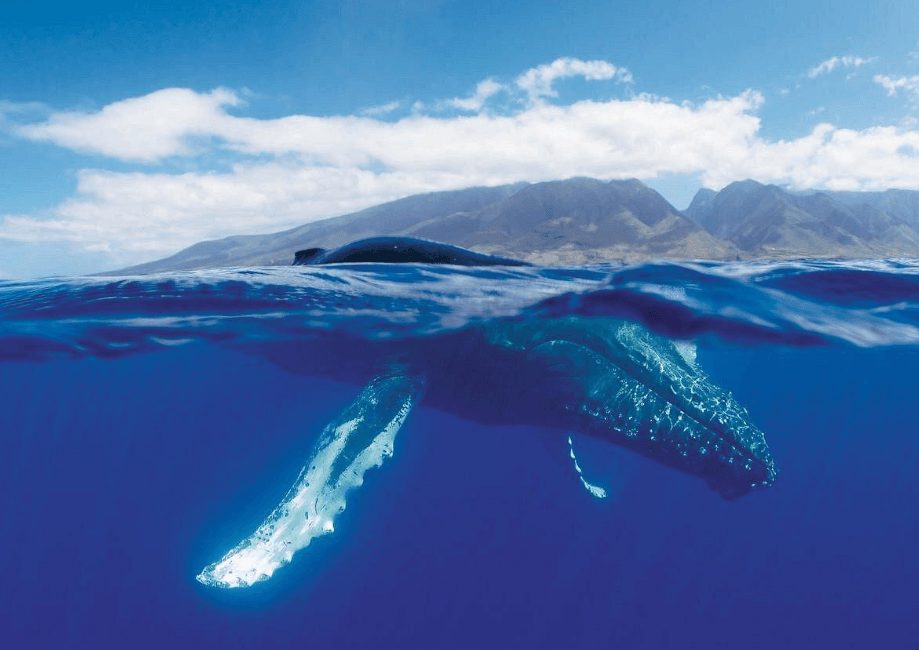
Samaná is an important seasonal breeding area for North Atlantic humpback whales. During the breeding season, visitors may see whales surfacing, traveling, interacting with other whales, or swimming with calves.
Their ability to use this warm-water habitat is supported by the same general adaptations that help them survive elsewhere: blubber, large body size, metabolic heat production, and physiological regulation.
However, observing a whale from a boat does not reveal exactly how its body temperature is changing or how thick its blubber layer is.
These processes take place beneath the skin and involve physiological mechanisms that cannot be assessed from a brief surface sighting.
Understanding whale biology helps visitors appreciate that an animal's visible behavior is only one part of a much larger set of adaptations.
How Can Scientists Study Temperature Regulation in Whales?
Studying temperature regulation in a large, free-swimming whale presents challenges. Researchers cannot simply examine every whale closely under controlled conditions.
Depending on the research question, scientists may use different approaches, including anatomical studies, measurements from appropriate samples, observations of behavior, and specialized research instruments.
The methods available vary according to the species, study setting, ethical considerations, and practical limitations.
Studying blubber
Blubber can be examined in appropriate scientific or veterinary contexts to understand its structure, composition, and role in energy storage and insulation.
Findings from such studies can help researchers understand the relationship between body condition and marine mammal physiology.
Studying circulation and heat exchange
Physiological research on marine mammals helps explain how blood flow and other processes influence heat transfer.
Some findings may come from other marine mammal species or controlled research settings, so it is important to distinguish general physiological principles from measurements made specifically on humpback whales.
Using observations carefully
Visible whale behavior can provide useful information about movement and activity, but it cannot by itself reveal precise internal temperatures or heat-transfer rates.
Scientific conclusions should be based on suitable measurements and evidence rather than assumptions made from photographs.
Frequently Asked Questions
How do humpback whales stay warm in cold water?
They rely on a thick layer of blubber for insulation, along with their large body size, metabolic heat production, and physiological mechanisms that help regulate heat exchange.
What is whale blubber made of?
Blubber is a specialized layer of fat and connective tissue beneath the skin. It stores energy and helps insulate the whale's body.
Are humpback whales warm-blooded?
Yes. As mammals, humpback whales regulate their internal body temperature rather than simply matching the temperature of the surrounding water.
Does blubber keep whales warm in Samaná's tropical waters?
Blubber provides insulation, but whales also regulate heat exchange with their environment. In warmer water, the challenge can include preventing excessive heat accumulation as well as retaining sufficient warmth.
Do humpback whales have the same amount of blubber all year?
Not necessarily. Body condition and energy reserves can change with feeding, migration, and reproduction. Differences between individual whales also occur.
Can you see a whale's blubber during a whale-watching trip?
No, not directly. Blubber lies beneath the skin, so its thickness cannot be measured reliably by looking at a whale from a boat.
Why do humpback whales migrate between cold and warm waters?
Their seasonal migration connects productive feeding areas with breeding habitats. Different environments support different parts of their annual life cycle.
Does a whale's large size help it retain heat?
Yes. Large animals generally have a lower surface-area-to-volume ratio than smaller animals of similar shape, which can reduce heat loss relative to body volume. Size works together with insulation and physiological regulation.
Final Thoughts: A Body Adapted to Changing Ocean Temperatures
Humpback whales can travel between cold feeding grounds and warm tropical breeding areas because their bodies are adapted to life in water across a range of temperatures.
Blubber provides insulation and stores energy, while large body size helps limit heat loss relative to body volume. Metabolism produces heat, and circulation and other physiological processes help regulate its movement through the body.
These adaptations do not operate independently. Together, they support the whale's seasonal movements, feeding cycle, and reproductive life.
When you observe humpback whales in Samaná, you are seeing animals whose bodies are finely adapted to a life that spans very different marine environments. Their ability to make these journeys is one of the remarkable features of their biology.

Local explorer & expert guide in Samaná Whale Sanctuary.