How Do Humpback Whale Calves Learn to Swim and Dive?
One of the most remarkable sights during the humpback whale season in Samaná, Dominican Republic, is a mother swimming with her young calf. The pair may travel close together, surface near one another, or disappear beneath the water before reappearing a short distance away.
These encounters offer a glimpse into an important stage of a whale's life: the period when a newborn must grow, coordinate its movements, and develop the abilities needed to survive in the ocean.
But how does a humpback whale calf learn to swim How does it know when to surface for air, and how does it develop the ability to dive?
Humpback whale calves are capable of swimming soon after birth, but their coordination, endurance, and diving abilities develop as they grow. Staying close to their mothers provides an important advantage while they navigate their surroundings and depend on maternal milk for nourishment.
This guide explains what scientists know about early calf development, how swimming and diving work, and why the relationship between a mother and calf matters during the breeding season in Samaná.
Can Humpback Whale Calves Swim Immediately After Birth?
Humpback whale calves are born in water and must be able to swim to survive. Unlike many land mammals, they cannot remain in a nest or on the ground while developing basic movement skills.
A newborn calf needs to reach the surface to breathe. It must also maintain its position near its mother, move through the water, and gradually build the strength needed for longer journeys.
Although calves can swim soon after birth, this does not mean that every movement is perfectly coordinated or that a newborn has the same endurance as an adult.
Early swimming is only the beginning of a much longer developmental process.
Why early movement matters
A calf's ability to swim helps it remain with its mother as the pair moves through the breeding area. The mother provides milk and close association during a vulnerable stage of the calf's life.
Swimming also allows the calf to reach the surface for breathing. Because whales breathe air, they must coordinate their movements with regular surfacing.
The calf's first weeks and months involve growing physically while continuing to develop the abilities needed for independent life.
How Do Whale Calves Learn to Coordinate Their Movements?
Swimming requires more than simply moving a tail. A whale must coordinate its body, tail flukes, and pectoral fins to move forward, adjust direction, and maintain control.
A calf's body is adapted for swimming from birth, but coordination and strength continue to develop with experience and growth.
1. Using the tail flukes
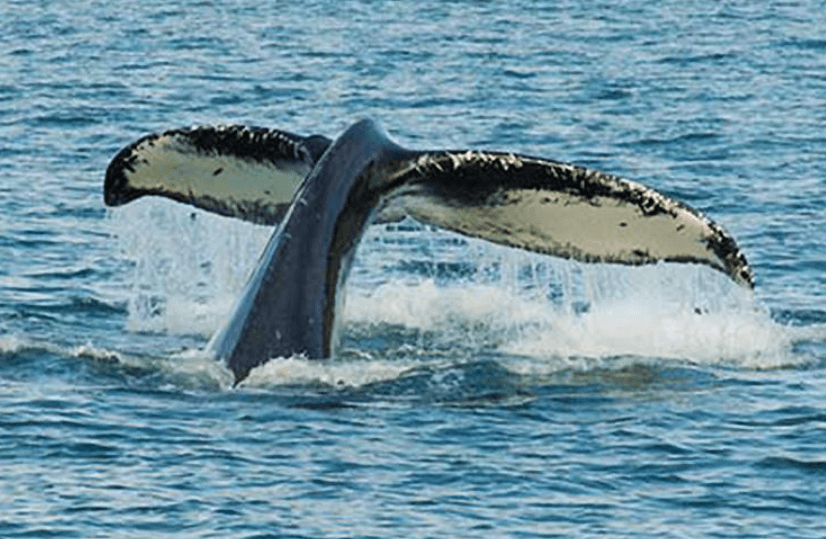
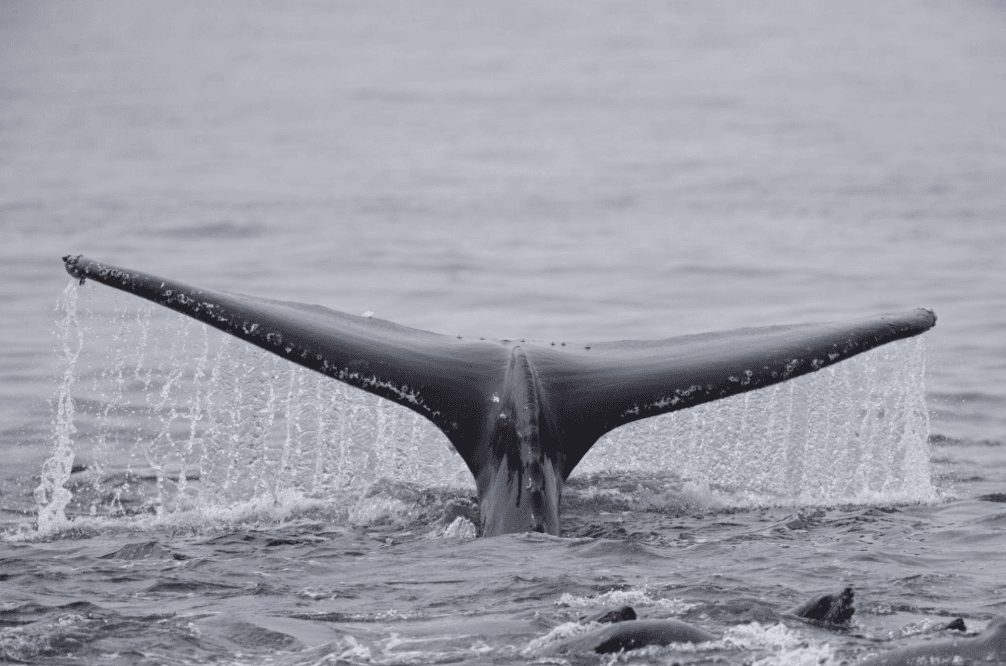
Humpback whales move forward primarily by moving their powerful tail flukes up and down. This movement pushes against the water and generates forward thrust.
A calf uses the same basic body design as an adult, but its smaller body and developing muscles affect how it moves.
As the calf grows, it can build the strength and endurance required to travel alongside its mother over longer periods.
2. Adjusting body position
A swimming whale must maintain a suitable body position as it moves through water. Small changes in posture can affect its direction, balance, and movement.
Young calves may display movements that look less smooth or more variable than those of adults. However, observers should be cautious about interpreting a single movement as evidence that a calf is struggling or learning a specific skill.
Natural behavior varies, and photographs or brief sightings rarely reveal the full context of an animal's movements.
3. Using the pectoral fins
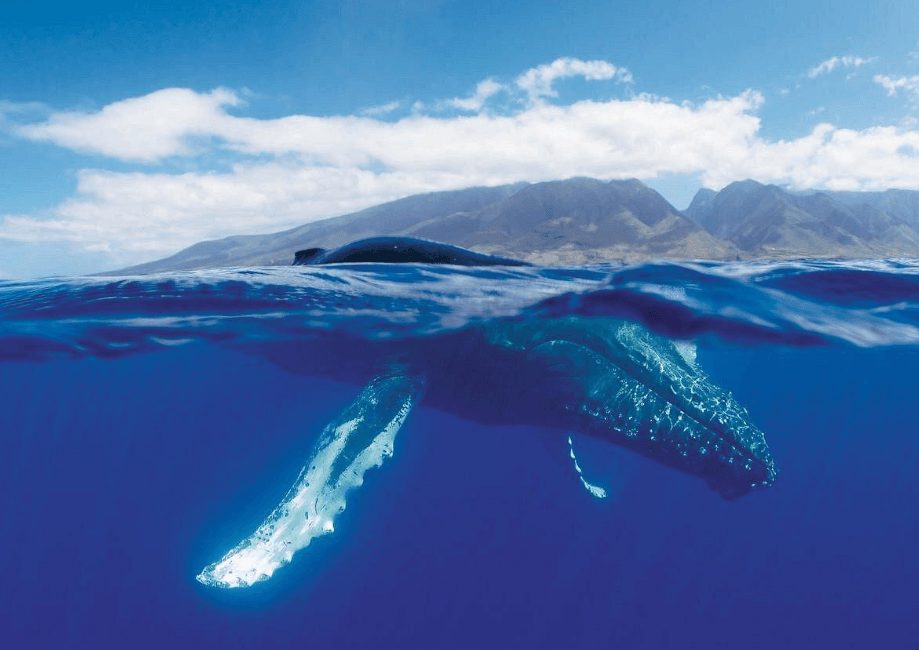
Humpback whales have exceptionally long pectoral fins compared with many other whale species. These fins contribute to maneuvering and control.
A calf must coordinate its body and fins while swimming near its mother and responding to changing surroundings.
The ability to change direction, maintain position, and move through the water supports the calf's growing independence.
How Do Humpback Whale Calves Know When to Breathe?
Whales do not breathe underwater like fish. They breathe air through blowholes located on top of their heads.
A calf must surface to take a breath and then return underwater. Breathing and swimming are therefore closely connected.
Surfacing for air
When a calf rises to the surface, it can exhale and inhale through its blowholes. The visible spray sometimes called a whale's blow is mainly warm, moist air and water droplets released around the blowholes, rather than seawater being expelled from the lungs.
The calf must coordinate surfacing with its swimming movements. Its breathing needs change with activity, conditions, and its stage of development.
Why calves remain close to their mothers
Staying near the mother helps keep the calf within the same general area while both animals surface and move through the water.
A mother and calf may not rise at precisely the same moment on every occasion. Their movements can differ while they remain associated.
For whale watchers, this means the pair may surface together, at slightly different times, or in a way that makes one animal temporarily harder to see.
Such variation is normal and should not automatically be interpreted as separation or distress.
How Do Humpback Whale Calves Develop Their Diving Abilities?
Diving is an essential part of life for a whale. Even when an animal spends much of its visible time near the surface, it must be capable of descending underwater and returning to breathe.
Young calves have developing physiological and behavioral abilities. Their diving performance changes as they grow and become more capable swimmers.
Shorter dives and gradual development
A calf's diving behavior is influenced by its size, physical condition, activity, and need to remain near its mother. Its underwater movements may differ from those of a mature whale.
It is not possible to determine a calf's age or health reliably from a single dive observed during a whale-watching trip.
Researchers studying whale behavior may use repeated observations, tagging where appropriate, and other scientific methods to investigate dive patterns. The details vary according to the study and the methods available.
Learning to return to the surface
Every dive must be followed by surfacing to breathe. The calf's ability to swim underwater and return to the surface is therefore fundamental to survival.
As the calf grows, it can develop greater swimming capacity and adapt its movements to changing conditions.
However, there is no single fixed timetable that applies identically to every calf. Individual development varies, and brief sightings provide only limited information about what happens underwater.
Why deep diving is not the main focus in Samaná
Samaná is widely known as a seasonal breeding area for North Atlantic humpback whales. During this period, mothers and calves may be observed in the region's waters.
For a young calf, remaining associated with its mother and developing basic swimming and breathing abilities are important aspects of early life.
Visitors should not assume that a calf is preparing for a deep dive whenever it descends from view. It may simply be moving underwater before surfacing again.
What Role Does the Mother Play in Calf Development?
A humpback whale mother plays a major role in supporting her calf during its early life.
The calf receives milk, stays associated with its mother, and develops while moving through the marine environment. This relationship is especially important because a young whale must grow while learning to function in open water.
Providing milk and energy
Humpback whale calves depend on their mothers' milk for nourishment. Milk provides the energy and nutrients needed for growth.
Producing milk places energetic demands on the mother, which relies heavily on energy reserves accumulated during feeding periods.
This connection between maternal energy and calf growth helps explain why the breeding season is such an important part of the humpback whale life cycle.
Maintaining close association
A mother and calf often travel in close proximity. This association allows the young whale to move with its mother through the breeding area.
Their spacing can change, and they may not always be equally visible from a boat. A temporary gap in a viewing angle does not necessarily mean the pair has separated.
Supporting early development
The mother's presence is an important feature of the calf's early environment, but it would be misleading to describe every swimming movement as a lesson deliberately taught by the mother.
Calves develop through a combination of their natural physical capabilities, growth, experience, and continued association with their mothers.
Scientists continue to study how whale calves develop and how their behavior changes during the early stages of life.
Do Humpback Whale Calves Copy Their Mothers?
Young whales can be observed swimming alongside their mothers and moving in broadly similar directions. Such observations show how closely their movements may be associated.
However, it is difficult to establish from a brief encounter whether a calf is deliberately copying a particular movement or simply responding to the mother's location and the surrounding conditions.
A calf's movements may be influenced by proximity, swimming needs, physical development, and the shared direction of travel.
Researchers distinguish between observed behavior and explanations for why it occurs. A photograph showing a mother and calf making similar movements does not, on its own, prove that the calf is imitating the mother.
For visitors, the most reliable interpretation is to appreciate the association without assigning a specific intention to every movement.
Why Do Calves Sometimes Surface Beside Their Mothers?
Mother-and-calf pairs may surface close together because they are traveling in the same area and maintaining a close association.
Seeing both animals at the surface can provide a useful opportunity to appreciate their relative size and the calf's position beside the adult.
However, their exact positions change constantly. A calf may appear beside the mother's body, behind her, or at a different angle depending on how both animals are moving.
The pair may also surface at different moments, making it possible to see one whale clearly while the other remains underwater.
These differences are part of observing mobile animals in an open environment. They do not automatically reveal the calf's developmental stage or indicate whether the mother is providing a particular form of instruction.
What Can Whale Watchers Learn from Seeing a Mother and Calf?
A mother-and-calf encounter can help visitors understand several aspects of humpback whale biology.
First, it illustrates the importance of maternal care and the period of rapid growth following birth.
Second, it shows that whales must coordinate swimming with breathing because they are air-breathing mammals.
Third, it provides a reminder that the behavior visible above water represents only a small portion of the animals' lives.
A calf may be underwater for much of an encounter, while its mother may surface at intervals. What visitors see is a brief window into a longer sequence of movement and behavior.
Guides can provide useful context, but responsible interpretation should avoid claiming to know the precise age, health, or intentions of a calf without adequate evidence.
How Should Boats Behave Around Mother-and-Calf Pairs?
Mother-and-calf pairs deserve particular consideration because calves are young animals in an important developmental stage.
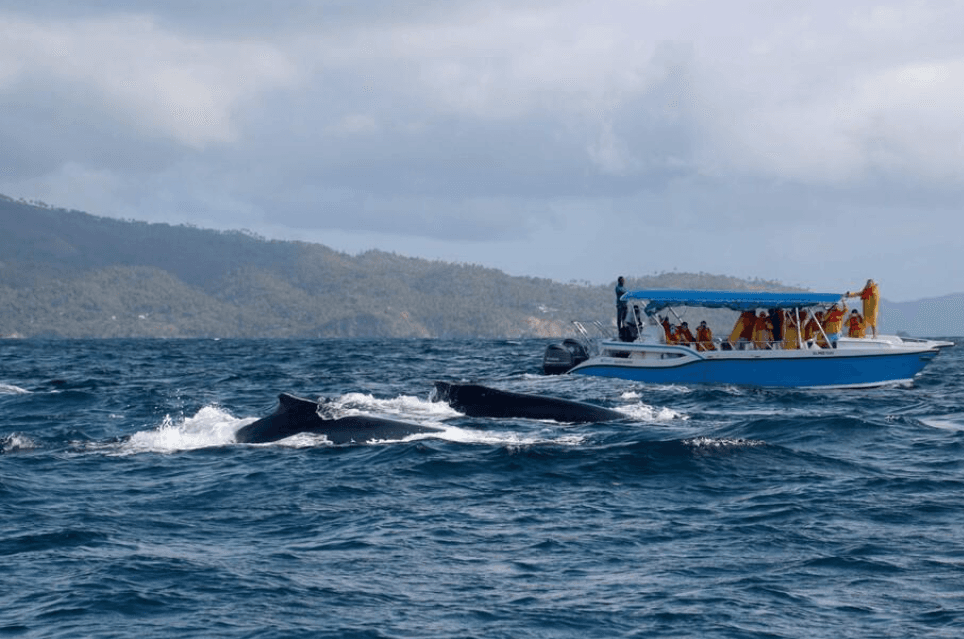
Responsible whale watching should follow applicable local rules and guidance for vessel approach, distance, speed, and viewing duration. The specific requirements should be confirmed with the relevant authorities and operator.
Passengers can help by following the crew's instructions, remaining seated or in designated areas when required, and avoiding actions that distract the crew or interfere with safe operation.
A close encounter is not necessarily a better encounter. Respectful observation allows whales to move naturally without unnecessary pressure from vessels.
If a mother and calf are visible, allow the crew to manage the encounter appropriately rather than encouraging the boat to move closer.
Frequently Asked Questions
Can humpback whale calves swim when they are born?
Yes. Calves must be able to swim soon after birth and reach the surface to breathe. Their coordination, strength, and endurance continue developing as they grow.
How do baby humpback whales breathe?
They breathe air through blowholes on top of their heads. They surface to exhale and inhale before descending underwater again.
How long can a humpback whale calf stay underwater?
Dive duration varies with age, activity, and other conditions. There is no single duration that applies to every calf, and a brief surface sighting cannot establish exactly how long a particular animal can remain underwater.
Do humpback whale calves learn from their mothers?
The mother's close association is important during early development. Calves develop their abilities while growing and moving with their mothers, although individual observations do not always reveal whether a particular movement is imitation or another response.
Why do whale calves stay close to their mothers?
The mother provides milk and the calf remains associated with her while developing in the marine environment. Their proximity can vary during swimming and surfacing.
Can I tell a calf's age by its swimming style?
Not reliably from a single sighting. Swimming behavior varies, and age estimation requires more information than a brief observation usually provides.
Are humpback whale calves born in Samaná?
Samaná is an important seasonal breeding and calving area for North Atlantic humpback whales. Calves are born in the wider breeding region, but a visitor cannot assume that a particular calf was born at the exact location where it is observed.
Is it safe for boats to approach a mother and calf closely?
Vessels should follow applicable wildlife-viewing rules and responsible operating practices. Passengers should never encourage an unsafe approach; the crew should manage the encounter according to the relevant guidance.
Final Thoughts: A Young Whale's First Steps in the Ocean
Humpback whale calves enter the world needing to swim and breathe at the surface, but their early abilities continue to develop as they grow.
Their movements involve coordination between the body, tail flukes, and pectoral fins. Their diving behavior changes with development, and their close association with their mothers supports this important early stage of life.
In Samaná, seeing a mother and calf offers a valuable opportunity to learn about whale reproduction and development. The encounter is most meaningful when visitors observe patiently, interpret behavior carefully, and respect the space these animals need.
Every mother-and-calf pair is part of a much larger story of migration, growth, and survival in the ocean.

Local explorer & expert guide in Samaná Whale Sanctuary.