How Can Whale Watchers Tell When a Humpback Whale Is About to Dive in Samaná Bay?
One of the most exciting moments during a whale-watching trip in Samaná Bay, Dominican Republic, is watching a humpback whale prepare to disappear beneath the surface. A moment earlier, its back may have been clearly visible. Then its body changes position, the water closes over it, and the whale is gone.
For visitors, recognizing the signs that may occur before a dive can make the encounter more interesting. You might notice the whale’s back arching, its body angle changing, or its tail flukes rising above the water.
However, not every dive looks the same. A humpback whale can submerge without showing its tail, and no single visual clue guarantees exactly when or how it will dive.
This guide explains what whale watchers can look for, how to distinguish a possible deep dive from an ordinary submergence, and how to make the most of these brief moments in Samaná Bay.
Why Do Humpback Whales Dive?
Humpback whales spend much of their lives underwater, returning to the surface to breathe air. During the seasonal whale-watching period in Samaná Bay, visitors see only part of their activity.
A whale may submerge while traveling, changing its position, or engaging in other underwater activities. The reason for a particular dive is not always visible from a boat.
Some dives are relatively brief, while others may keep the whale out of sight for longer. The duration depends on the circumstances and the individual animal.
For whale watchers, the most useful approach is to observe the whale’s body position and movement without assuming that every dive has the same purpose.
1. Watch for the Whale’s Back to Arch
One possible sign of an impending dive is a change in the curve of the whale’s back.
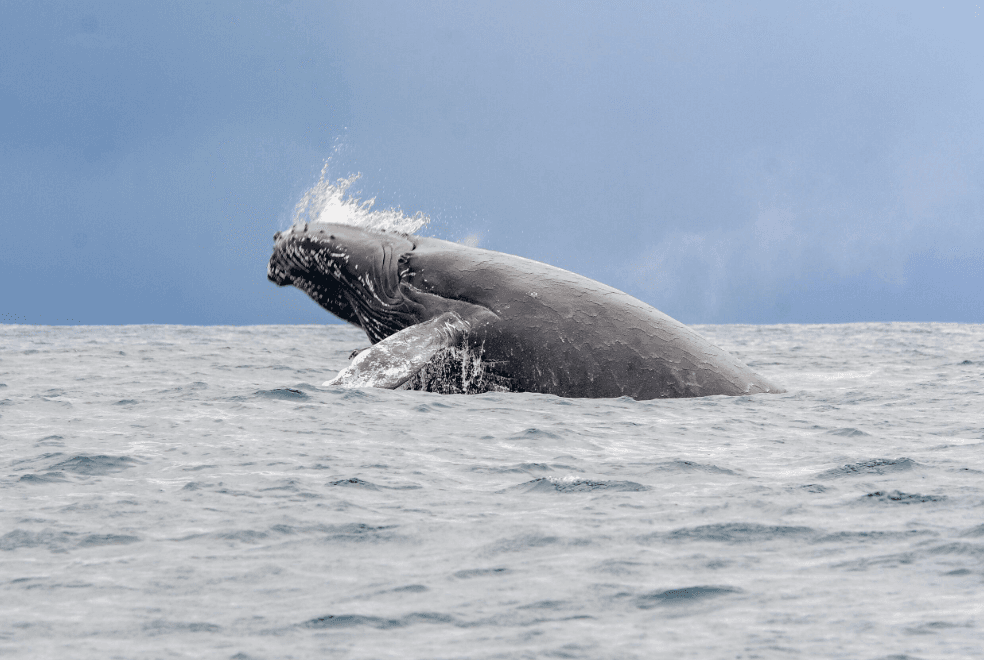
As a humpback whale angles its body downward, its back may appear more strongly arched above the water. The visible shape can change as the animal moves from swimming near the surface to descending.
This movement is particularly useful to observe because the whale’s back may remain visible for a short time before it disappears.
However, an arched back does not guarantee that a deep dive is about to happen. The whale may change its posture and submerge without performing a dramatic descent.
Whale-watching tip: Focus on the overall body movement rather than trying to predict the exact moment the whale will disappear.
2. Look for the Tail Flukes Rising
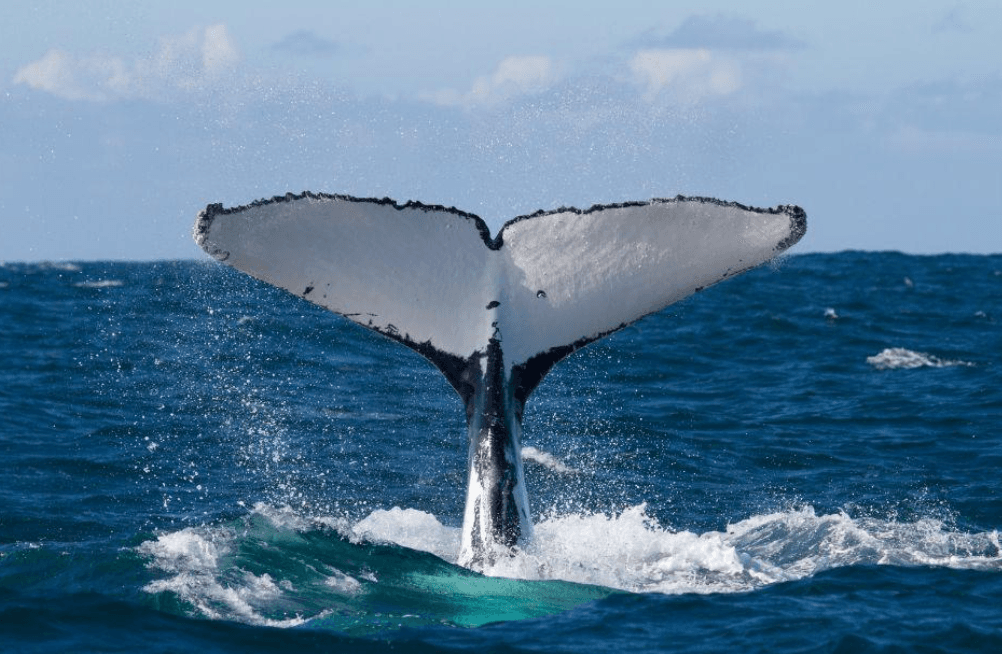
A raised tail fluke is one of the most recognizable sights during a humpback whale encounter.
Before some deeper dives, a whale angles its body downward and lifts its broad tail flukes above the water. The flukes may appear briefly before the animal descends out of sight.
This behavior is often called a fluke-up dive. When it occurs, it provides a clear visual moment for visitors and photographers.
Not every dive includes a fluke display, though. A humpback whale can submerge without raising its tail above the surface. The absence of a visible fluke does not mean the whale is not diving deeply.
Whale-watching tip: If you see the tail rise, keep watching the water rather than assuming the encounter has ended. The whale may surface again later, although its next location and timing cannot be predicted precisely.
3. Notice Changes in the Whale’s Body Angle
A humpback whale preparing to descend may change the angle of its body relative to the surface.
Its back might slope downward, and the visible portion of the animal may become smaller as it moves underwater. Depending on the viewing angle and sea conditions, this transition can be subtle.
From a boat, it can be difficult to distinguish a downward movement from a change in direction. Waves, distance, and the vessel’s own motion can make the whale’s posture harder to interpret.
For this reason, look for a sequence of movements rather than relying on a single glimpse.
4. Observe the Final Surface Appearance
Before disappearing, a whale may show its back, dorsal fin, or tail area one last time. These details can help visitors recognize that the animal is moving out of sight.
The final visible movement varies. Some whales expose their tail flukes, while others simply sink below the surface.
There is no universal sequence that every humpback whale follows before diving. Even experienced observers cannot always predict exactly what will happen next.
A good whale-watching experience involves noticing the pattern while accepting that wildlife does not perform on a schedule.
5. Understand the Difference Between a Brief Submergence and a Deep Dive
A whale disappearing beneath the surface does not automatically mean it has begun a long, deep dive.
Humpback whales may submerge briefly and reappear nearby, or they may remain underwater for a longer period. From the surface, the difference may not be obvious at first.
A visible tail-fluke lift can accompany a deeper dive, but it is not a requirement. Likewise, the whale’s disappearance alone cannot tell you its exact depth.
Rather than trying to classify every submergence immediately, observe what happens over time. If the whale returns to the surface, note its location and the visible movements that preceded the next dive.
Why Does a Whale Sometimes Show Its Tail Before Diving?
Raising the tail flukes is part of the body movement that can occur when a humpback whale angles downward for a deeper dive.
The whale’s powerful tail helps propel it through the water. As its body changes orientation, the tail may rise above the surface before the animal descends.
A fluke-up display is therefore useful to recognize, but it should not be treated as proof of what the whale intends to do next or how long it will remain underwater.
The most accurate description is that a tail-fluke lift often accompanies a particular kind of dive, while other dives happen without this visible signal.
Can You Predict Exactly When a Humpback Whale Will Dive?
No. You can recognize possible signs, but you cannot reliably predict the precise moment of every dive.
A whale might arch its back, lift its tail, or submerge with very little warning. Conditions on the water can also make some movements difficult to see.
Even when a familiar pattern appears, the whale may behave differently on its next surfacing. This is part of observing a wild animal rather than a staged performance.
Instead of focusing on perfect prediction, use the opportunity to notice how the whale moves and how its visible body position changes over time.
How to Photograph a Humpback Whale Before It Dives
If you want to photograph a whale in Samaná Bay, preparation can help you capture a brief moment without missing the experience itself.
- Keep your camera ready: A tail-fluke lift or change in body posture may last only a short time.
- Watch before taking the picture: Observing the whale directly can help you notice changes that might otherwise be missed.
- Use a suitable shutter speed: If you have control over your camera settings, a faster shutter speed can help freeze movement in good lighting.
- Avoid focusing only on the tail: The whale’s back, dorsal fin, and overall posture may also provide useful images.
- Follow the crew’s instructions: Keep your equipment secure and never encourage the boat to approach too closely for a photograph.
You may not capture every movement, and that is perfectly fine. A memorable encounter does not depend on getting a perfect picture.
What Should You Do When a Whale Disappears?
When a humpback whale submerges, remain attentive and allow the crew to manage the boat.
Do not assume the whale will surface in the same place or immediately return. Its underwater movement may take it beyond your current line of sight.
Listen to your guide, watch the surrounding water, and avoid asking the operator to chase the animal. Responsible whale watching means respecting the whale’s movement and following local rules.
The animal may appear again, but the timing and location of its next surfacing are not guaranteed.
Frequently Asked Questions
What is the clearest sign that a humpback whale is about to dive?
An arched back and a change in body angle may indicate that the whale is preparing to submerge. A raised tail fluke is a recognizable sign of some deeper dives, but not all dives include one.
Do humpback whales always lift their tails before diving?
No. A whale may dive without showing its tail flukes above the surface.
What does it mean when a whale raises its tail vertically?
It may be angling its body downward for a deeper dive. However, the exact movement and purpose depend on the circumstances.
How long will a whale stay underwater after a dive?
The duration varies. Visitors should not assume that every dive will last the same amount of time or that the whale will resurface nearby.
Can I tell how deep a humpback whale is diving?
Not from surface observations alone. A visible tail lift may suggest a deeper dive, but it does not reveal the whale’s exact depth.
What is the best way to watch a whale dive?
Observe its body posture, look for changes in its back and tail, and follow the guide’s instructions. Be ready for the possibility that the whale may submerge without an obvious warning.
Final Thoughts
Learning to recognize the possible signs of a humpback whale’s dive can add another dimension to whale watching in Samaná Bay. An arched back, a changing body angle, or a raised tail fluke may provide clues that the animal is about to disappear beneath the surface.
These signals are not guarantees, and not every dive follows the same pattern. Some whales show their tail flukes clearly, while others submerge with little visible warning.
During your next whale-watching trip, watch the whale’s whole body, appreciate the small details, and let the crew guide the encounter. Sometimes the most rewarding part is not predicting exactly what will happen, but noticing the moment as it unfolds.

Local explorer & expert guide in Samaná Whale Sanctuary.