How Do Scientists Determine Whether Humpback Whale Songs Change During a Single Singing Session?
Humpback whales are known for their elaborate songs, which can contain repeated sounds, recognizable phrases, and longer sequences of vocal units. Although researchers have documented changes in whale songs across seasons and populations, another important question concerns what happens over a much shorter period: does a humpback whale change its song during a single singing session?
Studying short-term variation helps scientists understand how whale songs are organized and performed. A singer may repeat a phrase, pause, alter the timing of a sequence, or move from one part of a song to another. Researchers must determine whether these observations represent genuine changes in vocal behavior or simply reflect differences in recording conditions and the difficulty of interpreting underwater sounds.
For those interested in Samaná whale watching in the Dominican Republic, this research offers a closer look at the acoustic behavior that occurs beneath the ocean surface.
What Is a Humpback Whale Singing Session?
A singing session is a period during which a whale produces a sequence of vocalizations recognized as song. In practice, researchers must define the beginning and end of a session according to their study methods and the available recordings.
A session may contain repeated phrases, transitions between song sections, and periods of silence. A pause does not necessarily mean the whale has permanently stopped singing, and a recording that ends does not prove the whale's session has ended.
This distinction matters because researchers can only analyze the sounds captured by their equipment. They may lose contact with a singer because of movement, background noise, equipment limitations, or the presence of other vocalizing whales.
Scientists therefore document recording gaps and use consistent criteria when identifying sessions for analysis.
1. Recording the Song Continuously
The first step is collecting recordings that cover as much of a singing session as practical.
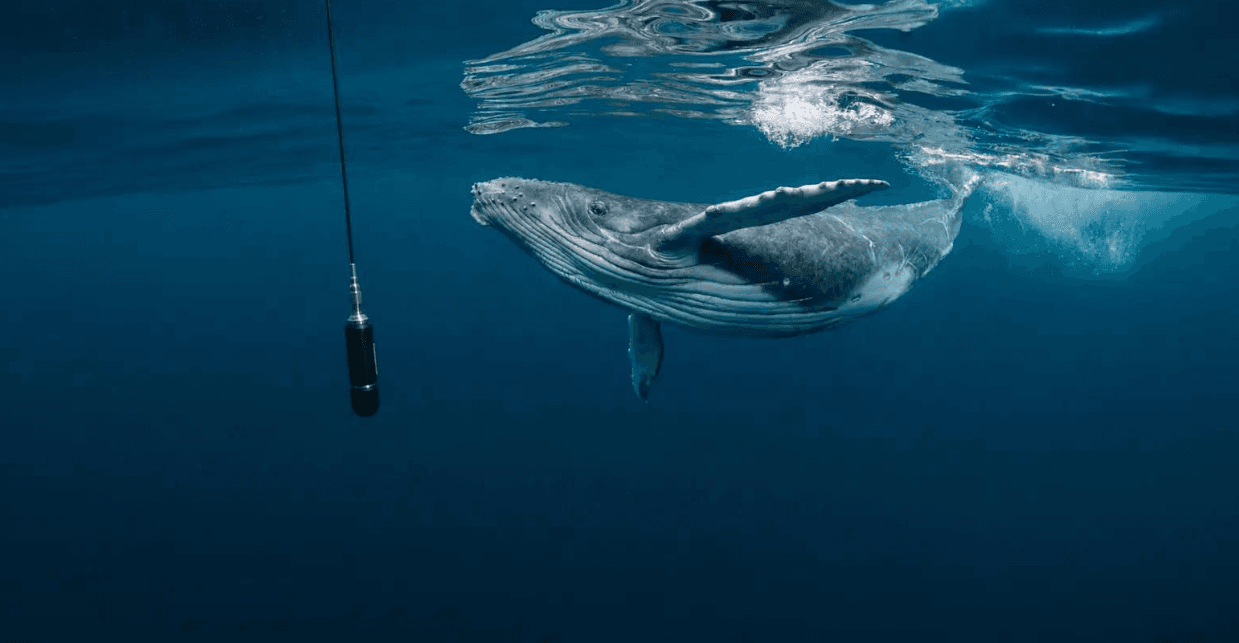
Hydrophones, or underwater microphones, capture sounds that travel through the water. Researchers may use stationary recording devices or equipment deployed from a vessel, depending on the research question and local conditions.
Continuous recordings are particularly useful because they preserve the order of sounds. A short recording might capture only one phrase, while a longer recording can reveal how phrases repeat, how transitions occur, and whether the pattern changes later in the session.
Researchers also record information about the time, location, equipment, and surrounding conditions whenever possible.
Background noise from vessels, waves, other animals, and recording equipment can make a song difficult to interpret. Scientists must distinguish changes in the recorded signal from changes that are likely to have occurred in the whale's vocal behavior.
2. Using Spectrograms to Track Vocal Patterns
A spectrogram displays sound frequency over time, allowing researchers to examine the structure of a song visually.
The horizontal axis usually represents time, while the vertical axis represents frequency. The strength of the sound appears as differences in visual intensity or color, depending on the software.
Spectrograms help scientists locate vocal units, compare their shapes, measure their duration, and observe how one sound follows another.
For example, researchers might examine whether a phrase contains the same sequence of units each time it repeats. They may also identify a change in the frequency contour of a sound or a difference in the spacing between phrases.
A spectrogram is not a direct explanation of why a whale changes its song. It provides a visual and measurable record that researchers can compare with other observations.
3. Measuring Repetition Within a Session
Repetition is an important feature of humpback whale song. A singer may repeat recognizable phrases several times before transitioning to another part of its song.
Researchers can count repetitions, measure the time between them, and compare the acoustic structure of successive examples.
Several patterns may emerge. A phrase may remain relatively consistent across repetitions, show small differences in timing, or contain measurable acoustic variation.
Scientists should not automatically interpret every difference as a new song component. Natural performance variation, overlapping sounds, and changes in recording quality can create apparent differences.
To make reliable comparisons, researchers establish clear criteria for identifying units and phrases. They can then evaluate how consistently those features appear throughout the session.
Repeated phrases provide a useful baseline for studying short-term variation because researchers can compare multiple examples produced within a relatively limited period.
4. Tracking Changes in Phrase Order
Researchers can also investigate whether the order of song phrases changes during a session.
They may label recognizable units or phrases and create a sequence showing the order in which they occur. Comparing these sequences can reveal repeated sections, transitions, and differences between successive portions of a recording.
For example, a singer may produce several repetitions of one phrase before moving into another recognizable section. Researchers can examine whether that sequence recurs and how much variation occurs between repetitions.
However, a change in phrase order does not necessarily indicate that the whale has invented a new song. The observed sequence may be part of its usual song structure.
Scientists need recordings long enough to establish a meaningful comparison and must consider whether parts of the sequence were missed or obscured.
5. Measuring the Duration of Sounds and Pauses
The duration of individual sounds and the timing of pauses can provide additional information about short-term song variation.
Researchers may measure how long each unit lasts, the interval between successive units, and the time separating phrases. These measurements help describe the rhythm and timing of a singing session.
If a whale gradually changes the spacing between phrases, scientists can quantify that change and determine whether it persists across multiple repetitions.
A pause must nevertheless be interpreted carefully. Silence in a recording may mean the whale stopped vocalizing, moved out of detectable range, or produced sounds that the recording system did not capture clearly.
Researchers therefore distinguish an observed period without detectable song from a confirmed behavioral stop whenever the available evidence does not establish the difference.
6. Distinguishing Real Changes From Recording Problems
One of the most important challenges is determining whether an apparent change belongs to the whale or to the recording.
Several factors can alter how a vocalization appears in an acoustic record:
- Changing distance: A whale moving farther from a hydrophone may sound weaker or less clear.
- Background noise: Vessel engines, waves, and other sounds may mask parts of a phrase.
- Overlapping singers: Another whale may produce sounds that overlap with the recording of interest.
- Equipment differences: Microphone sensitivity and recording settings can affect the captured signal.
- Incomplete recordings: Missing sections can make a familiar sequence appear different.
Scientists address these problems through quality checks, consistent processing methods, and comparisons between multiple examples.
If a feature appears to change only when recording conditions deteriorate, researchers should be cautious about concluding that the whale changed its vocal behavior.
Reliable analysis separates changes in the underlying vocalization from changes in the way that vocalization was captured.
7. Comparing the Beginning and End of a Session
A practical method is to compare selected sections from different points in the same recording.
Researchers might analyze an early section, a middle section, and a later section. They can compare frequency measurements, unit duration, repetition rates, phrase structure, and pauses.
This approach helps determine whether particular features remain stable or vary during the session.
For example, a scientist could test whether the duration of a repeated vocal unit differs between the beginning and end of a recording. If the difference is consistent and exceeds expected measurement uncertainty, it may warrant further investigation.
The result still requires careful interpretation. A difference in a measured feature does not automatically establish a meaningful change in song organization or communication.
Researchers may need additional recordings to determine whether the observed pattern is typical of that singer or unique to one session.
8. Using Software to Analyze Long Recordings
Long acoustic recordings can contain far more data than researchers can efficiently inspect manually. Software helps organize and analyze these data.
Depending on the study, scientists may use tools to display waveforms, generate spectrograms, mark vocal units, calculate acoustic measurements, and compare repeated patterns.
Automated detection systems can help locate possible song segments, but their outputs require validation. Background noise and overlapping calls may lead to missed sounds or false detections.
Researchers also need to use consistent analysis settings. Changing the way sounds are filtered, segmented, or measured can influence the apparent differences between sections.
Keeping clear records of analytical decisions makes the findings easier to evaluate and reproduce.
9. Determining Whether a Change Is Meaningful
Not every measurable difference is scientifically important.
A phrase may vary slightly in duration or frequency without representing a substantial change in the song's organization. Researchers therefore distinguish measurement variation from changes that are sufficiently consistent to support further interpretation.
They may examine the size of a difference, how often it occurs, and whether similar changes appear in other sessions.
Statistical methods can help assess patterns, but the choice of method depends on the research question and the quality of the data. Researchers must avoid treating repeated measurements from one session as if they necessarily represented independent observations from many different whales.
The interpretation should reflect the scope of the evidence. A study of one singing session can describe variation in that session, but it cannot establish how all humpback whales sing.
10. Why Singer Identity Matters
When several whales are vocalizing in the same area, researchers must determine whether a sequence of sounds can reasonably be attributed to one singer.
If the source changes midway through a recording, apparent variation may reflect two different whales rather than a change within one individual's song.
Acoustic characteristics, recording context, spatial information, and other observations may help researchers assess the likely source. However, underwater recordings do not always make individual attribution possible.
Scientists should report uncertainty when they cannot confidently establish that the same whale produced all the sounds under comparison.
This is particularly important when investigating short-term changes, because the research question depends on comparing vocal behavior within one singer's session.
11. Applying This Approach to Samaná Bay
Samaná Bay is a well-known seasonal destination for humpback whale watching. Researchers investigating local song behavior could use underwater recordings to examine how vocal patterns vary during individual singing sessions.
A suitable study might document recording times and locations, collect continuous acoustic samples where practical, identify song units, and compare repeated phrases within each session.
Researchers would also need to consider boat noise, overlapping singers, and the possibility that the recording starts or ends before the whale's actual singing session does.
Repeated observations across different days could help determine whether short-term patterns recur. However, conclusions about local whale behavior must be supported by recordings and documented analysis.
Without verified local data, it would be inappropriate to claim that a particular pattern of within-session change has already been demonstrated in Samaná Bay.
For visitors, the main lesson is that whale behavior extends far beyond what can be seen at the surface. Scientific recordings allow researchers to study these underwater vocal sequences without assuming that every sound or pause has a single obvious meaning.
12. What Short-Term Song Analysis Can Reveal
Analyzing a singing session provides information about the organization and performance of whale song over short timescales.
Researchers can describe repeated phrases, measure timing, compare acoustic features, and investigate whether changes are consistent across different portions of a recording.
These findings can support wider studies of humpback whale vocal behavior. They may also help researchers decide which patterns deserve further investigation across longer periods or between different singers.
However, short-term analysis alone cannot establish why a whale changed a vocal pattern. Explanations involving learning, social influence, or communication function require additional evidence.
The most reliable research combines careful acoustic measurement with an understanding of the recording context and the limitations of the observations.
Conclusion
Scientists determine whether humpback whale songs change during a single singing session by analyzing continuous recordings, comparing spectrograms, measuring repeated phrases, tracking pauses, and examining changes in timing and song structure.
They must also rule out alternative explanations, including background noise, overlapping singers, incomplete recordings, and equipment-related differences.
A single session can reveal useful details about vocal variation, but it cannot answer every question about whale communication. Repeated recordings, reliable identification of the singer, and careful interpretation are essential for stronger conclusions.
For anyone interested in Samaná whale watching, this research demonstrates how scientists can study the intricate sounds of humpback whales beyond surface observations—and why understanding those sounds requires patience, accurate measurements, and evidence-based conclusions.

Local explorer & expert guide in Samaná Whale Sanctuary.