How Do Scientists Use Humpback Whale Identification Records to Estimate How Long Individual Whales Live?
Humpback whales are long-lived marine mammals, but determining the age of an individual whale can be difficult when researchers cannot observe its entire life. In Samaná Bay, Dominican Republic, seasonal sightings provide opportunities to recognize individual whales and build records of their appearances over time.
Scientists can use these records to investigate longevity, but there is an important distinction: knowing when a whale was first photographed is not the same as knowing when it was born. A whale may already be many years old when researchers encounter it for the first time.
By combining long-term identification records with other biological information, scientists can estimate minimum ages, examine survival patterns, and investigate how long individual whales remain documented in a population.
Why Is Humpback Whale Longevity Difficult to Measure?
Humpback whales travel across large areas of the ocean. Researchers may observe an individual in one breeding season and fail to photograph it again for several years.
This creates a challenge when estimating age. Scientists rarely have a complete record beginning at birth and ending at death for a wild whale.
An individual may disappear from a research catalogue because it moved to another area, was not encountered during a survey, or could no longer be identified confidently from available photographs. Therefore, the last recorded sighting does not necessarily indicate the end of the whale's life.
Researchers must distinguish between the animal's actual lifespan and the period during which it was documented.
1. Building Long-Term Identification Records
The process begins with records that allow researchers to recognize individual whales across different encounters.
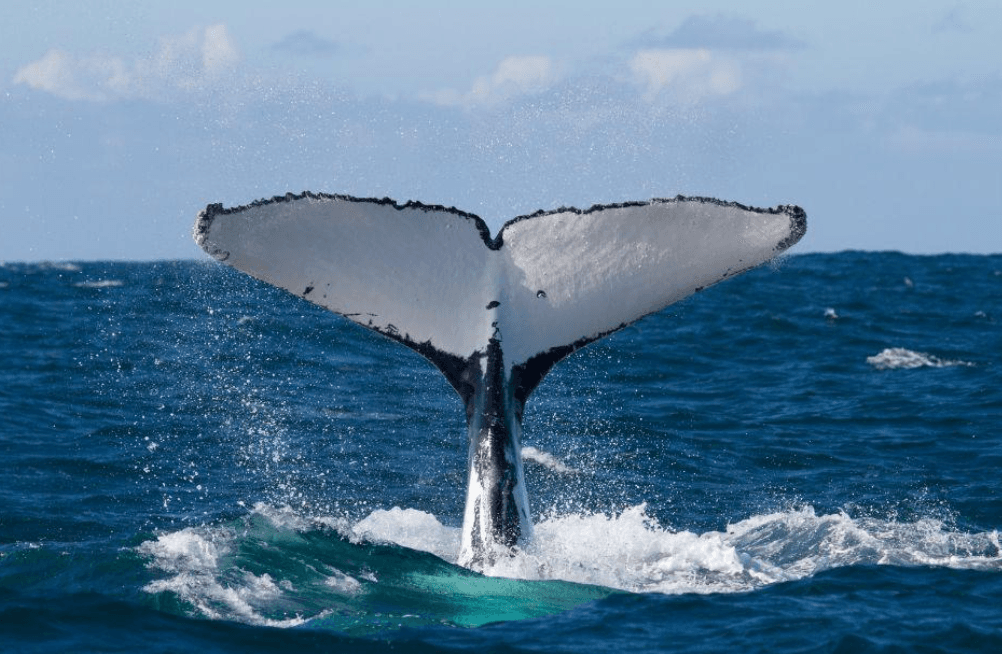
Photographs of tail flukes and other natural markings can help researchers determine whether a newly observed whale matches an existing catalogue entry.
Each reliable sighting may contribute information such as:
- The date of the observation.
- The location where the whale was recorded.
- The photograph or identification evidence.
- The individual's previous recorded appearances.
- Any relevant uncertainty about the identification.
Over multiple years, these observations can establish a documented history for an individual whale.
However, the earliest entry in a catalogue only establishes when researchers first recorded that whale in that particular dataset. It does not automatically reveal the whale's true age.
2. Establishing a Minimum Known Age
Repeated sightings can help researchers establish a minimum known age when an individual's identity is reliable.
For example, suppose a whale is photographed in Samaná Bay in 2010 and is confidently identified again in 2025. The record demonstrates that the same individual was alive and observed at both times.
This establishes at least a 15-year interval between documented appearances. It does not establish that the whale was exactly 15 years old in 2025, because it may have been born long before the first photograph.
If researchers can independently establish that the whale was a newborn calf in a particular year, they may be able to estimate its age much more precisely in subsequent years.
The distinction between a minimum known age and a confirmed age is essential for interpreting long-term whale records.
3. Using Calf Observations to Improve Age Estimates
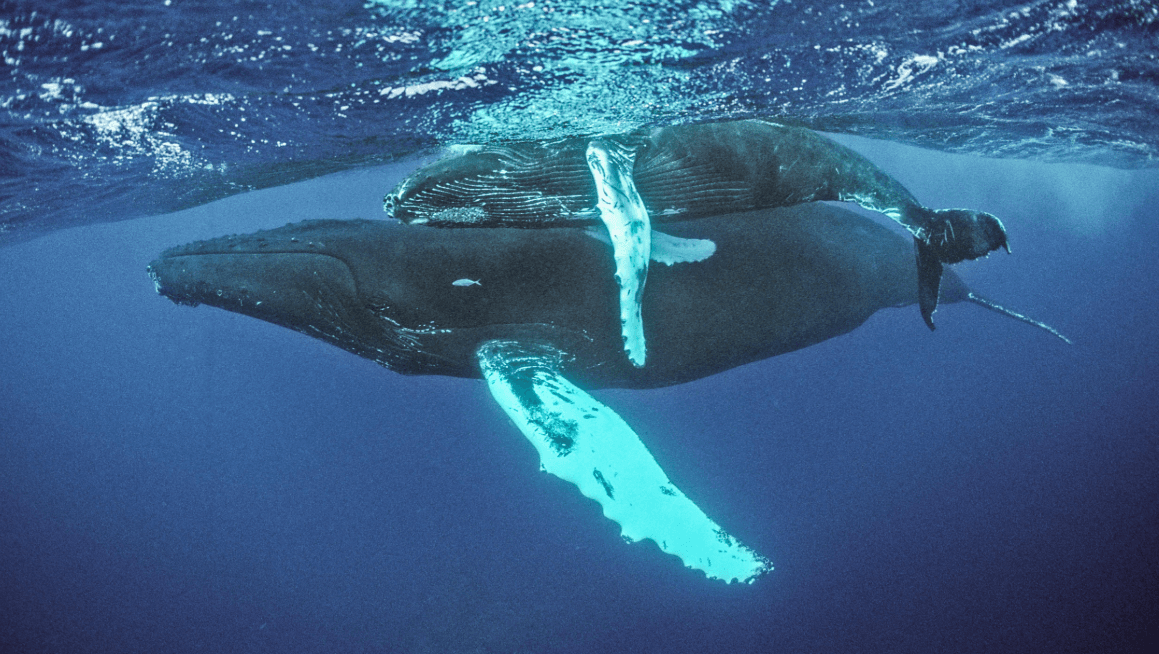
Observing a whale as a newborn or very young calf can provide a useful starting point for estimating age.
If researchers identify a calf alongside its mother and document the observation reliably, that record may establish an approximate birth year. If the individual is subsequently recognized in later seasons, scientists can compare the dates to estimate how old it has become.
However, not every calf observation provides a precise birth date. A calf may already be weeks or months old when first encountered, and researchers must be cautious when assigning an exact age.
A later photograph also needs to be matched to the original individual with sufficient confidence. Otherwise, researchers risk attributing one whale's history to another.
4. Comparing Sightings Across Different Years
Long-term records allow scientists to compare the same whale's appearances across multiple seasons.
A whale documented in several years has a known history extending across those observations. Researchers may investigate how frequently it appears, whether it is observed in different locations, and how long its documented record continues.
These patterns are useful for studying longevity, but researchers must account for gaps between sightings.
For instance, a whale photographed in 2012 and again in 2022 may have been alive throughout the interval, even if no sightings were recorded in the intervening years. The missing photographs do not imply that the whale was absent or dead.
5. Combining Photo-Identification With Other Research Methods
Photo-identification is valuable, but it is not the only source of information about whale age and longevity.
Depending on the research question and available evidence, scientists may also examine:
- Records of known-age calves and their later sightings.
- Long-term monitoring data from multiple locations.
- Biological information collected through appropriate research methods.
- Historical records that can be reliably linked to known individuals.
- Population-level survival estimates derived from repeated observations.
Each method has limitations. A photograph can establish an encounter, but it cannot independently reveal an animal's full biological history.
Researchers gain a more reliable understanding when independent sources of evidence support the same conclusion.
6. Understanding Survival Rates and Individual Lifespan
Individual lifespan and population survival rate are related but different measures.
An individual's lifespan refers to the time between its birth and death. A survival rate describes the proportion or probability of animals surviving over a defined period.
Researchers can use repeated sightings from many identified whales to investigate survival patterns. Statistical methods may account for the fact that some animals are not detected during a particular survey.
This is important because a whale that is not photographed during one season may still be alive elsewhere.
Such analyses can help researchers estimate survival probabilities for a population, even when they cannot determine the exact lifespan of every individual.
7. Why the Last Sighting Does Not Confirm a Whale's Death
One of the most important limitations of long-term whale records is that researchers usually cannot assume a missing whale has died.
A whale may travel beyond the survey area, visit a location where researchers do not operate, or simply go unnoticed during a particular season.
Even when an individual has not been recorded for many years, its fate may remain unknown.
Scientists therefore distinguish between a last known sighting and a confirmed death. This prevents the research record from understating lifespan or incorrectly classifying living animals as deceased.
8. Estimating Longevity When Exact Ages Are Unknown
When researchers do not know a whale's birth date, they can still make useful statements about its documented history.
For example, repeated sightings spanning decades can demonstrate that an individual survived across a substantial period. If the whale was already mature at its first sighting, its actual age may be considerably greater than the documented interval.
Researchers can report the number of years an individual has been known to them without claiming that this is the animal's total lifespan.
For population studies, scientists may also use statistical models that account for incomplete detection and uncertainty. These models can help estimate survival patterns, but their results depend on data quality and the assumptions used.
9. What Long-Term Records Can Reveal About Humpback Whales
Long-term identification records provide more than information about age. They can help scientists examine how individuals use different habitats over time and whether they return to familiar areas in successive seasons.
When records from different locations can be matched reliably, researchers may also investigate movements between observation sites.
These findings can improve understanding of whale population dynamics and support conservation planning. However, a record of repeated appearances in Samaná Bay should not be interpreted as proof that a whale spent the entire interval there.
Humpback whales are mobile animals, and a seasonal sighting history represents only the portions of their lives that researchers were able to document.
10. Why These Records Matter for Conservation
Understanding survival patterns can help researchers assess the long-term condition of whale populations.
If suitable data are available, scientists can investigate whether survival differs between age groups or changes over time. Such information may contribute to assessments of conservation risks and the effectiveness of protective measures.
However, longevity estimates must be interpreted alongside other evidence, including population trends, reproduction, threats, and the limitations of the observation system.
For Samaná Bay, the value of long-term identification work lies in building a more complete understanding of individual whales and the wider population that uses these waters seasonally.
Frequently Asked Questions
How long do humpback whales live?
Humpback whales can live for many decades, and some individuals may reach approximately 80–90 years. Exact ages are difficult to establish for most wild whales, so longevity estimates should be interpreted with appropriate scientific caution.
Can scientists determine a whale's exact age from a tail fluke photograph?
No. Tail fluke photographs help identify individuals, but they do not directly reveal a whale's age. Researchers need additional information, such as a reliable record of the animal as a young calf, to estimate age more precisely.
Does a whale's first recorded sighting tell scientists when it was born?
No. The first recorded sighting establishes when researchers first documented the individual in a particular dataset. The whale may have been alive for many years before that observation.
If a whale disappears from a research catalogue, does that mean it has died?
Not necessarily. It may have moved outside the observation area or gone undetected. Researchers distinguish between an animal that has not been seen again and one whose death has been confirmed.
Can researchers estimate survival without knowing every whale's age?
Yes. Statistical analyses of repeated sightings can help researchers estimate population survival patterns while accounting for incomplete detection. The reliability of these estimates depends on the quality and structure of the data.
How do Samaná Bay whale records help researchers?
Reliable identification records can help scientists document individual appearances across seasons and contribute to research on return patterns, movements, and long-term survival. Specific conclusions about lifespan require appropriate supporting evidence.
Conclusion
Scientists use long-term humpback whale identification records to investigate longevity by connecting reliable sightings across years, identifying known-age calves when possible, and analyzing repeated observations statistically.
These records can establish minimum known ages and help researchers estimate population survival patterns. They cannot, on their own, reveal the exact birth date or total lifespan of every whale.
In Samaná Bay, continued documentation of individual humpback whales can contribute valuable information about their long-term histories. By carefully distinguishing documented sightings from confirmed ages and deaths, researchers can build a more accurate understanding of these remarkable marine mammals.

Local explorer & expert guide in Samaná Whale Sanctuary.