How Do Scientists Determine Whether Individual Humpback Whales Prefer Certain Parts of Samaná Bay?
Samaná Bay in the Dominican Republic is an important seasonal destination for humpback whales during their breeding migration. Every season, whales arrive in these Caribbean waters, creating opportunities for whale watching and scientific research.
Although many whales may use the same bay, they do not necessarily use every part of it in the same way. Some individuals may be observed repeatedly in particular areas, while others may appear in different locations throughout the breeding season.
But how can scientists determine whether an individual humpback whale has a preference for a particular part of Samaná Bay?
Researchers investigate this question by combining photo-identification, sighting records, geographic data, repeated observations, and statistical analysis. These methods help them distinguish possible individual habitat preferences from patterns caused by weather, observation effort, or temporary movements.
Why Study Individual Whale Habitat Preferences?
Studying individual habitat use helps scientists understand how humpback whales interact with their environment.
A bay contains different geographical features, water depths, coastal areas, and exposure conditions. These characteristics may influence how whales use different locations for resting, social interactions, nursing, or other activities.
However, scientists cannot assume that every whale chooses an area for the same reason. A location where a whale is frequently observed might reflect its behavioral needs, the presence of other whales, environmental conditions, or simply better opportunities for researchers to detect it.
Individual-level research helps scientists investigate these possibilities more carefully.
1. Identifying Individual Humpback Whales
The first step is determining which whale has been observed.
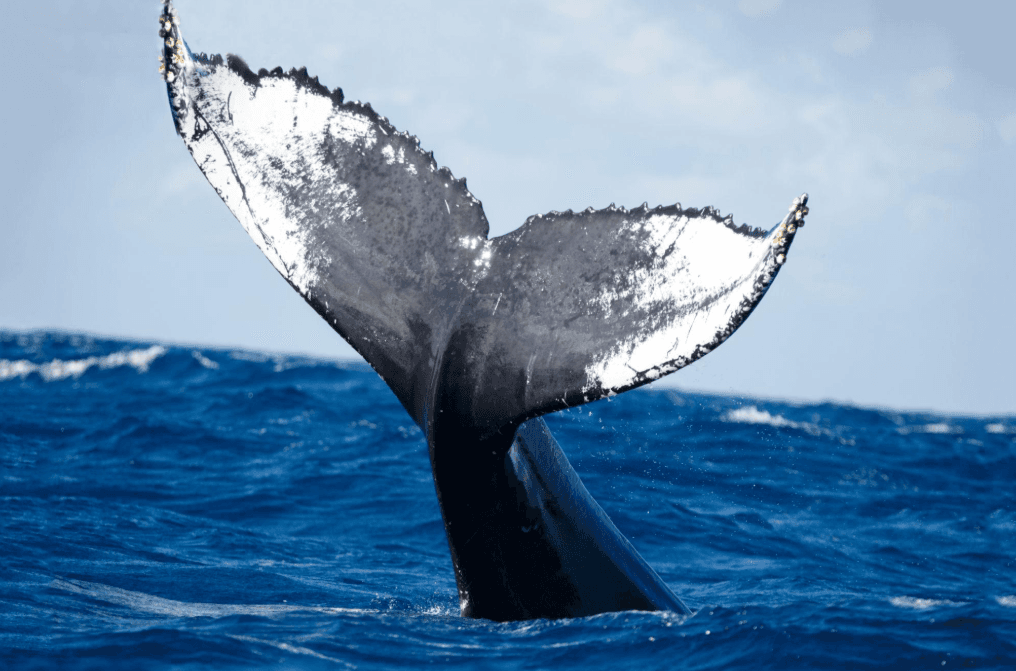
Researchers commonly use photographs of humpback whale tail flukes to identify individuals. The patterns of pigmentation, markings, scars, and edges can help distinguish one whale from another.
When a whale is photographed during different encounters, researchers can compare the images with an existing identification catalog.
If the photographs provide a reliable match, the sightings can be linked to the same individual.
For example, suppose a whale is photographed near one part of Samaná Bay in January and is identified again in a nearby area several days later. Researchers can compare these records to investigate whether the whale repeatedly uses a particular location.
Accurate identification is essential because sightings of different whales must not be mistakenly combined into one individual's movement history.
2. Recording the Location of Every Sighting
After identifying a whale, researchers record where the observation occurred.
Depending on the study, location information may include GPS coordinates, the date and time, the observation platform, and relevant environmental conditions.
Over time, these records create a geographic history for each identified whale.
Researchers can then compare an individual's sightings with the locations used by other whales.
For example, an individual might be recorded several times in the same general section of the bay, while another might be documented across a wider range of locations.
These observations provide a starting point for examining individual differences in habitat use.
Importantly, the records show where whales were observed, not necessarily every place they visited.
3. Building Maps of Individual Whale Sightings
Researchers can place verified sightings on digital maps to visualize where identified whales have been recorded.
A map may show whether an individual has been observed repeatedly in one section of the bay or across several different areas.
Scientists may compare maps from multiple dates or seasons to determine whether an apparent pattern remains consistent.
However, repeated sightings in one location do not automatically prove that a whale prefers it. Researchers must also consider where observation boats traveled and where visibility was good enough to detect whales.
Mapping is therefore most useful when combined with information about research effort and the conditions under which observations were collected.
4. Comparing Individual Whales With the Wider Population
Scientists need a comparison to determine whether an individual's location pattern is unusual.
Suppose one identified whale has several sightings in a particular area. Researchers can compare its records with those of other identified whales observed during the same period.
If many whales use the same area, the pattern may reflect a feature that attracts whales generally rather than a unique preference of one individual.
If an individual repeatedly uses a particular area more than expected relative to its availability and the study's observation effort, the evidence for individual habitat selection may be stronger.
Researchers must also account for differences in the number of sightings available for each whale. An individual photographed many times naturally provides more opportunities to identify a location pattern than one photographed only once.
5. Considering Water Depth and Environmental Conditions
Geographic location is only one part of habitat use. Environmental characteristics may help explain why whales use certain areas.
Depending on the available data, researchers may examine:
- Water depth: Different depths may be associated with different activities or movement patterns.
- Coastal geography: Shoreline shape and the arrangement of land and water may influence how whales move through an area.
- Weather and sea conditions: Wind, waves, and visibility can affect both whale behavior and the ability of observers to find whales.
- Seasonal conditions: The distribution of whales and their activities may change during the breeding season.
- Whale activity: Resting, socializing, traveling, and mother-calf behavior may be associated with different patterns of habitat use.
These factors help scientists investigate possible explanations for the observed distribution of individual whales.
They should not assume that a particular environmental feature causes a whale to use an area unless the evidence supports that conclusion.
6. Distinguishing Habitat Preference From Observation Bias
One of the biggest challenges is that researchers do not observe every whale continuously.
A whale may spend time in an area where research boats rarely travel. Another may be easier to photograph because it surfaces frequently or stays near a well-visited route.
Consequently, an area with many recorded sightings may be an area of high observation effort rather than the most frequently used habitat.
To address this problem, researchers may record survey routes, observation hours, sea conditions, and periods when no whales were detected.
Depending on the study design, they can use statistical methods that account for imperfect detection and uneven sampling effort.
This distinction matters because the place where whales are seen most often is not necessarily the place they prefer most.
7. Looking for Consistent Patterns Across Different Days
A single sighting offers limited information about an individual's habitat preferences.
Scientists become more confident when they can examine repeated, reliable observations collected over multiple days or periods.
For instance, researchers might investigate whether a whale returns to a similar area after being observed elsewhere, or whether it uses several areas under different conditions.
Repeated patterns can help distinguish a possible preference from a temporary visit.
Researchers should also account for the possibility that sightings taken close together represent one extended encounter rather than independent evidence of repeated habitat selection.
8. Comparing Habitat Use Between Breeding Seasons
Long-term identification records can help scientists investigate whether an individual uses similar areas in different years.
If the same whale is identified in Samaná Bay across multiple breeding seasons, researchers may compare its documented locations from each season.
Consistent patterns could suggest that the whale repeatedly uses a particular part of the bay. Changes in its recorded locations could indicate different habitat use, changes in behavior, environmental variation, or differences in research coverage.
The interpretation depends on how much information is available for each year.
A lack of sightings in a previously used area does not establish that the whale stopped using it. Researchers may simply have missed the animal.
9. Investigating Differences Between Mothers, Calves, and Other Whales
Humpback whales can be observed in different social and behavioral contexts. A mother traveling with a calf may use the bay differently from a whale involved in social interactions or one moving through the area alone.
Researchers can compare sightings of mother-calf pairs with those of other identified whales, provided that the observations support reliable classification.
These comparisons may reveal differences in the locations associated with particular groups or activities.
Nevertheless, scientists should avoid assuming that every mother-calf pair follows the same pattern. Individual behavior, environmental conditions, and the availability of suitable areas may all influence where whales are observed.
10. Using Statistical Models to Evaluate Habitat Selection
When enough reliable data are available, researchers may use statistical models to evaluate whether individual whales use certain areas more frequently than expected.
Depending on the research question, analyses might include spatial distributions, habitat-use estimates, repeated-measures models, or methods that account for imperfect detection.
The choice of method depends on the quantity and quality of the data. Researchers need sufficient observations, reliable individual identification, suitable environmental information, and a reasonable measure of survey effort.
A scientifically sound analysis also reports uncertainty rather than presenting every apparent pattern as a confirmed preference.
These methods can help answer questions such as whether individual whales show consistent spatial patterns, whether those patterns differ among whales, and whether observed differences are associated with environmental conditions.
Why This Research Matters for Whale Conservation
Understanding individual habitat use can help researchers identify areas that may be important to humpback whales during the breeding season.
If well-supported research identifies recurring areas of use, conservation planners may consider those findings when evaluating boating activity, tourism pressure, habitat protection, and other potential disturbances.
The results may also improve the interpretation of whale-watching observations. Repeated sightings of an identified whale in one area can contribute useful information when they are collected systematically and interpreted alongside survey effort.
However, research on habitat use should complement other evidence, including whale abundance, behavior, vessel traffic, and environmental conditions. No single sighting map can establish the complete ecological importance of an area.
Frequently Asked Questions
Do individual humpback whales prefer specific parts of Samaná Bay?
Some individuals may show repeated patterns of habitat use, but confirming a preference requires sufficient observations and careful analysis. A concentration of sightings alone is not conclusive evidence.
How do researchers recognize the same whale in different locations?
Researchers commonly compare photographs of distinctive tail-fluke patterns and other identifying features. Reliable matches allow sightings from different dates and locations to be linked to one individual.
Can scientists tell why a whale prefers a particular area?
Sometimes they can investigate possible explanations by comparing location records with depth, environmental conditions, whale activity, and other factors. Establishing the cause of a preference is more difficult than identifying a repeated pattern.
Does a lack of sightings mean a whale has left an area?
No. The whale may still be present but undetected. Weather, visibility, survey coverage, and the animal's behavior can affect whether researchers observe it.
Why is long-term monitoring important?
Repeated observations across days and seasons help scientists distinguish temporary movements from more consistent patterns of habitat use. Long-term records also allow researchers to investigate whether those patterns change.
Conclusion
Determining whether individual humpback whales prefer certain parts of Samaná Bay requires more than counting sightings. Scientists must identify individual whales reliably, record their locations, compare repeated observations, consider environmental conditions, and account for differences in observation effort.
These methods can reveal patterns in how individual whales use the bay while preserving an important distinction between observed behavior and confirmed habitat preference.
Continued, carefully designed research can improve understanding of humpback whale habitat use in Samaná Bay and contribute to evidence-based conservation of these remarkable marine mammals.

Local explorer & expert guide in Samaná Whale Sanctuary.